
EDITOR’S NOTE: Western North Carolina is weird – and it always has been. From Cherokee myths to Bigfoot and alien encounters, the Blue Ridge Mountains host the quirky and bizarre from past and present. We would not have it any other way, and neither would you. Join us in unfolding the histories and unraveling the mysteries of this strange land we call home.
___
What if there was an underground world beneath Asheville, one hidden by the city government? Shrouded in mystery, a tunnel network once planned for transportation now sits abandoned, waiting to be rediscovered someday.
As much fun as that would be, the truth is a bit different, but nonetheless highly intriguing.
Pack’s Tavern is a popular spot in town now. A former lumber mill, a century ago another tavern inhabited the building’s basement. A speakeasy down there allowed Asheville residents to drink and be merry during the Prohibition. Running out of the basement is a tunnel, once used for the delivery of the liquid contraband.
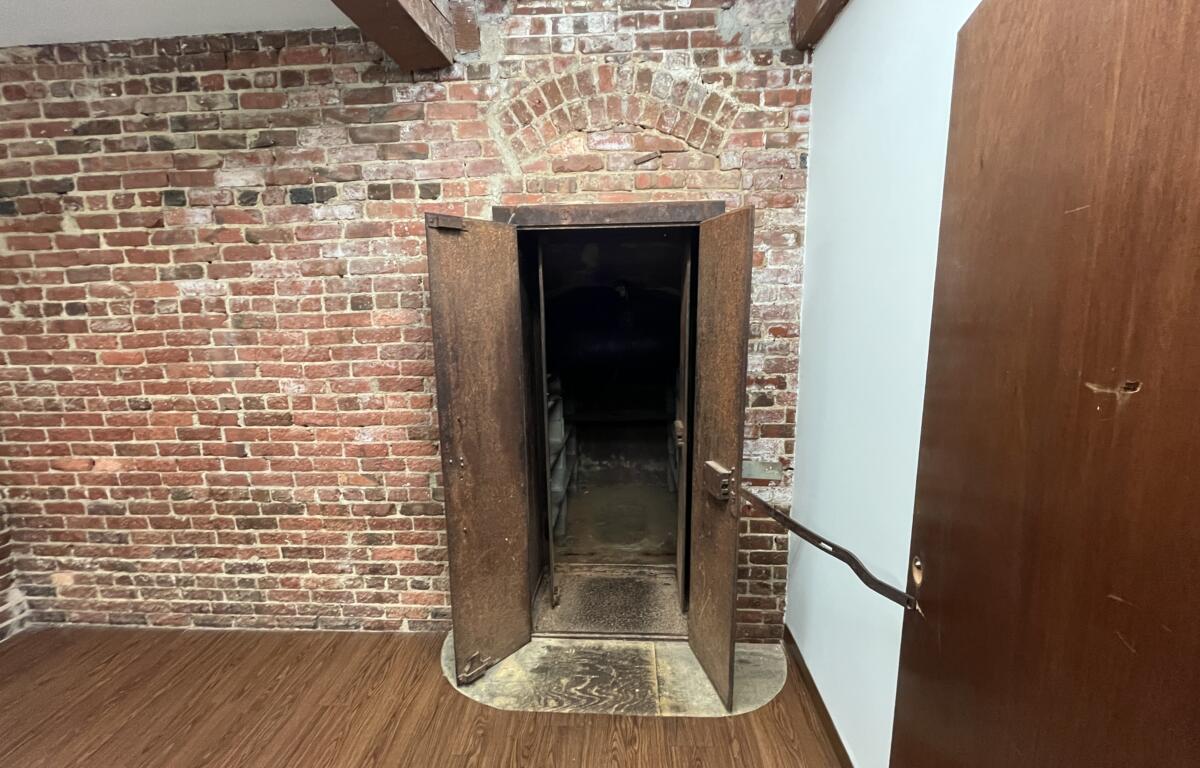
To learn more about the Pack’s Tavern tunnel, click here.
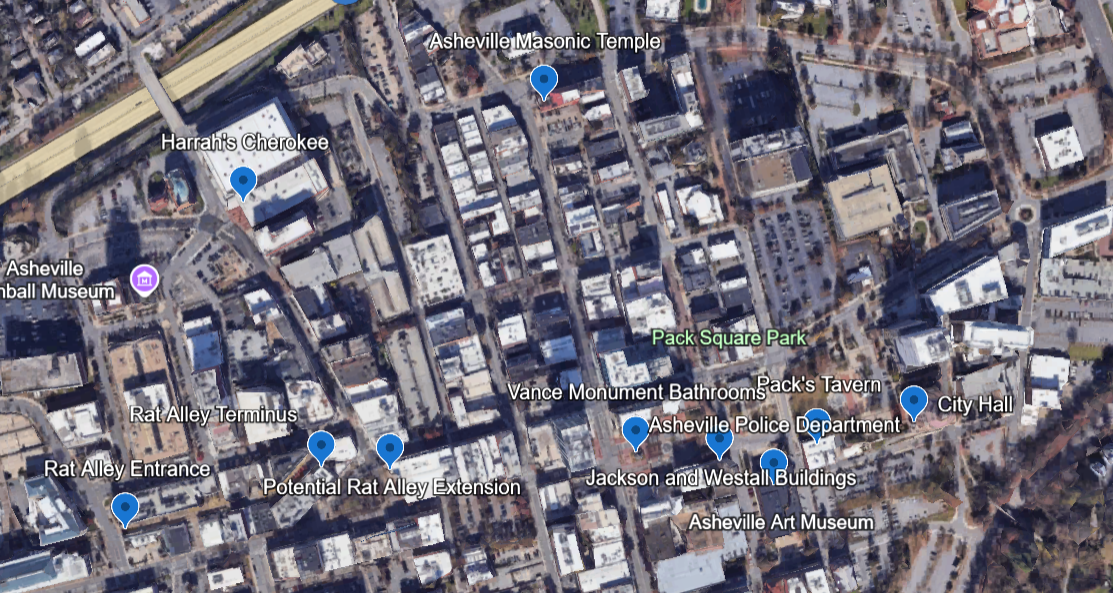
Another tunnel exists underneath Wall Street, although it is not quite a tunnel. As businesses developed on Battery Park Avenue and Patton Avenue, they were at a mismatched level with each other due to the topography. Wall Street was built above ground level to connect the business on either side, leaving a passage beneath for coal truck deliveries, explained Asheville historian Kevan Frasier.
Rat Alley, underneath Wall Street still exists today. It is not exactly a hangout spot, cluttered with refrigerators, boxes and a trash compactor, Frasier said. A turnaround at the end of the tunnel once used for coal trucks is now blocked off and cloaked in darkness.
Click here to watch a video of the Pack’s Tavern tunnel.
A persistent rumor on online forums is that Asheville was planning a subway in the 1920’s, beginning to dig tunnels to do so that are now abandoned. As fascinating as this would be, it is false. “The Asheville City Plan” by John Nolan in the UNC Asheville Special Collections suggested building a subway system, but there is no evidence the city council ever considered the idea. The trolley network downtown was sufficient, running as far as Weaverville.
One more subterranean location is confirmed. A lack of businesses with public restrooms downtown pushed the city council to build a solution in the 1920’s. Under Pack Square, a few yards east of the old Vance Monument, a set of white-only washrooms, each with separate ornate staircase entrances, offered relief to residents and tourists. In the late 1970’s or early 1980’s, the city sealed the entrances.
Frasier believes the city got rid of the restrooms for two reasons. First, they were rundown and decorated for a bygone era. Second, by then, restaurants were required to offer bathrooms to customers. Therefore, the need for city restroom infrastructure had diminished.
Because the staircases down to the Pack Square bathrooms looked like a subway entrance, Frasier believes many of the rumors of an Asheville subway megaproject stem from them. But he does not deny that many other tunnels exist, in most cases built for innocuous reasons like alcohol smuggling during Prohibition and utilities for the city.
Specific locations have occasionally been put forward as possible tunnel entrances, but none seem to be accurate. A long-supposed passageway beginning at the Asheville Masonic Lodge is unconfirmed by current members. “Unfortunately, anyone who might have known either way didn’t pass that information down to us,” David Gale explained, a spokesman for the organization.
-
Haunted Asheville and WNC: Ghost stories, eerie legends and mysterious places

From Asheville’s historic landmarks to mountain trails, old cemeteries and Appalachian folklore, explore the ghost stories and mysterious places that have become part of Western North Carolina’s history.
-
Strangeville: Elvis, Asheville and a tiny Cherokee museum

Just off of Highway 19 on the way down to Cherokee, N.C., eagle-eyed drivers might spot the silhouette of Elvis Presley on the side of a small brown building. Inside, visitors will find the Elvis Museum, owned and curated by Dorothy “Dee” Smith.
-
Strangeville: Revolutionary War Ghosts of the Carolina Backcountry

Ahead of America 250, Revolutionary War folklore links Western North Carolina’s Overmountain Men to ghostly legends from the Battle of Kings Mountain.
-
Strangeville: Harry Gardiner, the ‘Human Fly’ Who Climbed Asheville’s Flat Iron Building
A century before viral stunts, Harry Gardiner drew crowds to downtown Asheville by scaling the Flat Iron Building without ropes — part spectacle, part fundraiser and part civic promotion.
-
Strangeville: Devil’s Den and the outlaw legends of Iron Mountain

On the North Carolina-Tennessee line, Devil’s Den became part of a darker mountain history shaped by moonshiners and outlaws.