


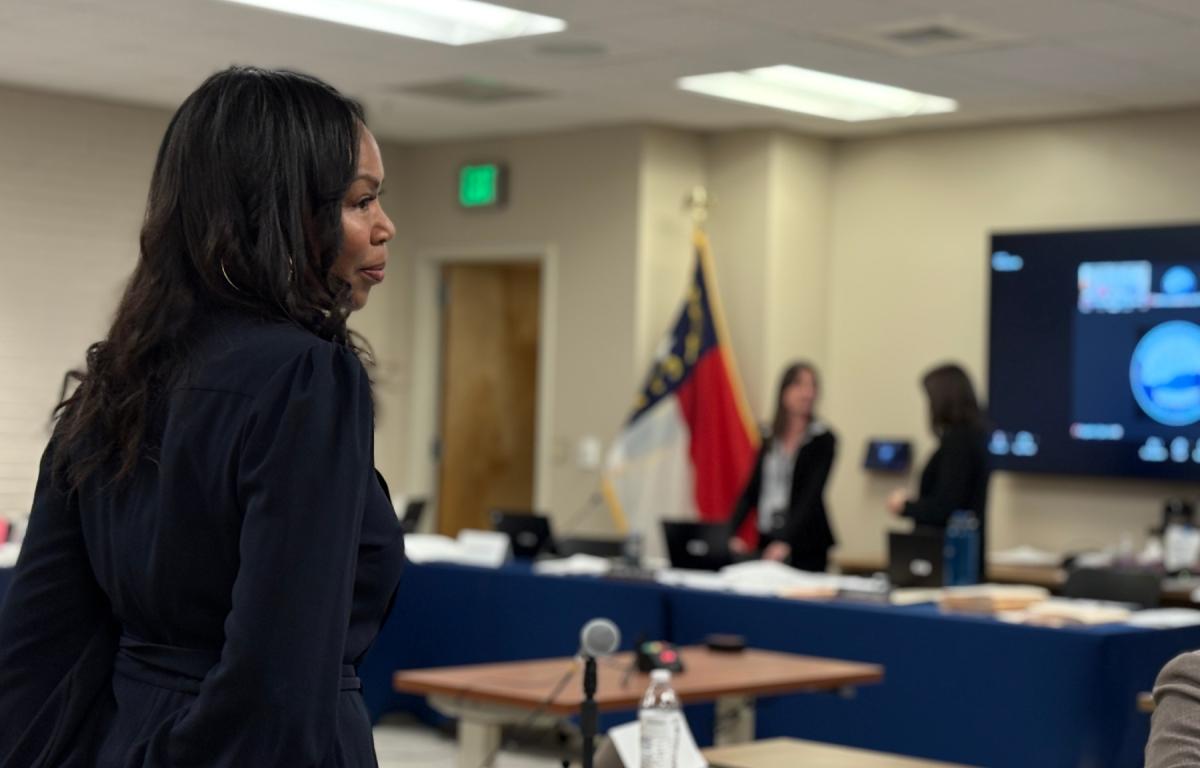

ASHEVILLE, N.C. (828newsNOW) — Two candidates whose eligibility to run for office was challenged were cleared to remain on the ballot Tuesday after the Buncombe County Board of Elections voted to deny both challenges following lengthy hearings.
The board rejected challenges against Asheville City Council candidate Antoinette Mosley and Republican sheriff candidate Victor “Vic” Morman during a meeting that began at 2:30 p.m. and lasted more than three hours. The board will issue written decisions in both cases.
Each challenge was heard separately. Challengers and candidates were allowed to present evidence, testify under oath, call witnesses and answer questions from board members. Under guidance from the North Carolina State Board of Elections, candidates bear the burden of proving by a preponderance of the evidence that they are qualified to run for office.
Sheriff race challenge
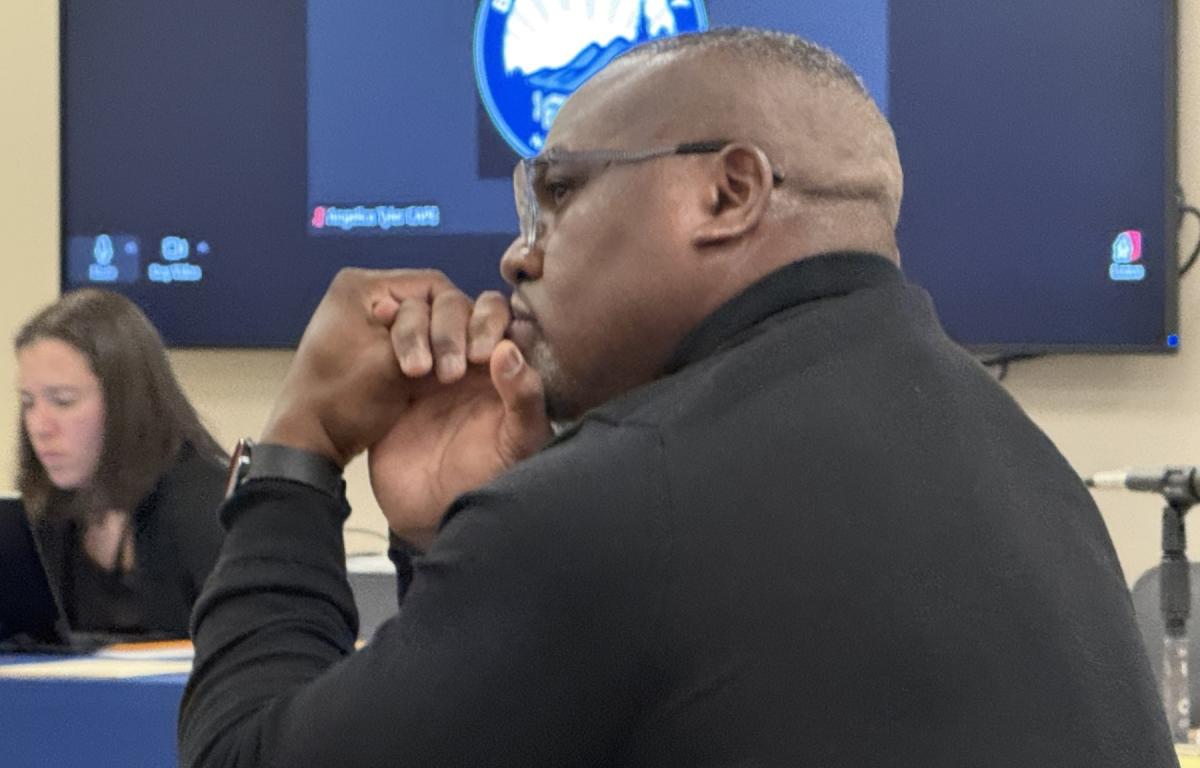
The challenge against Morman focused on whether he met the state requirement that candidates be affiliated with a political party for at least 90 days before filing for a partisan primary. The challenge alleged Morman failed to meet that requirement after changing his party registration from Democrat to Republican.
During the hearing, election officials reviewed voter registration records, candidate filing documents and records from the North Carolina Division of Motor Vehicles. Morman presented evidence showing he submitted a party affiliation change form on Sept. 19, 2025, which he said satisfied the 90-day requirement before his Dec. 18 filing date.
The challenger, Tina Lunsford, cited State Board of Elections records reflecting a processing date of Sept. 22, 2025, arguing that official records showed Morman fell short of the required time period.
Board members focused their deliberations on whether the controlling date was when the party change application was submitted or when it was processed and entered into the state’s voter database. Several members said state law treats the application date as controlling.
County Attorney Amy Broughton told the board that state statute requires party affiliation changes to be processed “as soon as practicable,” but does not specify that database entry dates override application dates.
The board voted 4-1 (abstained) to deny the challenge, concluding Morman met the statutory requirements to run for sheriff.
City council challenge
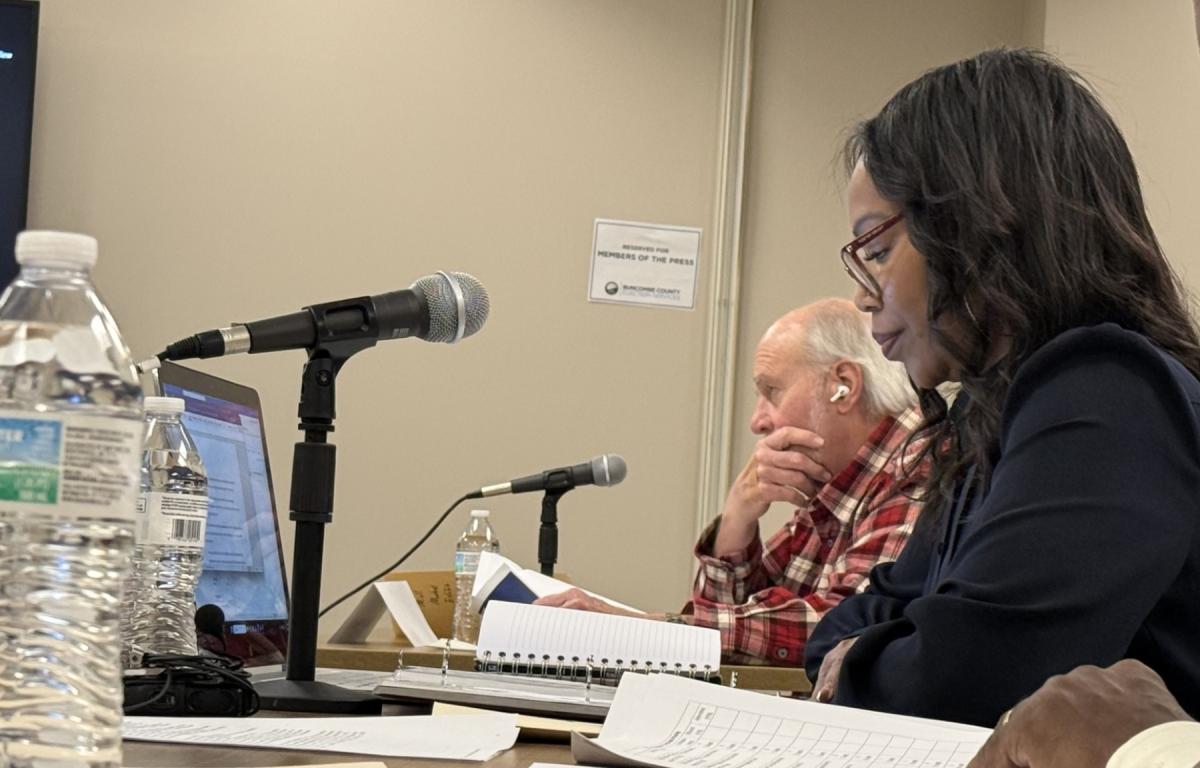
The board also rejected a residency challenge to Mosley’s candidacy for Asheville City Council.
The challenge, filed Jan. 8 by John E. Miall Jr., alleged Mosley may not have been eligible to seek reelection based on reports suggesting she did not reside full-time in Asheville.
Mosley testified under oath and presented voter registration records, tax documents, affidavits and other materials showing she has maintained Asheville as her legal domicile since returning to the city in 2016. She said she has lived at her Devonshire Place home for years, though storm damage and personal circumstances required her to temporarily stay elsewhere.
Mosley acknowledged owning property in Fulton County, Georgia, and receiving a homestead tax exemption there, but said the exemption was revoked retroactively after the issue was brought to her attention. She testified she never intended to abandon her Asheville residence and plans to return full-time once repairs to her home are completed.
Under North Carolina law, residency challenges require proof that a candidate abandoned a prior domicile, established a new one and intended it to be permanent.
During the hearing, the challenger called Heather Boyd, of Transylvania County, as a witness. Boyd testified she compiled publicly available voting, property and tax records related to Mosley but had no personal knowledge of Mosley or her intent regarding residency.
Board members debated the relevance and weight of older and out-of-state records, noting that admissibility did not determine their significance. Several members said the focus was whether Mosley is currently domiciled in Asheville and whether there was evidence she intended to abandon that domicile.
After deliberations, the board voted to deny the challenge, allowing Mosley to remain on the ballot.
With the rulings, both candidates will remain eligible to appear on the ballot for the March 3 primary election.