


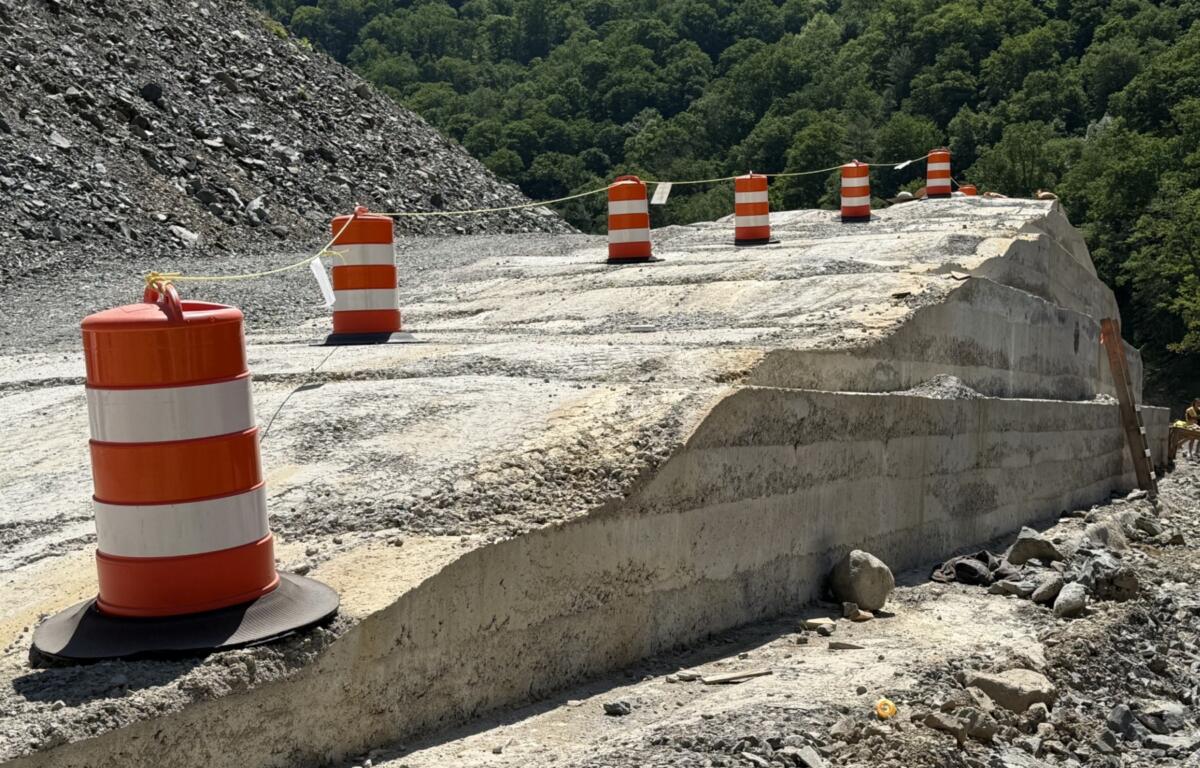

HAYWOOD COUNTY, N.C. (828newsNOW) — Nearly 20 months after Tropical Storm Helene tore apart Interstate 40 through the Pigeon River Gorge, crews have entered a new phase of reconstruction, building a massive concrete retaining wall system that state officials say will form the backbone of one of the largest highway repair projects in North Carolina history.
The project, expected to cost nearly $2 billion, is designed not only to restore the interstate connection between North Carolina and Tennessee but to better protect it from the kind of catastrophic flooding that destroyed sections of the corridor in September 2024.
For motorists traveling through the gorge, however, the most visible reality remains traffic.
Travelers have developed their own strategies for navigating the construction zone: leave before sunrise, travel after dinner or avoid weekends altogether. Nearly every vehicle passing through the seven-mile work zone must squeeze into a single lane in each direction, where backups remain common.
Beyond the traffic cones and reduced speeds, though, a massive engineering operation is steadily taking shape.
Towering retaining walls are rising above the Pigeon River. Hundreds of workers are spread across the corridor. Rock blasted from a nearby borrow site in the national forest is being crushed, processed into specialized concrete and hauled directly to construction sites along the interstate.
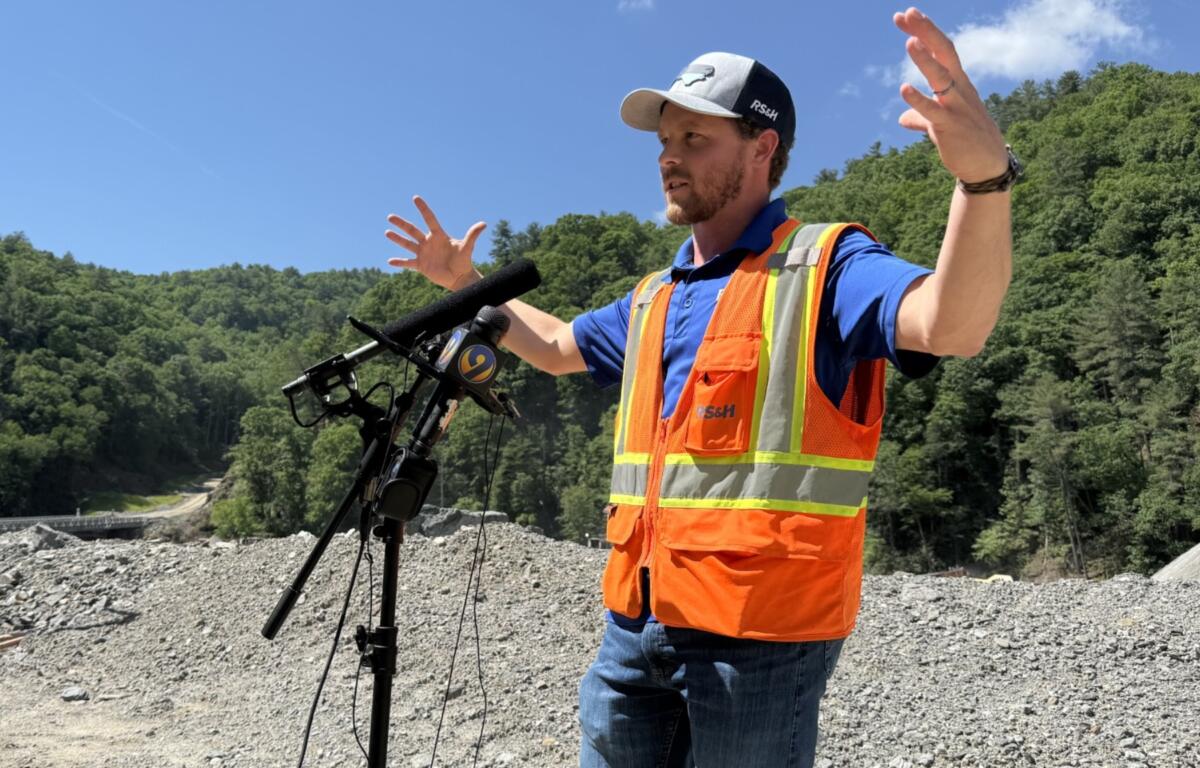
“This is something we’ve never really faced in North Carolina,” NCDOT Resident Engineer Blake Soblesky said during a media tour of the project Wednesday. “Quite an extensive repair.”
Building a stronger foundation
The most severe damage from Helene occurred along the eastbound side of I-40 between the Tennessee state line and the twin tunnels near mile marker 5.
During the storm, floodwaters transformed the normally scenic mountain river into a torrent powerful enough to strip away an estimated 1 million cubic yards of rock and soil supporting the roadway.
Rather than rebuilding the embankment as it existed before the storm, engineers developed a new design intended to better withstand flood events.
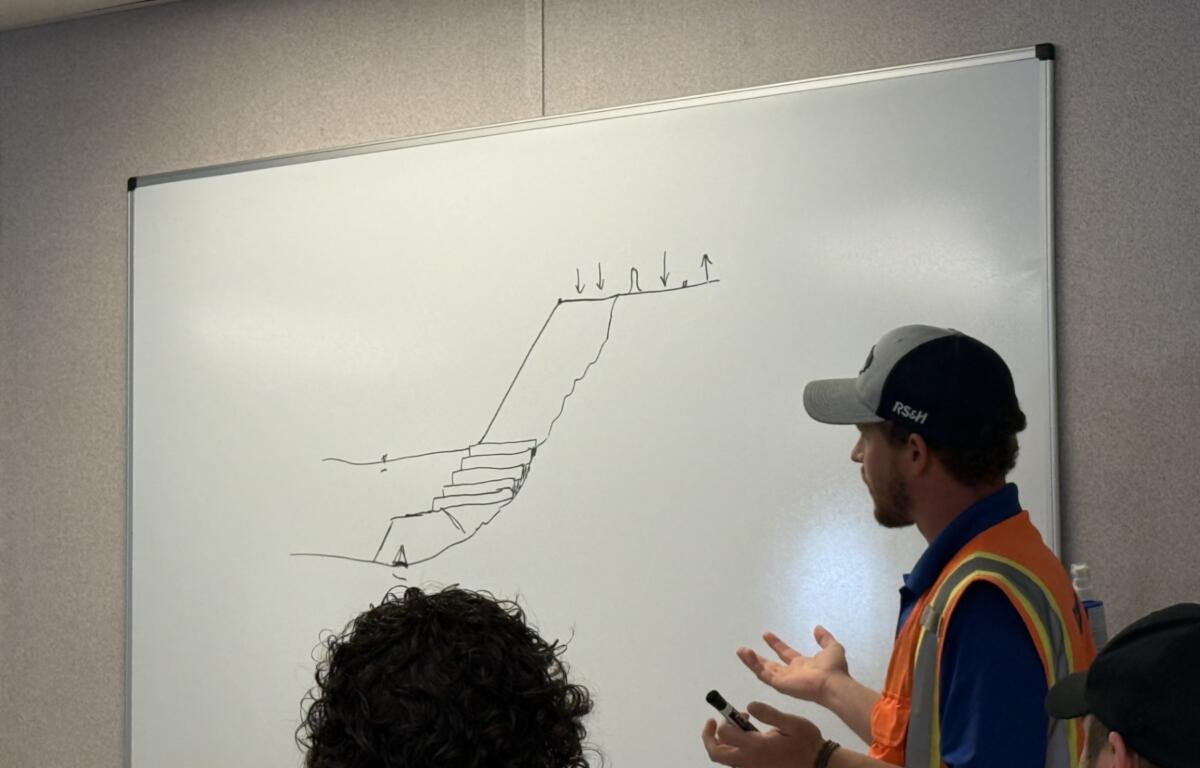
The centerpiece of that design is a retaining wall system constructed from roller-compacted concrete, commonly known as RCC.
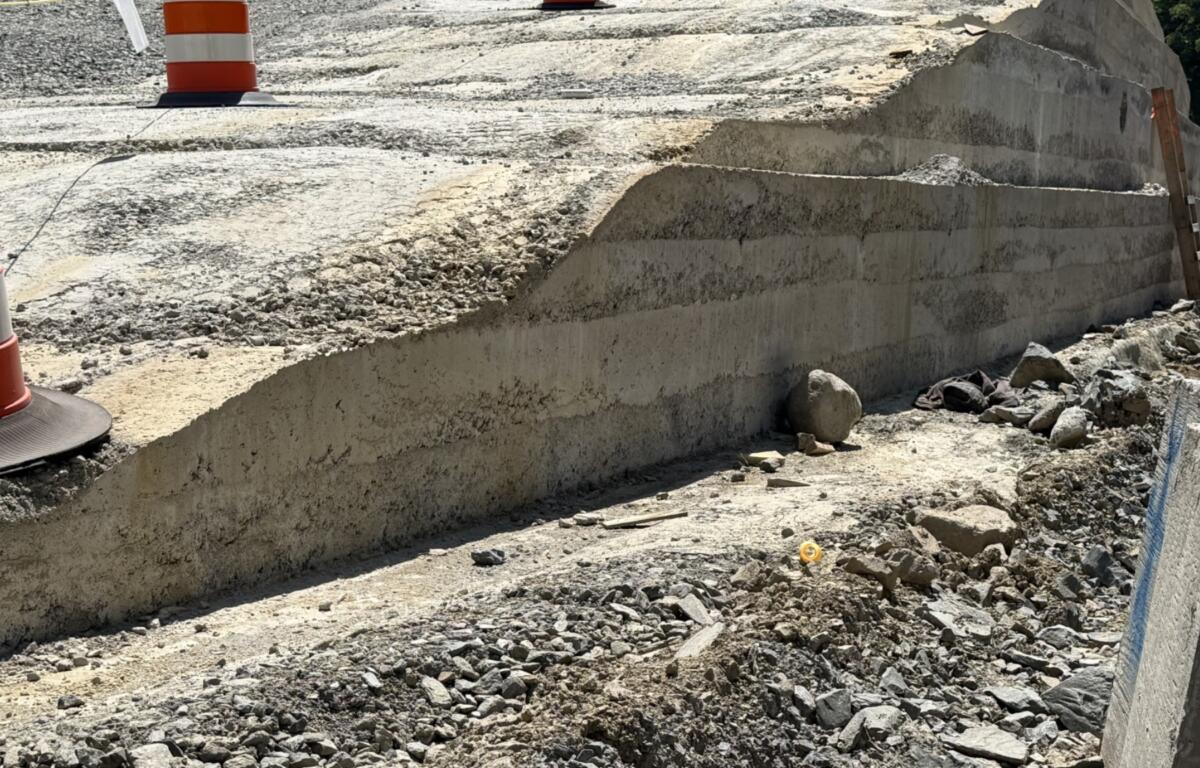
The material resembles dry concrete more than the wet mixture most people associate with construction sites. Trucks dump it into place, bulldozers spread it and heavy rollers compress it into dense layers that gradually form a massive reinforced embankment.
Workers place the concrete in 1-foot-thick layers. Four layers create a 4-foot lift, and crews repeat the process over and over, building a giant stair-stepped structure from the riverbank toward the future roadway.
When completed, the RCC walls will extend roughly 5 to 6 miles through the gorge. Depending on location, they will range from about 25 feet to 70 feet tall, while some sections of the corridor rise more than 100 feet above the river.
“The existing embankment was very steep and made out of rock material,” Soblesky said. “When you have a large rain event like Helene, the river eroded and scoured that material out and took it away. This design is concrete. It’s a giant mass that can’t be washed out like smaller rock.”
Engineers say the new structures are designed to withstand a flood event similar to Helene. Additional scour protection has been incorporated beneath the walls to help prevent water from undermining the structures during future storms.


A self-contained construction operation
The reconstruction effort has effectively created its own industrial complex inside the narrow mountain gorge.
Across the river, crews blast rock from a borrow site operated under an agreement between NCDOT and the U.S. Forest Service. Off-road trucks transport the material across temporary bridges to a crushing facility, where it is processed into aggregate.
The aggregate is then moved to an on-site RCC plant, mixed into concrete and loaded onto another fleet of trucks for delivery directly to construction zones.
The operation includes a quarry, crushing plant, concrete production facility, haul-road network, temporary bridges and nearly 6 miles of river causeways built specifically to support reconstruction efforts.
Because of the gorge’s remote location and the traffic restrictions already affecting I-40, officials say producing materials on-site has become essential.
“We’re trying to produce as much stone, aggregate and material for the project on site as possible,” said Josh Deyton, NCDOT’s Division 14 construction engineer. “It’s a good win for the people who use the facility and for taxpayers because it does save money.”
Officials estimate sourcing material directly from the project area reduces costs and construction time by roughly 30 percent compared with trucking aggregate from commercial quarries elsewhere in North Carolina or Tennessee.


Progress measured by preparation
Although permanent reconstruction has become more visible in recent months, transportation officials caution that much of the project’s work occurred long before concrete was placed.
To date, crews have installed approximately 31,000 cubic yards of roller-compacted concrete, representing about 4 percent of the total RCC required for the project.
Overall construction is estimated to be roughly 15 percent complete.
Officials say those figures reflect the enormous amount of preparation necessary before permanent rebuilding could begin.
Since the storm, contractors have stabilized mountainsides, recovered material from the river, built temporary access roads and causeways, established the borrow site and constructed processing facilities capable of producing material for years of reconstruction.
“There’s been a lot of work that’s gone on,” Deyton said. “Some of it’s been investigation for the design, and some of it’s been done for the construction of the permanent repair.”
The project currently employs approximately 300 workers. Officials expect that number to increase to about 500 workers during the summer construction season.
Next phase approaching
While the RCC retaining walls currently dominate activity throughout the gorge, they represent only one component of the long-term reconstruction strategy.
A second retaining system, known as interlocking pipe-pile walls, is scheduled to begin construction in June. Engineers say the structures will be used in areas where site conditions require a different approach.
The ultimate goal remains reopening the damaged eastbound section of I-40.
Transportation officials are targeting late 2028 for reopening the reconstructed lanes, although some construction activity would continue beyond that date.
If completed as planned, the project could become one of the largest transportation construction efforts ever undertaken by NCDOT.
“The amount of roller-compacted concrete we’re doing on this project is one of the largest roller-compacted concrete projects in the United States,” Deyton said.
Why the river looks different today
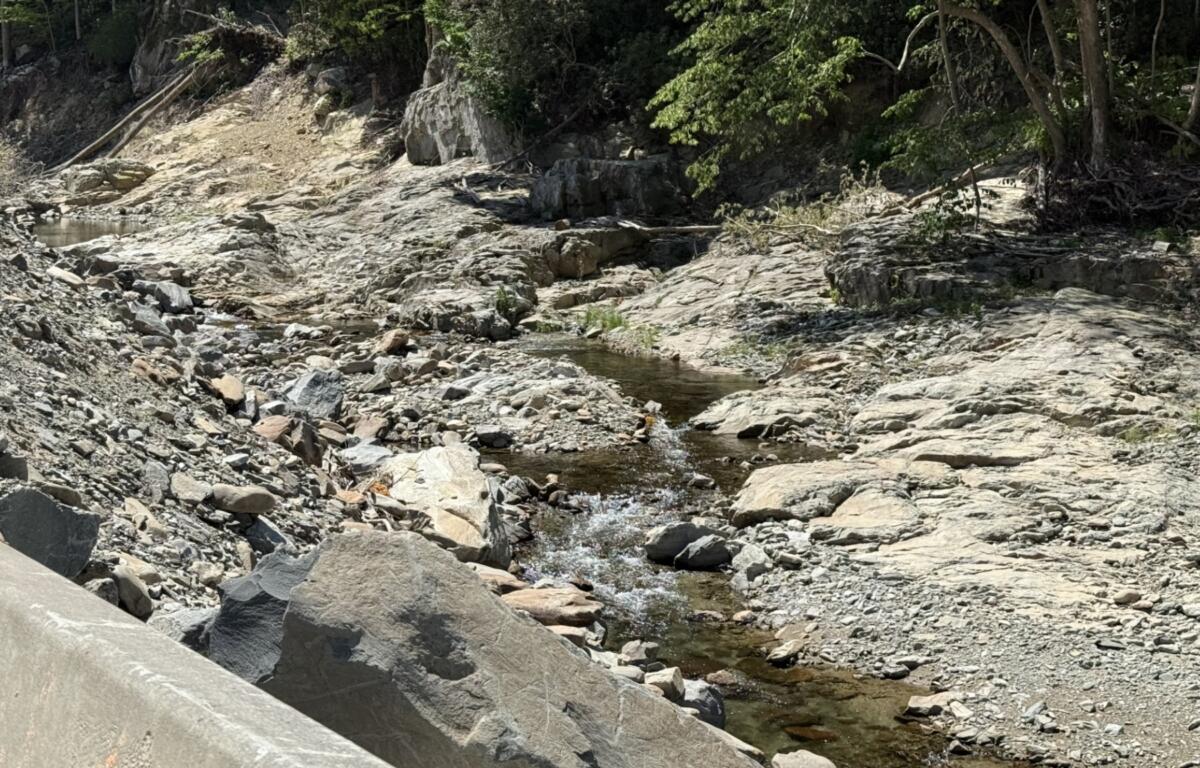
Visitors often ask why the Pigeon River appears relatively modest today compared with the destructive force witnessed during Helene.
Project engineers say the answer lies partly in how the river is managed.
The Pigeon River system is heavily influenced by hydroelectric operations upstream, including releases from the Waterville Dam and other facilities. Under normal conditions, much of the water entering the system is routed through hydroelectric infrastructure before being discharged downstream.
During Helene, however, those systems were overwhelmed and sent torrents of water through the gorge.
“So what you’re seeing down there is water coming from the lake through the turbines through the mountain,” Soblesky said. “Most of the time, the water that comes into the lake does not come through this section.”
As a result, river levels can vary considerably depending on power-generation schedules, maintenance operations and water-management decisions. A stretch of river that appears relatively calm in the morning can be noticeably higher later in the day.
For transportation officials, those changing water levels serve as a reminder of the challenge facing engineers rebuilding the interstate.
For drivers navigating daily backups, the reconstruction remains a source of frustration. For the hundreds of workers spread across the gorge, it represents an unprecedented effort to restore a critical freight and travel corridor through one of the most rugged landscapes in the Appalachian Mountains.
By the numbers: I-40 Gorge Reconstruction
- Estimated project cost: Nearly $2 billion
- Damaged corridor: 7 miles
- Rock and soil lost during Helene: Approximately 1 million cubic yards
- Roller-compacted concrete placed so far: 31,000 cubic yards
- RCC work completed: About 4%
- Overall project completion: About 15%
- Current workforce: Approximately 300 workers
- Peak workforce expected: 500 workers
- RCC retaining wall length: Approximately 5-6 miles
- Target reopening of rebuilt eastbound lanes: Late 2028