


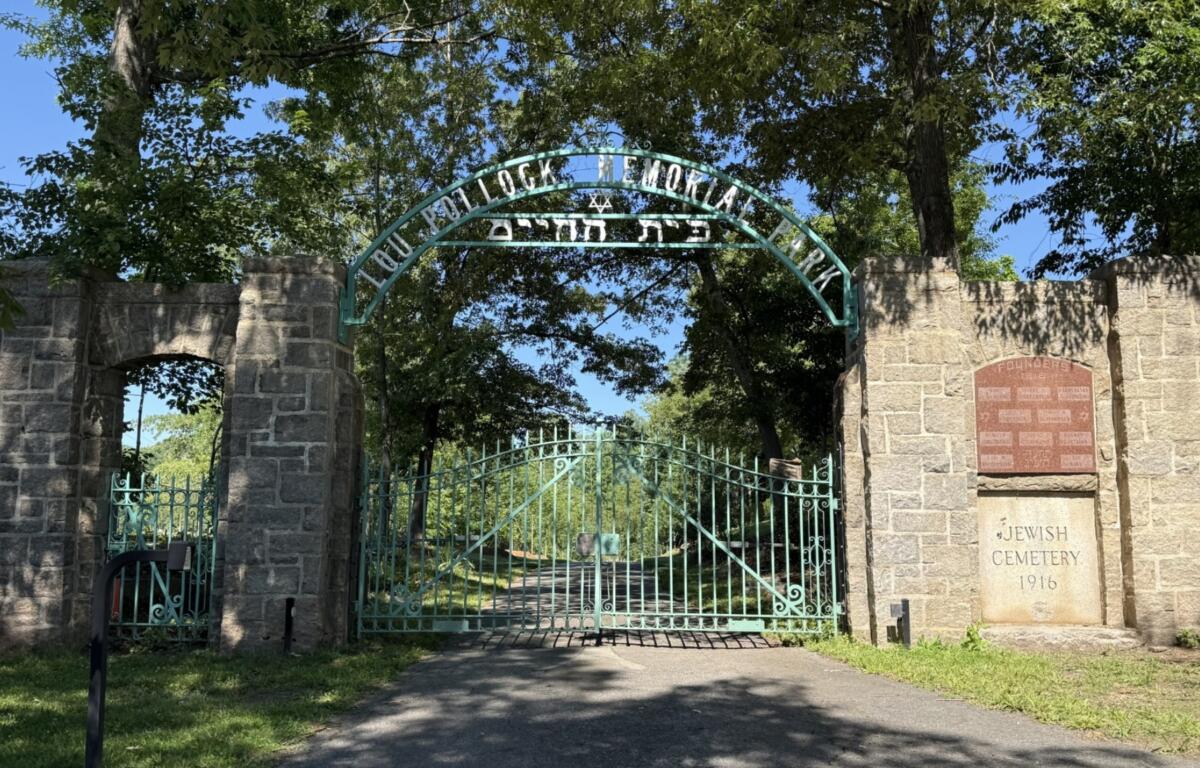

ASHEVILLE, N.C. (828newsNOW) — A meticulous restoration project at one of Asheville’s historic Jewish cemeteries has earned one of the region’s highest preservation honors.
The entry gate at Lou Pollock Memorial Park recently received a Griffin Award for Restoration from the Preservation Society of Asheville & Buncombe County, a distinction reserved for projects that return historic sites to a specific period in their history while preserving original materials whenever possible.
The award recognizes restoration work completed by Living Stone Masonry on the cemetery’s damaged entrance, which dates back more than a century.
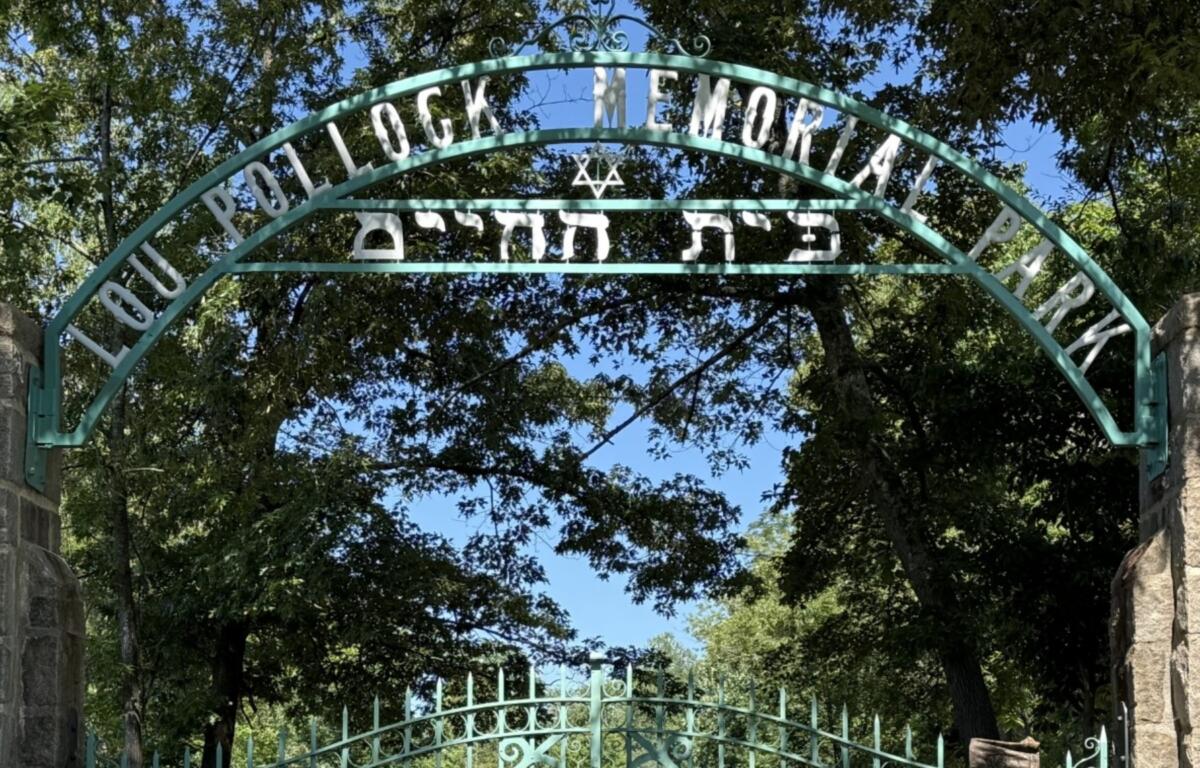
Established in 1916, the cemetery was originally known as Mount Sinai Jewish Cemetery. It was founded in part through the efforts of Lou Pollock, a Russian-born shoe merchant who helped create a burial ground to provide Asheville’s Jewish community with affordable and appropriate funeral and burial services.
In 1949, the West Asheville Hebrew Cemetery Association renamed the site in Pollock’s honor.
The restoration became necessary after a large truck damaged the cemetery’s granite entrance columns and iron arch.
Rather than replacing materials, the project team carefully documented and mapped each stone before rebuilding the two granite columns. That detailed approach allowed workers to reconstruct the structure using the original stone, eliminating the need for additional materials.
Masons also repointed the stonework using matching lime mortar and precisely reinstalled mounting hardware to maintain the gate’s structural integrity and historic appearance.
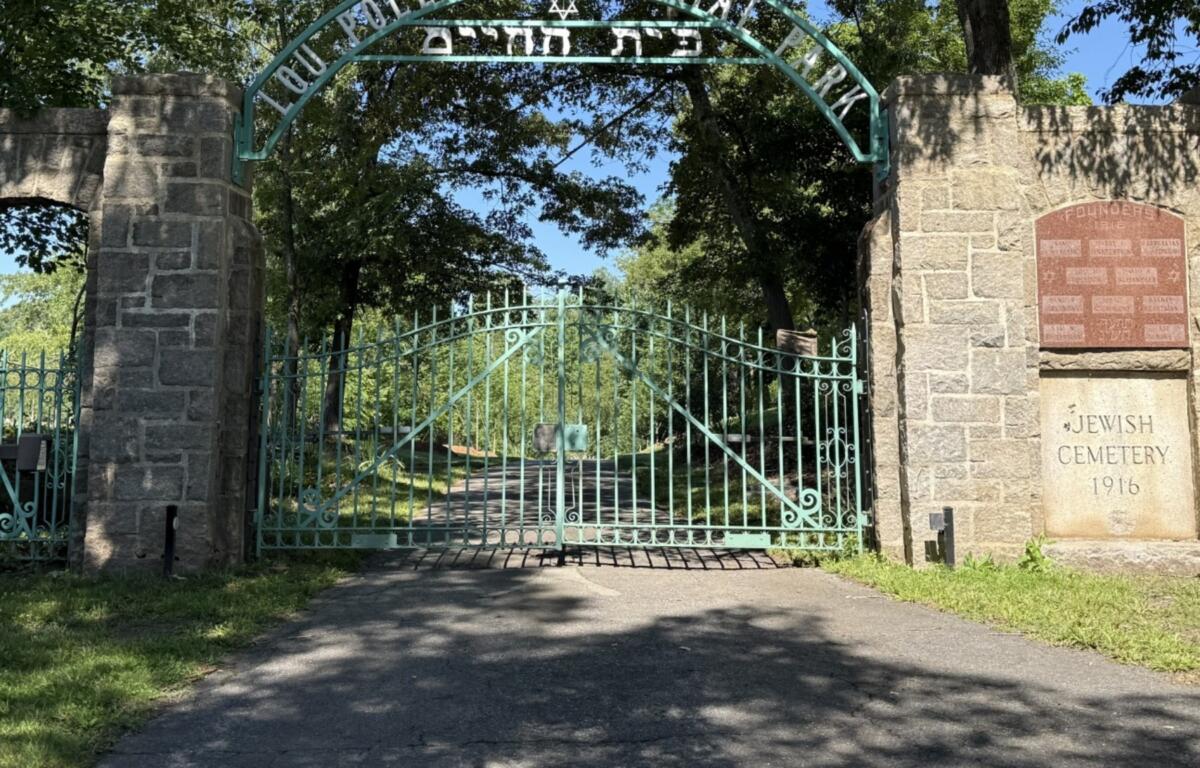
The project presented additional challenges because the cemetery’s dense tree canopy prevented crane access. Instead, workers constructed elaborate scaffolding systems to lift and reinstall the granite capstones and iron arch — a method similar to what the original builders likely would have used more than a century ago.
Preservation Society officials said the restoration exemplifies the highest standards of historic preservation by safeguarding an important community landmark while retaining its original character.
The Griffin Award’s restoration category is rarely presented and is considered one of the purest forms of preservation work, recognizing projects that faithfully return historic structures to a specific moment in their history.