


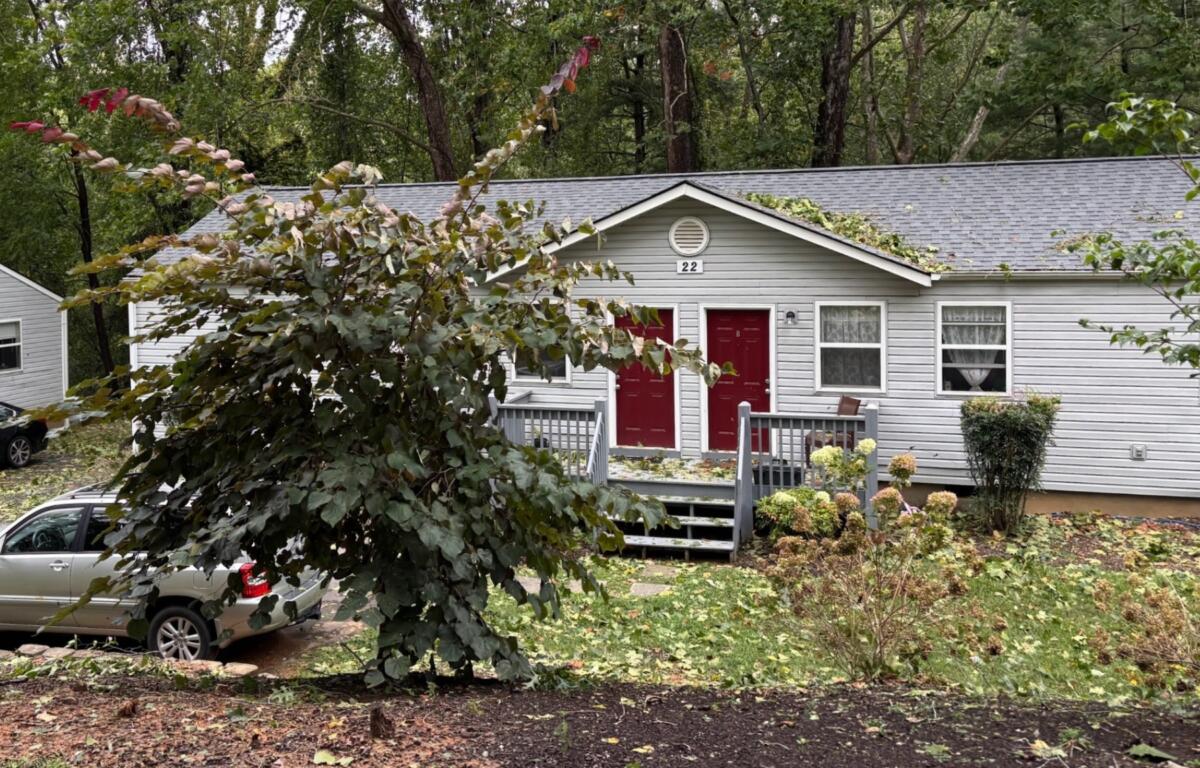

ASHEVILLE, N.C. (828newsNOW) — Asheville residents could soon see changes aimed at increasing housing options across the city, while officials are also considering redirecting millions of dollars in Tropical Storm Helene recovery funds to help more homeowners rebuild.
Those were among the key topics discussed during a recent meeting of the Asheville Neighborhood Advisory Committee, where members weighed in on proposed affordable housing amendments and received updates on ongoing disaster recovery efforts.
One of the city’s major housing initiatives would pair new housing development with anti-displacement strategies designed to help longtime residents remain in their neighborhoods as Asheville continues to grow.
City Communications and Public Engagement Director Dawa Hitch said the effort is intended to move affordable housing production and displacement protections forward at the same time.
“We’re trying to have these two things work in parallel with each other,” Hitch told committee members.
Among the first proposals expected to reach the Planning and Zoning Commission and City Council later this year are changes involving duplexes, accessory dwelling units and parking requirements.
Committee members expressed the strongest support for a proposal that would allow duplexes in all residential zoning districts.
Several members said duplexes offer a way to add housing without dramatically changing the character of existing neighborhoods.
“It shocked me when it said one-third of Asheville’s residents are only allowed in one-third of the neighborhoods,” one committee member said. “It really should be allowed everywhere, in my opinion.”
Others noted that duplexes were once common throughout Asheville before zoning restrictions limited where they could be built.
Parking changes generated significantly more debate.
The proposal would eliminate minimum parking requirements for new development, allowing builders greater flexibility when designing housing projects.
Committee members voiced concerns that reducing parking requirements could worsen congestion on already crowded neighborhood streets, create challenges for emergency vehicles and make accessibility more difficult for residents with disabilities.
“I think Asheville already has a public transportation problem,” another committee member said. “When you’re eliminating parking minimums, you need enough affordable housing on commercial corridors that have enough public transportation that they don’t need parking, and we just don’t have that.”
Others acknowledged potential benefits, including lower development costs and greater flexibility for building on smaller lots.
The committee also discussed a proposal to increase the maximum size allowed for accessory dwelling units, commonly known as ADUs or backyard cottages. Members raised questions about lot size requirements, setbacks and whether increasing the limit to 90 percent of the primary residence’s size could create unintended consequences.
The housing discussion is part of a broader anti-displacement and affordable housing initiative that city staff expect to continue through early 2027.
The committee also received an update on Community Development Block Grant-Disaster Recovery funding tied to Helene recovery efforts.
City officials are considering reallocating $19.2 million from other recovery categories to expand funding available for single-family home repairs.
The proposal would transfer $10 million from infrastructure projects and $9.2 million from multifamily housing construction, increasing the city’s home repair allocation from $3 million to approximately $22.2 million.
One committee member said current estimates suggest the original $3 million allocation may only be enough to assist about eight households, despite more than 100 homeowners applying for assistance.
The larger allocation could potentially help around 60 households, according to estimates discussed during the meeting.
Committee members also raised questions about how federal disaster recovery funding is being administered.
North Carolina received approximately $1.4 billion in federal disaster recovery funds, including more than $800 million designated for housing rehabilitation and reconstruction. The committee has sought clarification on why Asheville homeowners appear to be relying primarily on the city’s $225 million allocation rather than accessing funding from the state’s larger housing pool.
“I don’t have a definitive answer at this point, but I have raised some questions that I hope I will get some clarification on,” one committee member said.
The proposed reallocation will be reviewed by the Housing Recovery Board before moving to City Council. A public hearing is scheduled for June 9, with a council vote expected June 23.
Committee members also heard updates on several recovery and planning efforts, including redevelopment planning for French Broad River Park and Azalea River Park, the city’s Urban Forest Master Plan and a resilience hub mapping project designed to identify locations that served as community support centers during Helene.
The city is also reviewing its traffic-calming policies, with committee representatives reporting that officials are looking for ways to streamline a process that can currently take up to 18 months from request to implementation.
Input gathered from the Neighborhood Advisory Committee will be shared with city planners and elected officials as the housing proposals move through Asheville’s public review process in the coming months.