
ASHEVILLE, N.C. (828newsNOW) – “Othello,” one of Shakespeare’s greatest tragedies, is now being performed by the Montford Park Players. Read our review for more.
When to catch “Othello”
“Othello” will be staged by the Montford Park Players at 7:30 p.m., Friday to Sunday, June 5-27 at Hazel Robinson Amphitheatre, 92 Gay St., Asheville. Admission is free and open to the public.
Who stars in “Othello”?
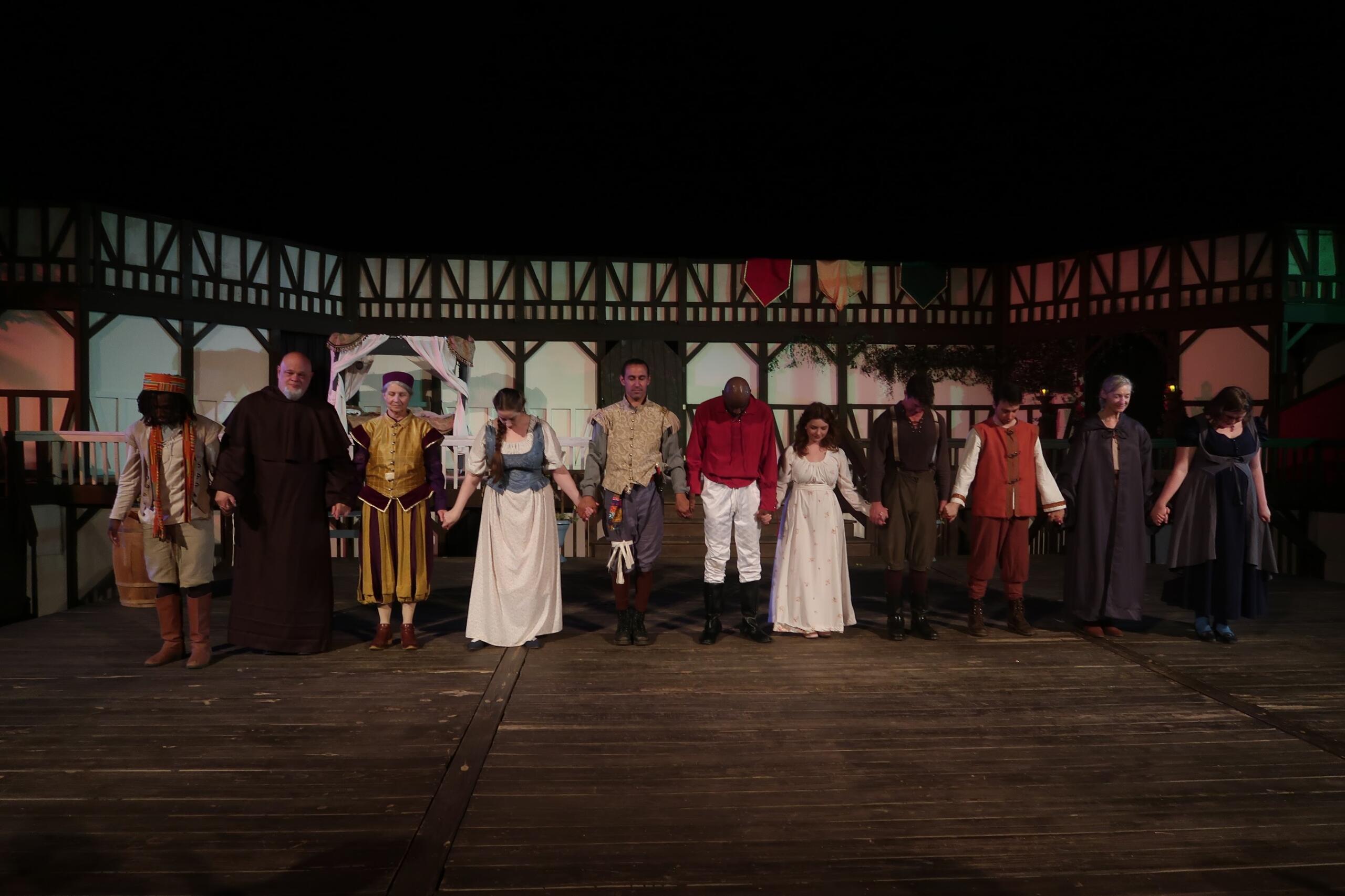
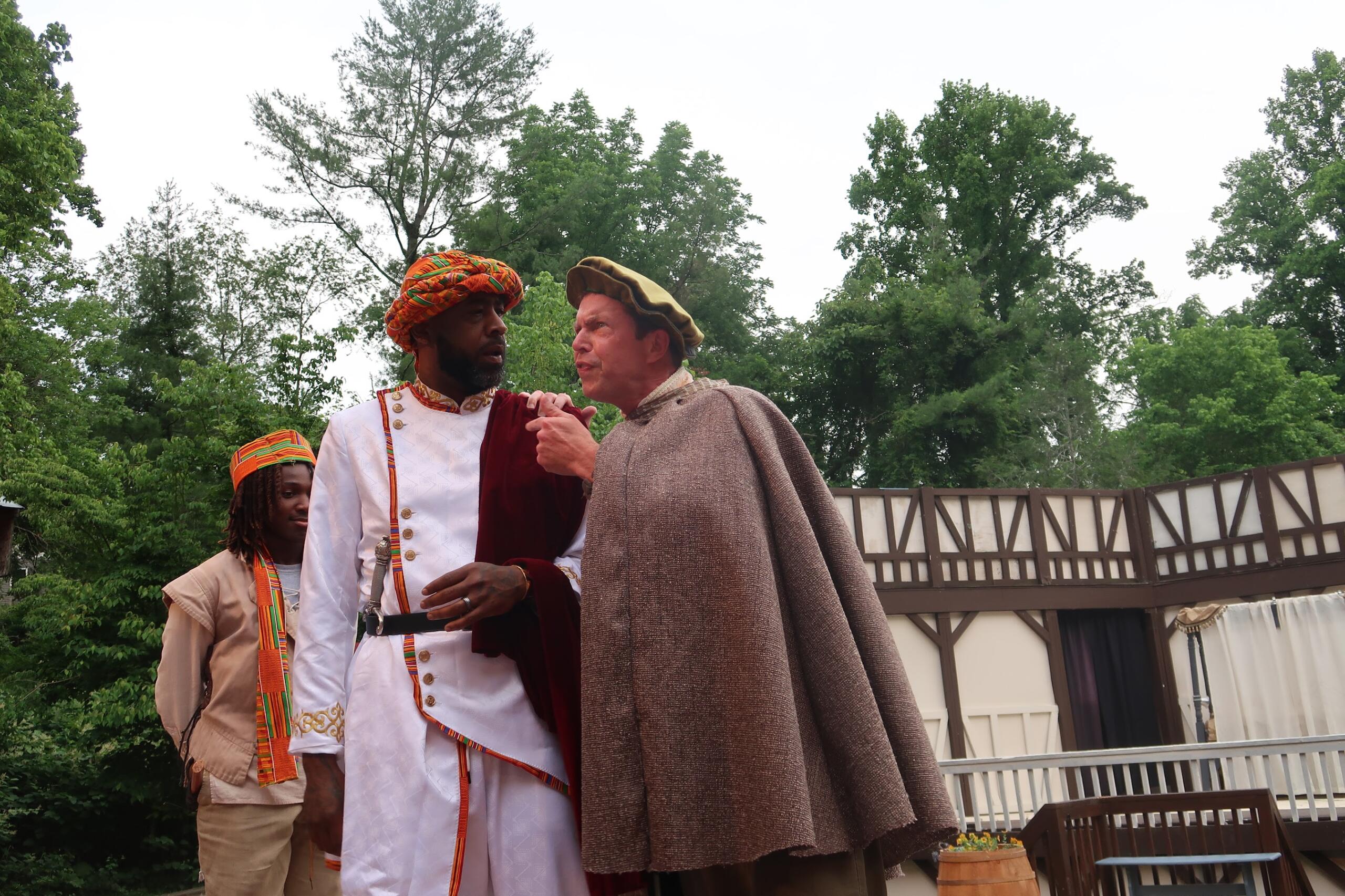
“Othello” was directed by Stephanie Hickling Beckman from the play by William Shakespeare. The show stars Chesney Goodson as Othello, Travis Lowe as Iago, Aaron Ybarra as Cassio, Molly Wilson as Desdemona, Kai Strange as Roderigo, Sonia D’Andrea as Emilia, Paula O’Brien as Brabrantio/Gratiano, Darren Marshall as Montano/Duke, Alex McPherson as Lodovico/Senator, Rachel Huneycutt as Bianca and Zay Hickling Beckman as Officer.
Stephanie Hickling Beckman provided the set and sound design, Mikhale Sherrill served as stage manager and assistant director, costume design was by Ida Bostian, lighting design by Jason Williams, the set build by Walker Linkous and fight choreography by Michael Dickinson.
Review: “Othello” by the Montford Park Players
Iago, nemesis of Othello, is often considered the greatest villain in Shakespeare’s entire portfolio. The Montford Park Players cast an actor that lives up to the character’s reputation.
Travis Lowe, star of “Cyrano de Bergerac” during last year’s Montford Park Players season, embodied the notorious villain as a steamrolling slimeball, sardonic and charming as sin. Lowe brought an irresistible glee to Iago, literally winking at the audience as the character wove his web of treachery, but allowed the darker sides of the character to seep out, too. The actor found three sides in the Iago prism – the nasty racist, devilish charmer and cruel, desperate Machiavellian – forming a crystal-clear character arc.
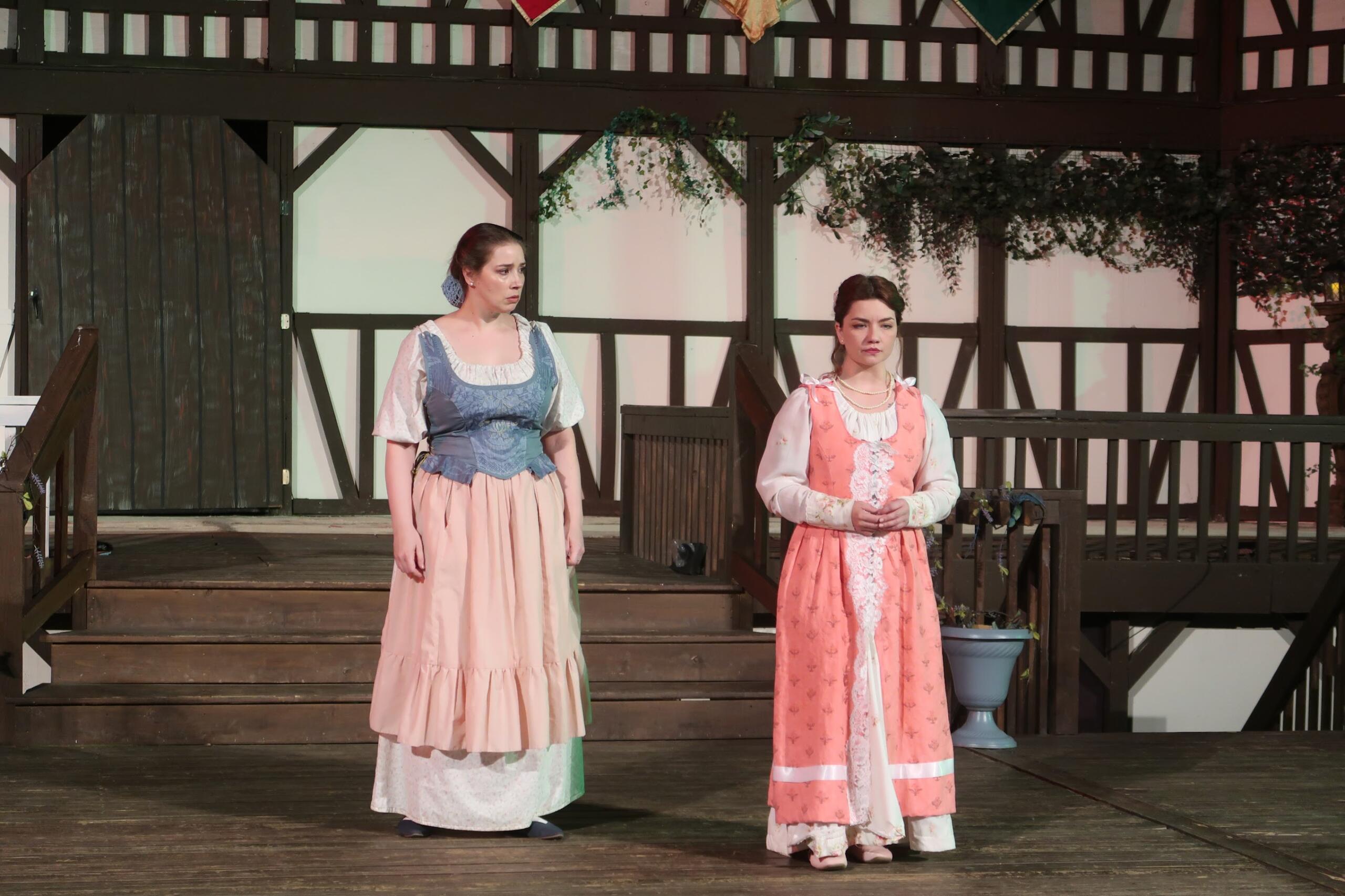
Meanwhile, Molly Wilson as Desdemona, wife of Othello and foremost of Iago’s victims, and Sonia D’Andrea as Emilia, Iago’s beleaguered wife and Desdemona’s loyal handmaiden, also put in incredible work.
The two were particularly good together. The best scene of the show, period, was theirs. Toward the end of the play, in the twilight moments before Desdemona is killed, she and Emilia share an eerie, melancholy song. In Wilson and D’Andrea’s hands, the moment was profound. The sorrow they conjured onstage was palpable. I was moved to tears.
On the flipside, D’Andrea was able to bring out the wry, comic sides of her character, too. In her withering barbs toward Iago, the actor delivered the biggest laugh lines of the night, edging out Lowe for the comedy crown.
I lead with this trio of performances because they were the most fully articulated thing about this “Othello.” Other elements of the show were excellent, but there were also idiosyncrasies and off-kilter decisions that led to a wonky cohesive experience.
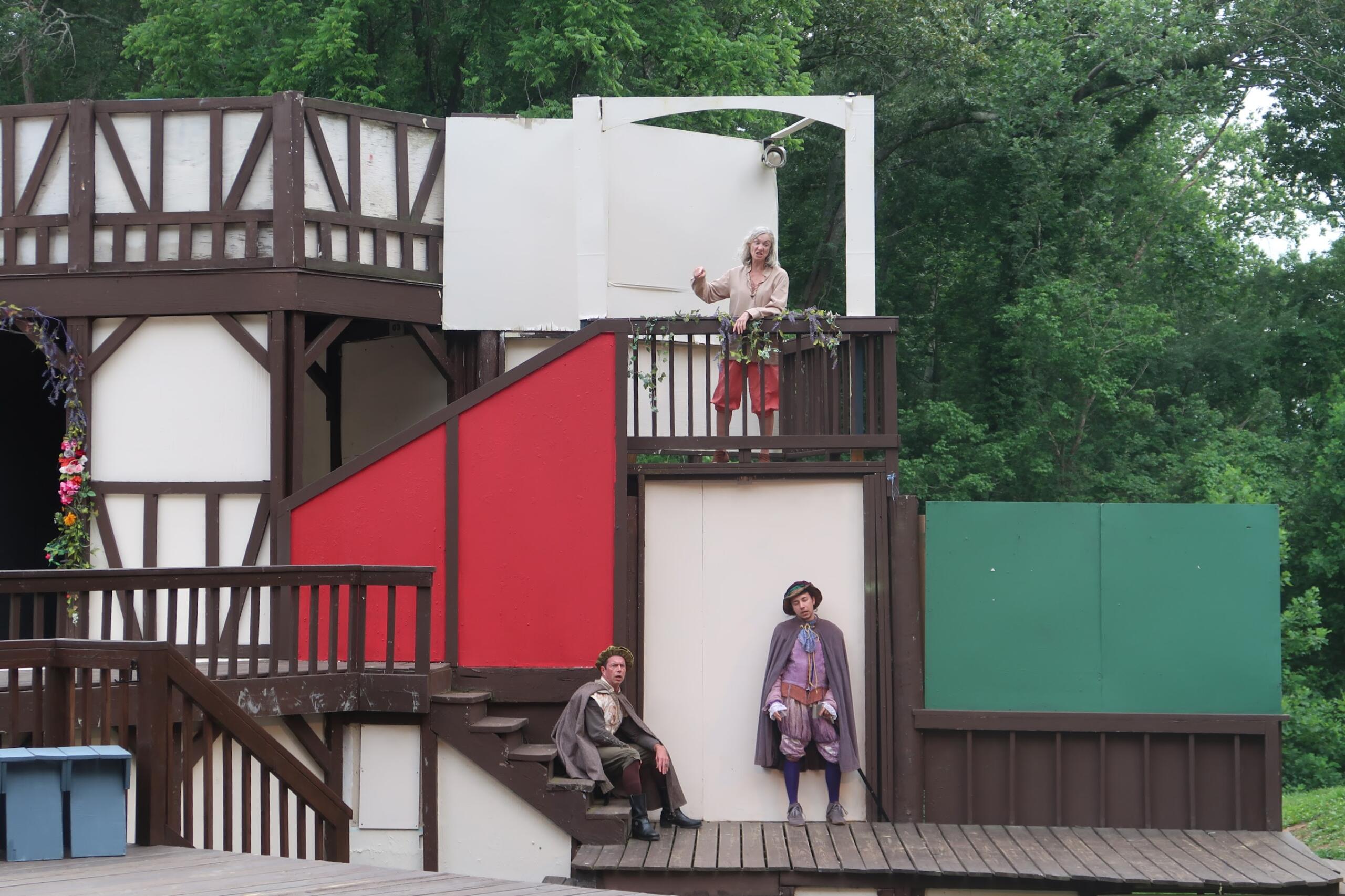
One example of the latter was the set, which felt surprisingly anonymous for a Montford Park Players production. Though each of the company’s plays are staged in the Hazel Robinson Theatre, the set dressing is usually vastly different, reinventing the walls, props and floors with metaphoric, handsome and/or thematically enriching designs.
However, while the “Othello” set accurately conveyed what it needed to for the plot of the play, it did not make a statement beyond its surface necessities. “Othello” is set in Italy, and in Venice and Cyprus, specifically. The set conveyed this fact via two wall maps reading “ITALY” and “CYPRUS” at house left, and at house right, three walls painted the green, white and red of the Italian flag. However, those wall panels were arranged in opposite order from the flag, and so were the center stage wall drapes, which replicated the red, white and green order. The incongruities were small, but felt bigger when there was little else on the spare stage to evoke the setting – or feeling – of the production.
Another decision with a seesawing impact – good to bad, in dramatic shifts – was the music of the show. The Montford Park Players are known for incorporating anachronistic music into their performances, but that is usually when the play in question has been shifted forward in time as well. This version of “Othello,” meanwhile, had great fidelity to its period trappings, and at the beginning, the music did too.
Before the show, Aaron Ybarra, whose infectious puppy dog energy translated well to their portrayal of Othello’s lieutenant, Cassio, came out onstage and told the audience we were going to learn a song. While they played a guitar and sang, we sang along, and the resulting tune felt simultaneously appropriate to the time period and made for a delightfully engaging bit of audience participation, especially when it was invoked in the middle of the show.

If that was the only way music was deployed, it would have been fine. However, throughout the performance, abrupt snippets of instrumental song would come out over the loudspeakers. Then, before we knew it, they would depart as harshly as they came. Occasionally, the piped-in music would even undercut pivotal moments, like when a vocalizing male voice nearly drowned out Othello during his monologue about murdering Desdemona. The music was likely meant to add dramatic atmosphere, but it was distracting from the actual drama unfolding onstage.
Then there was the performance of Othello himself, brought to life by Chesney Goodson. In his character’s introduction, Goodson made a fascinating decision: every line Othello spoke was delivered in a rhythmic, staccato iambic pentameter, like the words were spilling out spontaneously from deep inside the Venetian general. It was a bold choice, and underlined the themes of isolation and singularity in the story.
As a character, Othello is peerless, both as a leader of men and a Black character in white society, yet ultimately ostracized and betrayed by those around him. With the rest of the cast reading their dialogue naturalistically, Goodson’s delivery was incredibly effective. However, the performance was inconsistent. Like the inverse of the recorded music, Goodson would pick up and drop again the flowing style of Othello’s speech, abruptly abandoning the melodic approach for standard line readings and then starting them up again.

Nonetheless, by the final act, Goodson landed the plane. In the concluding moments, the tragedy of “Othello” was made reality by the actor’s performance. From Desdemona’s death to the final fight with Iago, Goodson led the cast through the tragic denouement just like a general leading a weary army into one last battle.
It may be odd to call a tragedy a good time, but watching these Players perform “Othello” was precisely that.
-
‘Footloose’ at Flat Rock Playhouse can boogie

-
Montford Park Players: Iago, Desdemona, Emilia shine in uneven ‘Othello’
-
Montford Park Players put on a wonderful, wonderful, ‘Wonderful Wizard of Oz’

-
Flat Rock Playhouse should be proud of ‘Pride and Prejudice’

-
‘Much Ado About Nothing’ at Hendersonville Theatre is a pop-punk pleasure