



ASHEVILLE, N.C. (828newsNOW) — Nearly two years after Tropical Storm Helene devastated Western North Carolina, state and federal officials say recovery is accelerating, but billions of dollars in unmet needs remain as communities continue rebuilding homes, infrastructure and local economies.
Members of the Governor’s Advisory Committee on Western North Carolina Recovery heard updates Monday showing progress across housing, communications, tourism and infrastructure recovery efforts while also highlighting major funding gaps that remain throughout the region.
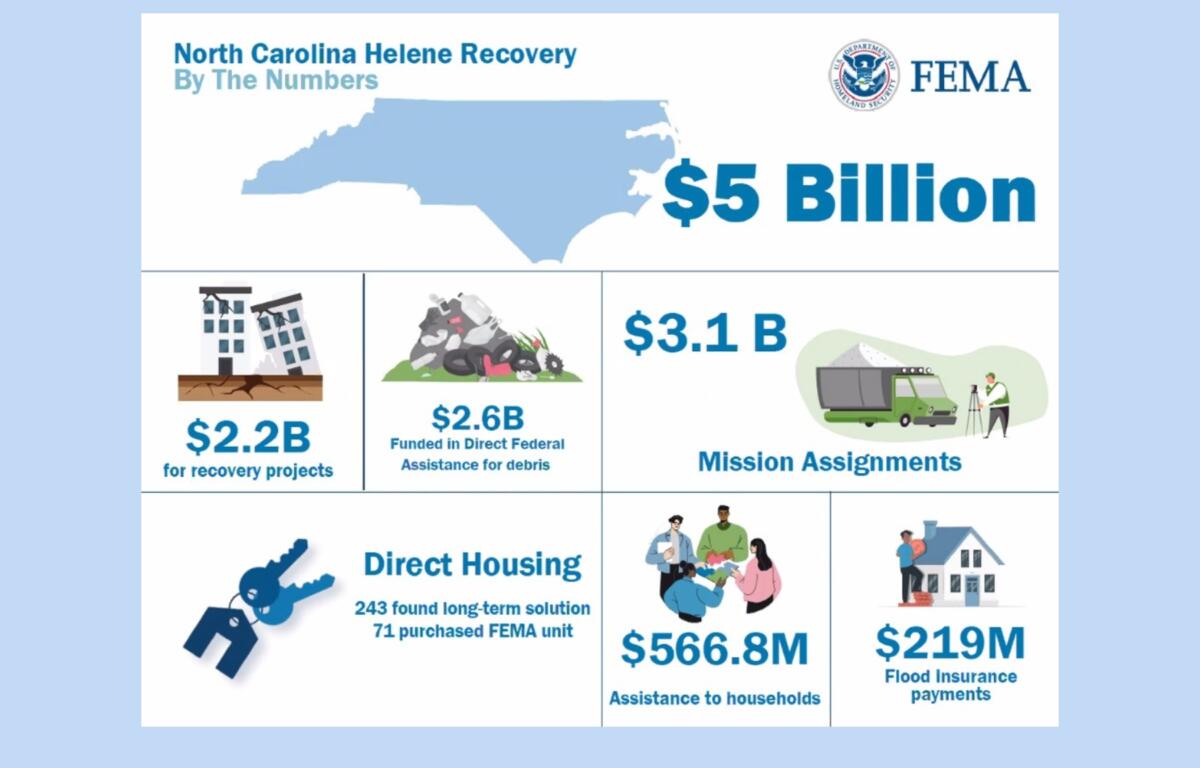
FEMA officials reported that more than $5 billion has been committed to Helene recovery efforts, including more than $2.2 billion in public assistance funding for local governments and infrastructure repairs, $566 million in direct assistance to survivors and $2.6 billion for debris removal.
Jordan Rink, director of FEMA’s North Carolina Recovery Office, said nearly $350 million has been obligated in recent weeks for debris removal, road repairs, utility restoration and school recovery projects.
“We’re not going anywhere,” Rink told committee members, noting FEMA has a recovery office in Asheville.
FEMA currently has about 350 personnel assigned to Helene recovery, including roughly 50 staff members permanently based in Western North Carolina.
Even with those investments, state officials say much more assistance is needed.
Gov. Josh Stein and recovery leaders recently traveled to Washington, D.C., seeking an additional $10 billion in federal recovery funding. The request includes $3 billion for housing, $3 billion for local infrastructure projects, $1 billion for water and wastewater systems and $1.5 billion for economic recovery efforts.
State officials estimate Helene caused roughly $60 billion in damage across North Carolina.
Housing remains one of the region’s biggest challenges.
Officials reported that 80 homes have now been completed through the state’s Renew NC housing recovery program, with another 46 under construction and more than 300 in pre-construction stages.
The state also reported strong early interest in a new multifamily housing program, receiving 17 project applications totaling about $60 million in requested funding.
Recovery officials said approximately 2,100 eligible households remain unfunded through current housing programs.
Communications resilience emerged as another major focus of the meeting.
Officials said Helene exposed critical weaknesses in Western North Carolina’s communications infrastructure, with roughly 75 percent of cell sites failing during the storm and about 1,700 miles of fiber infrastructure damaged or destroyed.
The Land of Sky Regional Council is developing a regional communications resilience plan that calls for stronger backup systems, additional fiber redundancy, expanded satellite internet capabilities and improved coordination among emergency agencies.
North Carolina Highway Patrol officials said lessons learned during Helene have led to a recommendation for 31 new Viper emergency communications towers across Western North Carolina.
Major Kevin Owens said the proposed towers would improve emergency communications, strengthen broadband availability and expand cellular coverage in rural areas.
The statewide Viper radio network handled nearly 3 million communications during the disaster and remained operational approximately 94 percent of the time despite unprecedented demand.
Tourism officials also reported encouraging signs that visitors are returning to the mountains.
Visit NC’s Marlise Taylor said a $14 million tourism recovery campaign generated nearly 1 billion advertising impressions and significantly improved public perceptions of Western North Carolina.
Research showed travelers exposed to the campaign were 20 percentage points more likely to consider visiting North Carolina than those who had not seen the advertisements.
The campaign generated an estimated 133-to-1 return on investment, with visitors spending $133 for every advertising dollar spent, Taylor said.
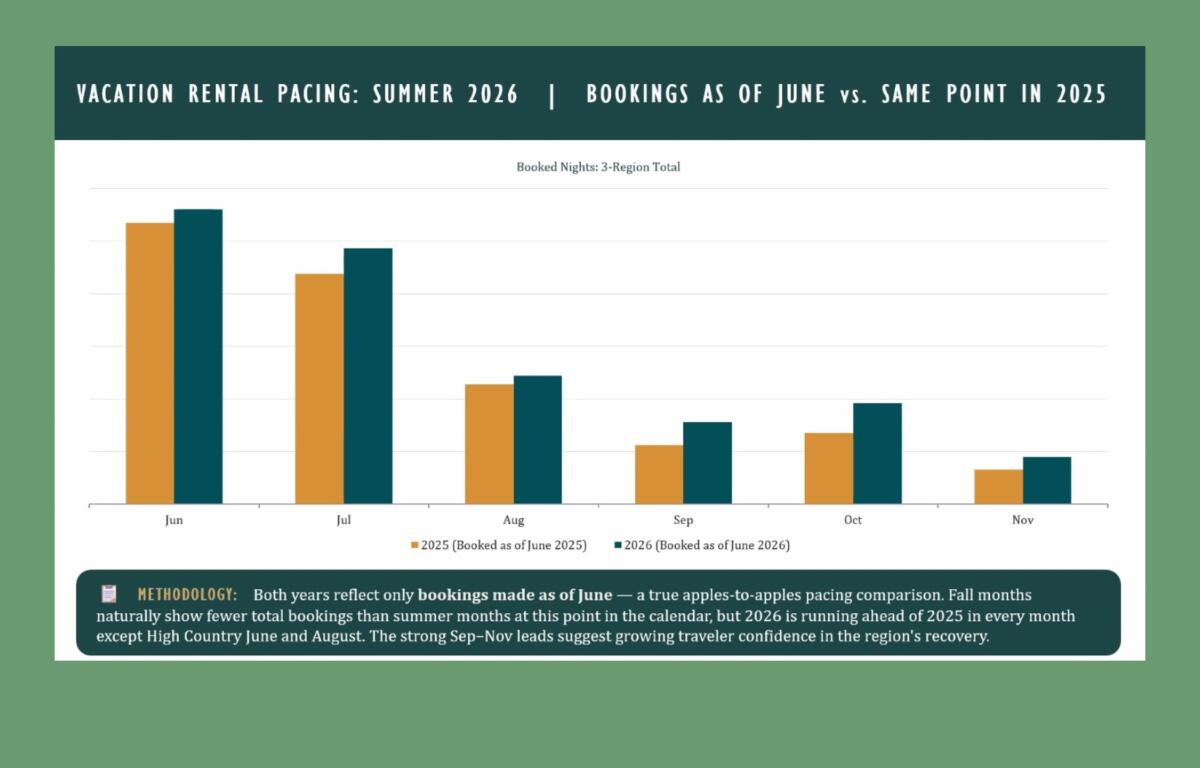
Perhaps the most encouraging statistic presented was that vacation rental bookings for June through November are currently running about 14 percent ahead of where they were at the same time last year.
“We are seeing some positive trends as we’re moving through 2026,” Taylor said.
However, she cautioned that tourism recovery remains uneven.
Hotel occupancy recovered relatively quickly after the storm, but much of that demand came from FEMA workers, insurance adjusters, contractors and displaced residents rather than traditional leisure travelers.
Vacation rental bookings, considered a stronger indicator of tourism activity, remain about 6% below pre-Helene levels, though they continue improving each month.
Taylor also warned that outdated storm imagery still being used in national media reports can hurt recovery efforts.
“When potential visitors in other states see those, they tend to believe that’s current,” she said. “Showing those pictures is really doing more harm than good for our potential visitors.”
Several tourism leaders stressed that reopening the Blue Ridge Parkway remains critical to long-term recovery, particularly for smaller mountain communities that rely heavily on visitor traffic.
Mitchell County Tourism Development Authority Director Kelly Jones highlighted a new regional tourism initiative involving Mitchell, Avery and Yancey counties designed to draw travelers into communities affected by ongoing parkway closures.
Beyond tourism and housing, officials announced several new recovery programs.
The state has launched a federally funded wildfire mitigation program that will help landowners reduce wildfire risks through prescribed burns and fuel reduction projects at no cost to participants.
A new debris removal grant program is also accepting applications from local governments and nonprofits for cleanup work not covered by FEMA funding.
State officials also reported continued investments in stream restoration projects, though demand far exceeds available funding. Counties have submitted about $93 million in eligible requests while only $38 million has been allocated so far, leaving roughly $55 million in unmet needs.
Committee members also discussed ongoing concerns about thousands of damaged private roads and bridges throughout the region.
Officials said more than 3,000 private road and bridge sites have applied for assistance, but current funding is expected to address only a fraction of those projects.
As recovery enters its next phase, officials repeatedly emphasized that rebuilding efforts are increasingly focused not only on restoring what was lost, but making communities more resilient before the next disaster strikes.
The advisory committee’s next meeting is scheduled for July 17 at Caldwell Community College’s Watauga campus.