



ASHEVILLE, N.C. (828newsNOW) — Two years after Tropical Storm Helene tore through Asheville, signs of recovery can be found across the city.
Businesses have reopened. Roads and public spaces have returned to use. Homes have been repaired and rebuilt. Major recovery projects are moving from emergency response into long-term reconstruction and resilience.
But reminders of what happened Sept. 27, 2024, remain.
Some damaged properties remain unresolved. Landslides and erosion continue to trouble neighborhoods. Major infrastructure projects will take years. And residents in some parts of Asheville say the recovery they hear about doesn’t always resemble what they see outside their doors.
That contrast — substantial progress alongside stubborn problems — is where Asheville finds itself two years after Helene.
City officials have described the recovery as increasingly focused not simply on replacing what was lost, but on making Asheville better able to withstand the next disaster.
Community voices have been part of that effort.
In a video shown during Tuesday’s Asheville City Council meeting, residents reflected on what the city has been through and what recovery still means two years later. Their comments touched on loss, resilience and the work that remains.
The scale of the damage helps explain why that work is far from finished.
Helene brought nearly 14 inches of rain to Asheville Regional Airport over roughly three days, including rain that fell ahead of the storm itself. The French Broad and Swannanoa rivers surged out of their banks, flooding Biltmore Village, the River Arts District and other low-lying areas.
Homes, businesses, roads, parks and other public infrastructure were damaged or destroyed.
By February 2026, Buncombe County had identified 379 homes destroyed by the storm, including 94 within Asheville and 285 elsewhere in the county.
Rebuilding a more resilient water system
One of the most visible examples of Helene’s destruction and Asheville’s recovery is the city’s water system.
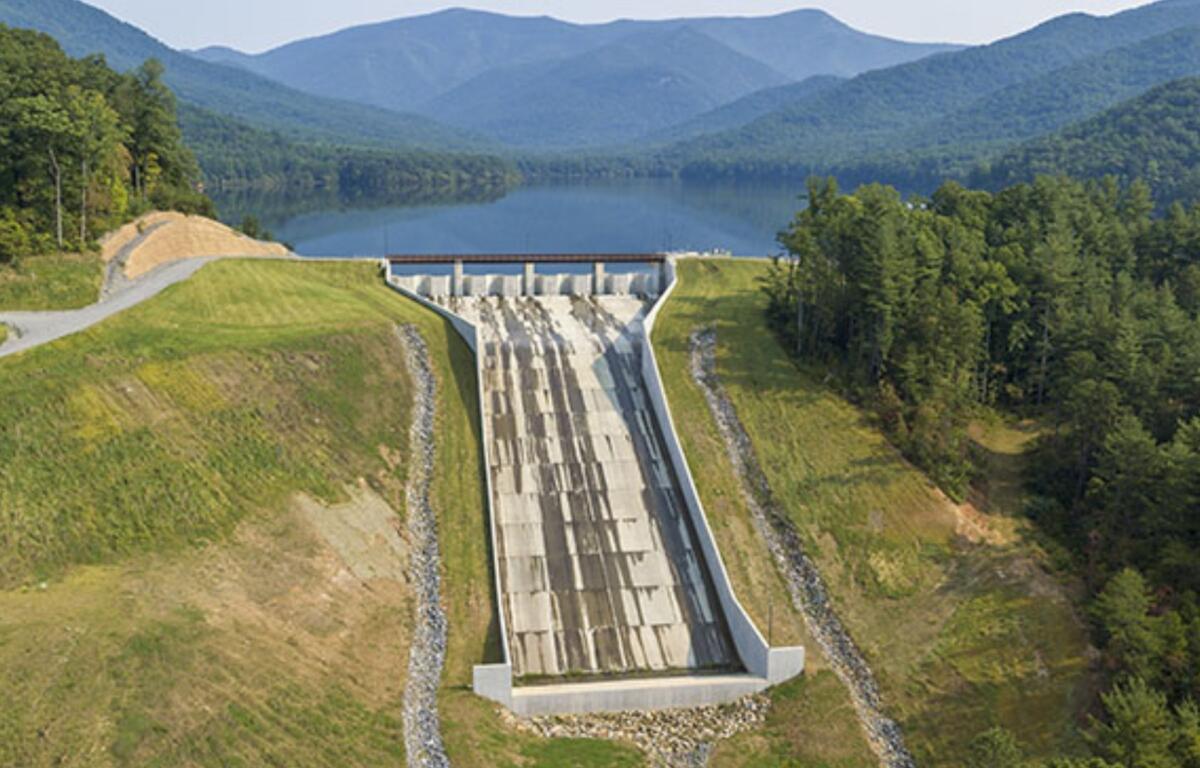
The storm caused catastrophic damage to the system that serves Asheville and surrounding areas, leaving many customers without running water for weeks. Damage to transmission lines and heavy sediment in the North Fork Reservoir complicated efforts to restore service.
Since then, the city has moved from emergency repairs toward longer-term projects intended to make the system more resilient.
Those efforts include strengthening critical infrastructure and looking at ways to reduce the system’s vulnerability to flooding and severe weather.
For many Asheville residents, the water crisis became one of the defining experiences of Helene — and one of the clearest examples of how damage to infrastructure can ripple through nearly every part of daily life.
Recovery looks different from neighborhood to neighborhood
The progress is easier to see in some places than others.
Businesses have returned in areas hit hard by flooding, and reconstruction is underway on public infrastructure throughout the city. But recovery hasn’t followed the same timetable everywhere.
In neighborhoods such as Viewpointe, residents are still dealing with lingering erosion and landslide concerns, reminders that recovery can look very different from one part of Asheville to another.
Elsewhere, property owners continue to navigate repairs, insurance, federal assistance and decisions about whether damaged buildings can or should be rebuilt.
Housing remains one of the city’s biggest long-term challenges. Helene struck a community already struggling with housing costs and availability, and the loss or damage of homes added another layer to that problem.
Biltmore Village and the River Arts District
Some of the most visible recovery work is happening in places that became symbols of Helene’s destruction.
Biltmore Village was inundated as the Swannanoa River rose, damaging businesses, buildings and infrastructure. Some businesses have reopened, while other properties remain vacant or under repair.
The River Arts District also continues to rebuild after floodwaters swept through studios, businesses and public spaces along the French Broad River.
The district has come back to life in many places, but scars from the storm remain. Recovery there is tied not only to individual property owners but also to larger decisions about roads, parks, greenways, riverfront infrastructure and how flood-prone areas should be rebuilt.
From recovery to resilience
Two years after the storm, Asheville’s recovery is increasingly measured in years rather than weeks or months.
Some projects are complete. Others are under construction. Still others remain in planning, design or funding stages.
That means the anniversary is not an endpoint.
For city officials, residents and business owners, the question is increasingly shifting from how Asheville recovers from Helene to what kind of city emerges from that recovery.
The answer will take years to fully see.
For now, Asheville is a city where rebuilding and normal life are happening side by side — where businesses are open and parks are returning, but where damaged properties, unstable slopes and major infrastructure projects still serve as reminders of what happened two years ago.