


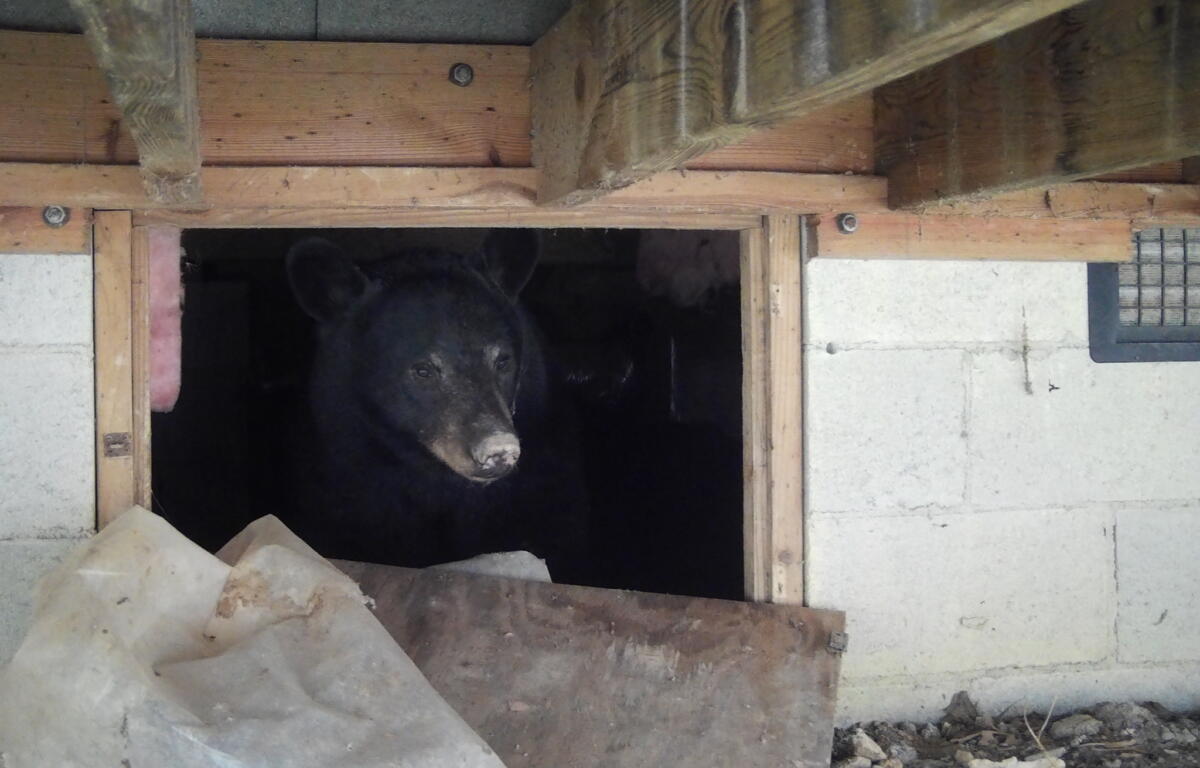

RALEIGH (828NewsNow) — The North Carolina Wildlife Resources Commission is urging residents to prepare their homes for the colder winter months due to black bears now actively searching for places to den.
According to a Nov. 13 news release, wildlife officials said late fall is when bears ramp up their search for a quiet, dry, dark den to call home for the winter months. Sometimes that search ends up in residential neighborhoods, officials said.
“It is increasingly common for black bears to den in communities under decks and storage sheds, crawlspaces, vacant homes or brush or debris piles in yards,” the NCWRC said in the release.
The NCWRC is advising the public to follow proven BearWise methods to discourage bears from choosing a location to den for the winter around homes or commercial property.
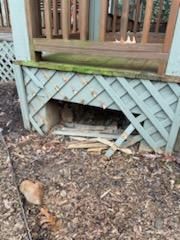
Photo by N.C. Wildlife Resources Commission
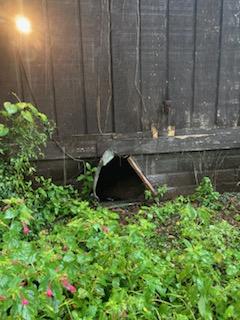
Photo by N.C. Wildlife Resources Commission
BearWise methods include the following:
- Close and lock pet doors, sheds, root cellars and outbuildings.
- Check under porches and decks for areas and openings where bears might curl up. Block openings as best as you can with thick plywood or by installing unwelcome mats or electrified wire. Decorative lattice will not keep out a determined bear.
- Reinforce crawlspace vents and doors with thick plywood, electrified wire or unwelcome mats. A large, adult bear can access your crawlspace through standard 8-by-16-inch foundation vents.
- Remove garbage, birdseed, pet food and food meant for other wildlife.
- Have a vacant home or cabin? Make sure to lock all ground level windows and doors and remove all foods and odors that could attract bears.
Black bears in North Carolina can start denning as early as October or as late as February, the release said, with some bears not denning at all. There are several factors that contribute to when bears start denning, with the main factor being food availability, which can be both natural foods and human-provided foods.
“Female black bears having cubs will always den, as the den serves as a safe place to give birth in from late December through February,” said Black Bear Biologist Jenna Malzahn in the release. “Male bears and females that aren’t pregnant may den later in the winter season or not all, due to the year-round availability of human-provided foods, such as birdfeeders, garbage and purposeful feeding by people.”
NCWRC staff said they’ve experienced an increase in bears denning under houses and decks because of increasing development, as well as increases in human and bear populations.
“We started receiving reports of bears checking homes for potential denning sites in early October this year. Any building or structure, occupied or not, can provide shelter for bears,” said Ashley Hobbs, the state’s BearWise coordinator. “Keep in mind, even large bears can squeeze into some really small spaces because they don’t have collarbones. The most common residential den sites we see reported are inside crawlspaces and underneath decks.”
NCWRC biologists advise removing any potential food sources and shore up your home now. Officials said if a bear den is discovered in a populated area or under a home, people are encouraged to co-exist with the bear through the end of denning season, which runs from October through April.
“Homeowners can safely coexist with denning bears until they leave in the spring,” said Malzahn. “Bears are only interested in getting their winter rest or, if it’s a female, caring for her cubs. Denning bears are not interested in engaging with people. Disturbances by people or pets, however, may cause a female to abandon her cubs. So that needs to be considered before making the decision to disturb a denning bear.”
If a resident discovers a den, NCWRC advises calling the N.C. Wildlife Helpline at 866-318-2401 or contact their local district wildlife biologist. A list is available at the NCWRC website.