


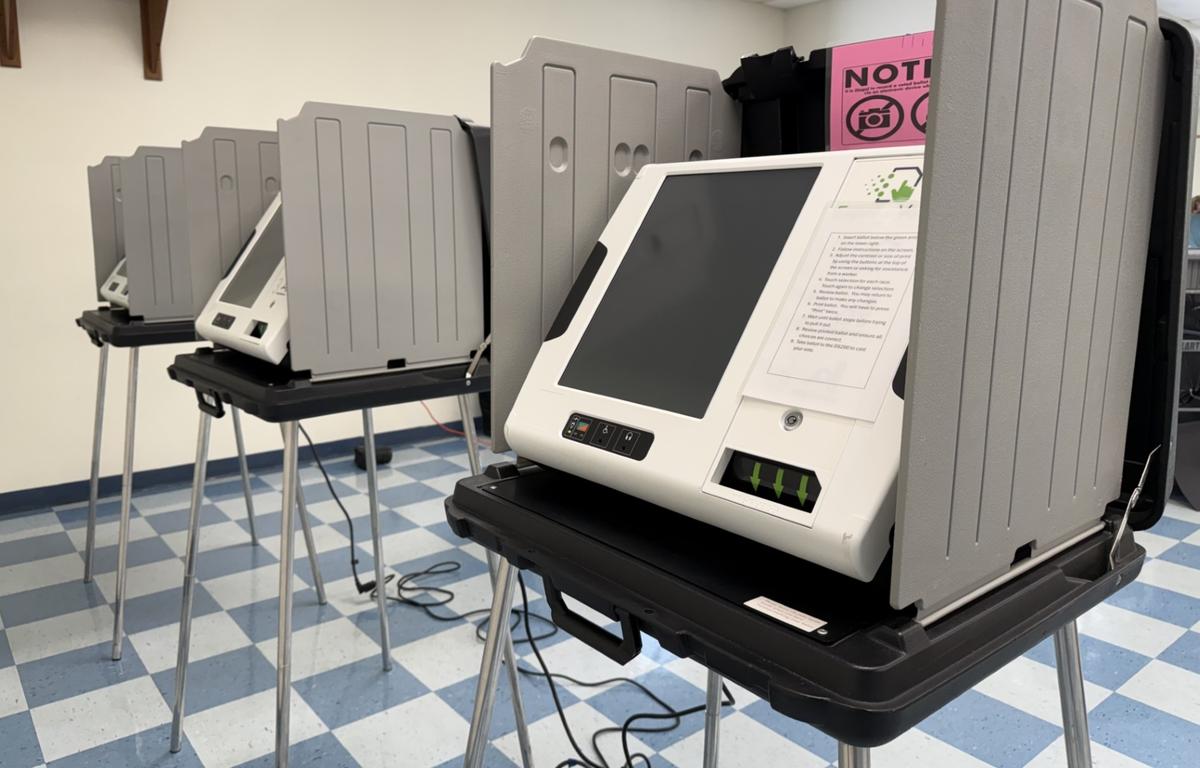

ASHEVILLE, N.C. (828newsNOW) — From who leads Asheville to how Buncombe County pays for affordable housing and open space, voters have some big decisions to make Tuesday, Nov. 3.
The general election will determine who holds several key local offices, who represents Western North Carolina in Raleigh and Washington, and whether Buncombe County can borrow another $70 million for housing and conservation projects.
There are also three proposed amendments to the North Carolina Constitution, including measures dealing with income taxes, property taxes and voter identification.
Early voting ended Saturday, Oct. 31, but voters who haven’t cast their ballots can still vote Tuesday.
Here’s a look at what’s at stake and what voters need to know before heading to the polls.
Asheville mayor and city council
Asheville Mayor Esther Manheimer is seeking a fourth term, facing a challenge from City Council member Kim Roney.
Both candidates have identified housing affordability and public safety as major concerns, but they differ on how the city should address those issues.
Manheimer has emphasized securing state and federal funding for Asheville’s recovery from Tropical Storm Helene, expanding affordable housing and rebuilding police staffing.
Roney has called for expanding the use of mental health professionals in emergency response, protecting neighborhoods from displacement and making city government more transparent.
The candidates also have differing views on how council members should communicate and conduct city business outside public meetings.
Read more: Asheville mayoral race: Where Manheimer and Roney stand.
Voters will also choose three members of Asheville City Council from a field of six candidates: Drew Ball, Maggie Ullman Berthiaume, Jeffrey Burroughs, S. Antanette Mosley, Sheneika Smith and Keith Young.
The election comes as Asheville continues recovering from Helene while facing questions about housing costs, homelessness, public safety and how to pay for city services.
Those concerns have been especially personal in neighborhoods such as Shiloh, where residents pressed candidates during an August forum about whether longtime homeowners will be able to afford to stay, whether aging infrastructure will be repaired and how neighborhoods will be protected from future storms.
Read more: Shiloh residents press Asheville candidates on neighborhood’s future.
County races and other contests
Buncombe County Sheriff Quentin Miller, a Democrat, is seeking another term against Republican Gary Parris.
Two Buncombe County Board of Commissioners districts also have contested races.
In District 1, Democrat Anna Stearns faces Republican Rob Stetson. In District 2, Democrat Lonnie Israel faces Republican Greg Parks.
Voters will also decide school board races, state legislative contests and judicial seats, depending on where they live.
In North Carolina’s 11th Congressional District, Democrat Jamie Ager, Republican Jennifer Capps Balkcom and Libertarian Travis Groo are running for the seat.
The U.S. Senate race features former Democratic Gov. Roy Cooper, Republican Michael Whatley, Libertarian Shannon Bray and Green Party candidate Michael Dublin.
Voters statewide will also decide a North Carolina Supreme Court race between Democratic incumbent Anita Earls and Republican Sarah Stevens, along with other judicial contests.
Not every race appears on every ballot. Voters can check their sample ballots through the N.C. State Board of Elections.
For a broader look at the local races, see 828newsNOW’s candidate and voting guide.
Two county bonds totaling $70 million
Buncombe County voters will decide whether to authorize $40 million in bonds for affordable housing and $30 million for open space.
The housing bonds would help finance housing for low- and moderate-income residents, including related infrastructure and land acquisition. The open space bonds would support land conservation, parks, greenways, trails and other outdoor recreation projects.
The county is seeking the same amounts voters approved in 2022 — $40 million for housing and $30 million for open space. County officials say much of the earlier funding has been committed to projects, but more money is needed to meet long-term housing and conservation goals.
The new bonds would allow the county to borrow another $70 million, to be repaid with interest.
The estimated total repayment cost is approximately $111.1 million, including $41.1 million in interest. That breaks down to $63.5 million for housing and $47.6 million for open space.
County estimates put the combined property tax impact at about $43 a year for a home valued at $446,500, the median home value used in the county’s calculations. Actual costs would depend on a property’s taxable value and the terms of the borrowing.
The county has not committed the new bond money to a final list of projects. Those decisions would be made later, subject to county approval and oversight.
The two bond questions are separate. Voters can approve one, both or neither.
Read more: Buncombe voters to decide $70 million in affordable housing, open space bonds.
Three proposed constitutional amendments
North Carolina voters will also decide whether to make three changes to the state Constitution.
One would lower the maximum allowable state income tax rate from 7% to 3.5%. The change would not automatically lower anyone’s current income tax bill, but it would limit how high the rate could be set in the future.
Another would require the General Assembly to establish limits on property tax increases by local governments.
The amendment does not specify what those limits would be or how they would work. Lawmakers would have to determine those details through future legislation, meaning voters would be approving a constitutional requirement without knowing exactly how it would affect future local property tax decisions.
Buncombe County commissioners voted unanimously in October to oppose the proposed property tax amendment, raising concerns that restrictions could make it harder for local governments to fund services and respond to emergencies.
The third amendment would expand the Constitution’s photo identification requirement to cover all methods of voting, rather than only in-person voting. State law already requires identification for absentee voting, with exceptions available.
Voters will mark FOR or AGAINST each proposed amendment.
Read more: What’s on the 2026 Buncombe County ballot besides candidates?.
What to know before voting Tuesday
Polls will be open from 6:30 a.m. to 7:30 p.m. Tuesday, Nov. 3. Anyone in line when polls close will be allowed to vote.
Unlike early voting, Election Day voters must go to their assigned precinct.
There is one polling place change in Buncombe County. Voters in Precinct 60.4 who previously voted at Abiding Savior Lutheran Church in Fairview will now vote at A.C. Reynolds High School, 1 Rocket Drive, Asheville.
North Carolina voters are asked to show an acceptable photo ID. Those who don’t have one may still be able to vote by completing an ID Exception Form or using the provisional ballot process.
Curbside voting is available at all polling places for voters who cannot enter because of age or disability. Voters can pull up to the designated curbside voting area, where an election official will assist them.
Voters returning absentee ballots must make sure their ballots reach the county elections office by 7:30 p.m. Tuesday. A ballot postmarked by Election Day but received later will not count.
Absentee ballots cannot be returned to Election Day polling places. They may be delivered to the Buncombe County Election Services office at 35 Woodfin St. in Asheville by the deadline.
Voters can find their assigned polling place, check their registration and view their sample ballot using the state’s voter search tool.
Unofficial election results will begin coming in after polls close Tuesday night. The results will not be final until the required canvass process is completed.