


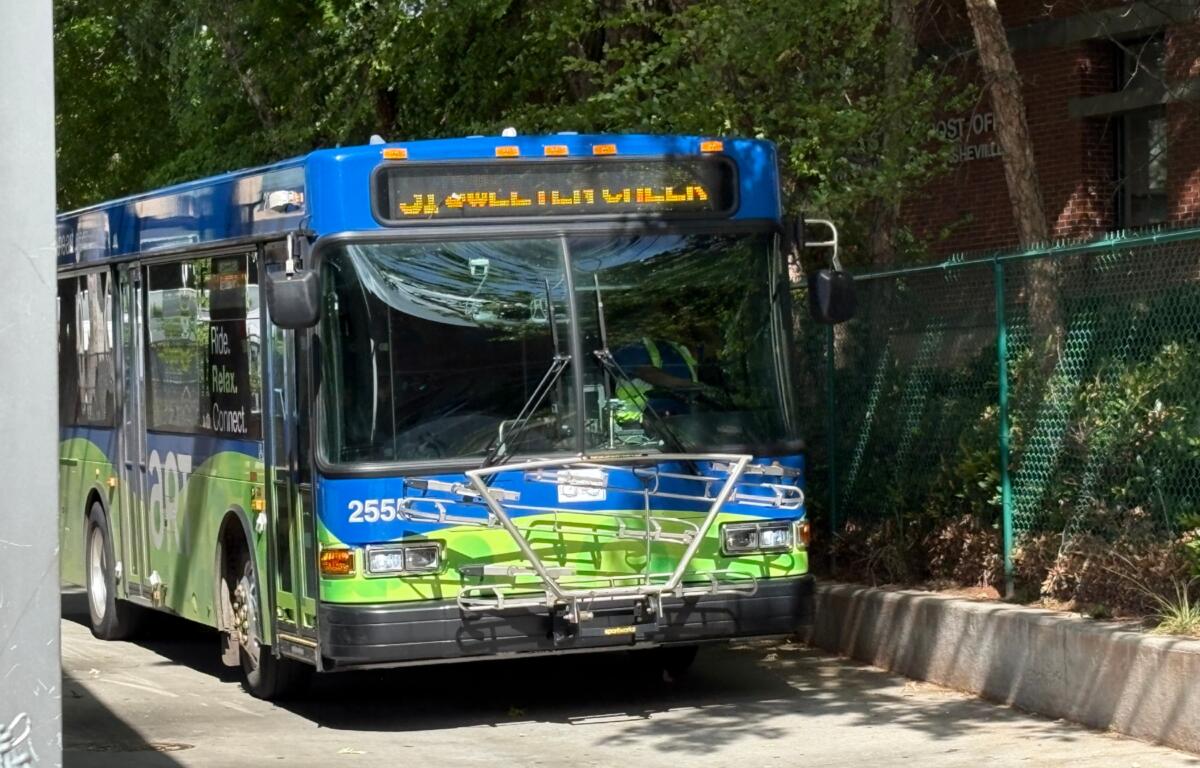

ASHEVILLE, N.C. (828newsNOW) — Asheville residents could see major changes to the city’s public transportation system under a proposed redesign that would increase bus frequency on major corridors, improve transfers and make routes easier to understand — but some neighborhoods could lose direct service.
The Asheville Rides Transit (ART) system is considering a new network designed to shift more resources toward areas with higher demand while maintaining service in neighborhoods where residents rely heavily on buses.
City transit officials presented the draft network July 1 to the Asheville Planning and Zoning Commission as part of a Transit Network Comprehensive Operational Analysis that began in 2025.
The study, conducted with consultant Jarrett Walker and Associates, examined how well the current system serves riders, collected public feedback and developed options for improving service.
“This is really about trying to improve the transit system so it works better for the community,” said Chris Whitlock, the city’s transit division manager.
The proposed redesign would move ART closer to a system focused on ridership, with more frequent service along major corridors while still providing coverage in lower-income areas and communities with higher transit needs.
More frequent service on major routes
Under the draft plan, service would increase along several major corridors, including:
- Hendersonville Road
- Patton Avenue
- Tunnel Road
- McDowell Street
- Hillcrest
- River Arts District
Transit officials said the redesign would create a more predictable system by increasing frequency and improving connections between routes.
One of the biggest proposed changes is a “pulse” system at the downtown ART Station, where buses would arrive and depart at scheduled intervals to make transfers easier.
Currently, buses arrive and leave throughout the hour, meaning riders transferring between routes may face long waits.
Under the proposed system, most buses would arrive around the same times, allowing riders to transfer within a shorter window.
“We want to reduce transfer times overall,” transit officials said.
Commissioners said the pulse system could be one of the most important improvements for riders.
One commissioner asked whether the pulse system could be implemented even if City Council does not approve the entire proposed network.
Transit officials said some pieces could potentially be incorporated into the current system, but fully implementing the model would require major schedule changes.
“We could make some routes more aligned with the pulse system, but I don’t think we can do all of them,” transit staff said.
Officials said the goal is to create a system that is easier for riders to understand and use.
Some areas could lose direct service
The proposed redesign would improve frequency in some areas while removing or changing service in others.
Areas identified for possible service reductions include:
- Beaverdam
- Grove Park
- The Social Security office area
- MAHEC
- Tanger Asheville outlet mall
- A portion of Haywood Road west of Patton Avenue
Transit officials said they have received significant feedback about some of those proposed changes, particularly the MAHEC area and the Social Security office.
Staff is reviewing whether those locations can remain part of the network.
Adding MAHEC back into the proposed route would add about 14 minutes of travel time, which could reduce planned service frequency along Hendersonville Road from every 30 minutes to every 45 minutes.
Adding the Social Security office stop would add about 16 minutes and could disrupt the proposed hourly schedule.
Commissioners questioned how the changes would affect people who depend on transit for work, medical appointments and daily needs.
Another commissioner raised concerns about changes near Tunnel Road, noting the area has many employers and could benefit from stronger transit connections.
“Encouraging employers to be there is one way to do that, and I think transportation access for those employers is possibly part of it,” he said.
City says more residents could gain access to jobs
Transit officials said the proposed network could improve access to jobs and increase the number of residents who live near more frequent service.
The study found the draft network could increase access to jobs within 45 minutes by about 10 percent overall.
Officials said low-income residents could see a 15 percent improvement in job access, while residents of color could see a 16 percent improvement.
However, the proposal would slightly increase the number of Asheville residents who live more than a half-mile from transit service.
Under the current system, about 39 percent of residents are more than a half-mile from transit. Under the draft network, that number would increase to about 42 percent.
Transit officials said the change reflects a tradeoff: fewer routes operating less frequently in exchange for more frequent service along key corridors.
ART ridership still recovering
The proposed changes come as ART continues working to rebuild ridership following the pandemic.
Transit officials said annual ridership is currently around 400,000 to 500,000 trips.
Before COVID-19, the system recorded nearly 2 million trips annually.
Officials said making service more frequent, reliable and easier to navigate is a key part of encouraging more people to use public transportation.
Public feedback will help shape final plan
The city received more than 1,350 responses during its latest public survey about the proposed network.
Officials said they will present a summary of public feedback to City Council later this month.
If approved, the changes would not take effect until July 2027 or later, giving the city time for additional outreach with residents, businesses and communities affected by route changes.
Transit officials said they will continue reviewing feedback before bringing a final recommendation forward.