


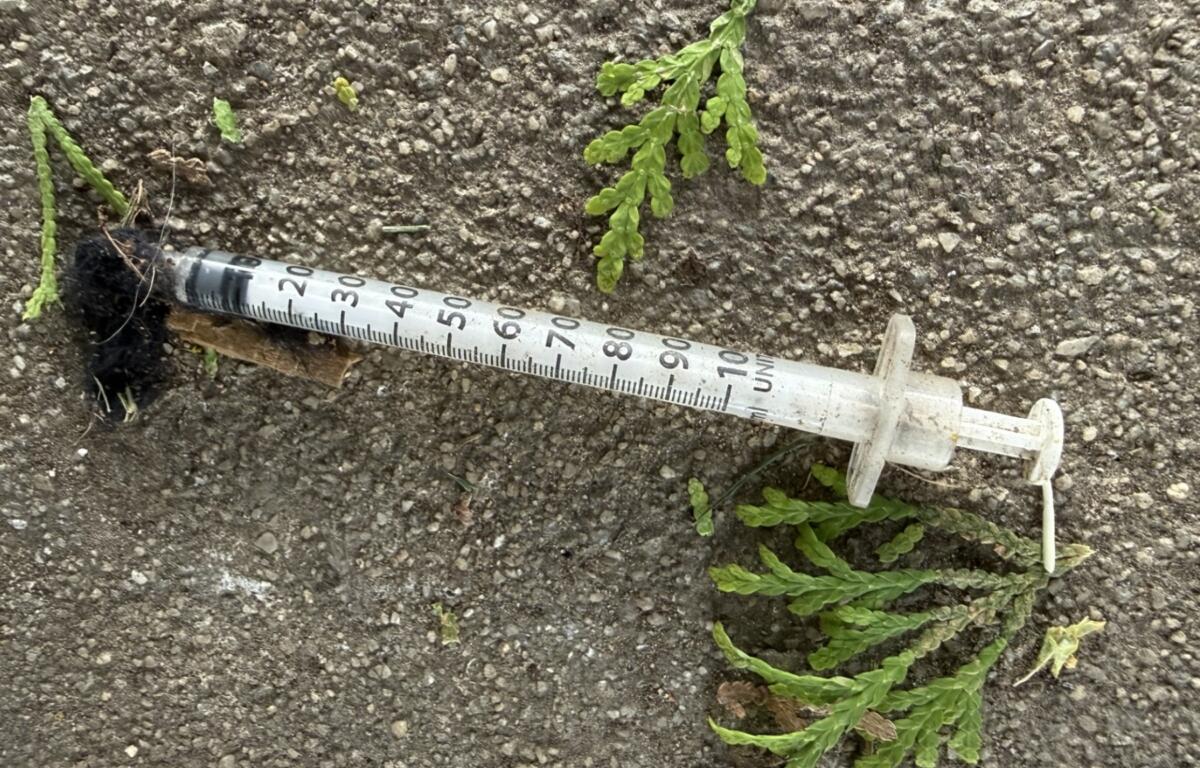

ASHEVILLE, N.C. (828newsNOW) — Buncombe County continues to rank among North Carolina’s hardest-hit areas for fentanyl-related deaths, and Asheville police say community members remain a key part of efforts to identify drug activity — as long as tips include enough detail to be actionable.
According to the North Carolina Office of the Chief Medical Examiner, Buncombe County ranks fifth in the state for fentanyl-positive deaths per 100,000 residents, based on data from April 2025 through March 2026. The report, updated in June 2026, shows the county has continued to climb state rankings, after previously ranking seventh for year-over-year fentanyl overdose deaths per capita.
As overdose deaths continue to drive public safety concerns, the Asheville Police Department said they rely heavily on community reports to identify suspected drug activity — but not all tips are equally useful.
“We triage complaints based on the information we’re given,” APD Capt. Joe Silberman said. “We only have so many officers and detectives, so we’re looking at how much detail there is and whether it’s something we can realistically investigate.”
Silberman said vague complaints — such as someone reporting they smelled marijuana somewhere in a neighborhood — rarely provide enough information to launch an investigation. But tips that include addresses, descriptions of suspicious activity, vehicle information and other details can often become investigative leads.
“If somebody says, ‘I know they’re selling drugs out of this house,’ and provides enough information for us to start an investigative lead, that’s something we can work with,” he said.
Investigators say stronger tips include specific addresses, descriptions of vehicles, patterns of activity and information about how long suspected behavior has been occurring.
“The word is detail,” Silberman said. “The more detail we have, the more efficiently we can use our resources.”
Fentanyl remains top enforcement priority
APD says its enforcement efforts are focused primarily on fentanyl and other high-risk narcotics because of their connection to overdose deaths across the region.
“Fentanyl is actively killing human beings on a regular basis,” Silberman said. “That’s what moves the needle.”
While marijuana remains illegal in North Carolina, Silberman said detectives prioritize investigations involving fentanyl, firearms and organized drug trafficking because of the immediate danger those cases pose to the community.
Specialized undercover detectives and street crime units routinely investigate complaints involving fentanyl sales and other felony drug offenses, he said.
“We have plenty of those cases,” Silberman said. “That’s a regular occurrence.”
Anonymous tips encouraged
Silberman encourages residents to use APD’s anonymous Tip411 reporting system, which allows investigators to ask follow-up questions while protecting the identity of the person submitting the tip.
“It is legitimately anonymous,” Silberman said. “If you don’t tell me who you are, I don’t know who you are.”
The ability to continue communicating with investigators after submitting a tip often makes a significant difference.
“If you’re willing to have a dialogue with us, that’s going to be much more helpful than sending a tip and immediately closing communication,” he said.
Whenever possible, Silberman said, investigators prefer to protect the identity of people reporting suspected criminal activity.
“If I don’t need your testimony to establish probable cause, I would really prefer not to put your name in a case file,” he said.
Housing patrol initiative planned
APD and the Housing Authority of the City of Asheville are preparing to launch a one-year pilot program in July that will increase police presence in public housing communities.
Under the plan, officers assigned to a newly restructured Housing Team will conduct regular patrols, engage with residents on quality-of-life concerns and assist staff during inspections of vacant units.
APD said the initiative is designed to improve safety and strengthen relationships in public housing communities through sustained engagement and targeted enforcement.