


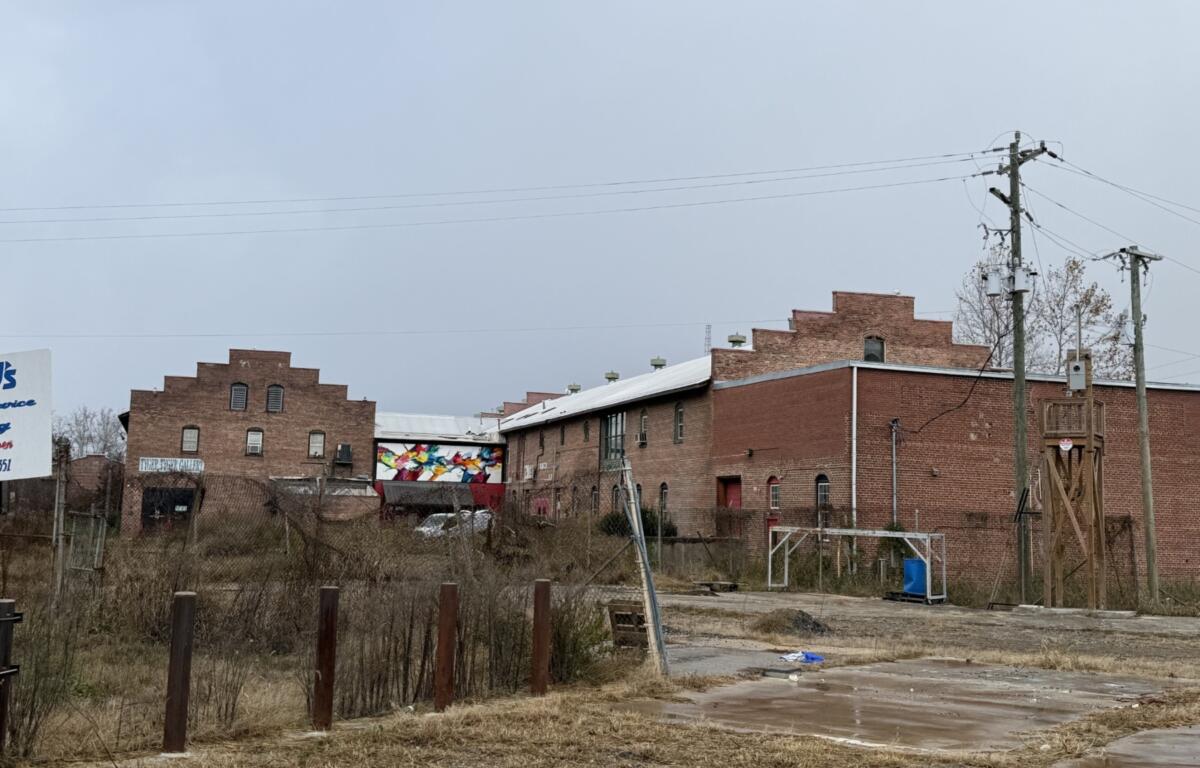

ASHEVILLE, N.C. (828newsNOW) — Asheville’s $30 million in federal disaster recovery funding remains set aside for flood-damaged commercial districts, but businesses and nonprofit organizations hoping for assistance still don’t know when the money will become available.
City officials confirmed this week that no decisions have been made about how to spend the money and none of it has been redirected away from commercial areas along the French Broad and Swannanoa rivers.
The clarification comes after representatives of the River Arts District raised concerns during Tuesday’s City Council meeting about the future of the funding and whether nonprofit organizations would have a chance to apply for it.
The $30 million is part of Asheville’s $225 million allocation through the federal Community Development Block Grant Disaster Recovery program following Tropical Storm Helene.
In a response to questions from 828newsNOW, city officials said staff members are still gathering information about storm damage, current conditions and recovery needs in the commercial corridors.
“The City has not made any funding decisions regarding these funds, and there have been no changes or redirection of them away from commercial districts,” the city said.
The city expects to publish a preliminary program manual by the end of December, as required by the federal grant. Staff members plan to return to City Council in early 2027 with more detailed program options and recommendations for moving forward.rn to City Council in early 2027 with more detailed options, feedback from stakeholders and recommendations for moving forward.
No date has been announced for accepting applications or awarding money.
Concerns have been building
Questions about the funding have been circulating for months.
During a September workshop, City Council members discussed several possible uses for the $30 million, including assistance for individual businesses, flood mitigation, greenways and larger public infrastructure projects.
Some council members questioned whether the money would have a greater impact if it were combined with other funding sources to pay for larger improvements rather than divided among individual projects.
Mayor Esther Manheimer raised the possibility of combining the federal money with state funding, tourism dollars and other resources to create a much larger investment in Asheville’s river corridors.
No decisions were made, and council members asked staff for more information before moving forward.
The concerns surfaced again in October during a meeting of Asheville’s Helene Economic Recovery Board.
Board Chairman Jeffrey Burroughs questioned whether the city might redirect some of the money or change the application process outlined in its recovery plan.
At the time, city economic revitalization program lead Charlie Savage acknowledged that discussions about possible changes had taken place but said nothing had been formally proposed.
The issue returned to City Council on Tuesday, when River Arts District advocates urged the city to keep the funding available for flood-damaged commercial districts and allow nonprofits to compete for assistance.
Could the RAD Creative Campus qualify?
One project that could potentially seek funding is the proposed RAD Creative Campus, an arts development planned for Lyman Street in the River Arts District.
The project would involve redeveloping existing buildings to provide space for artists and other creative activities.
City officials said the project has not been ruled out.
“Because no funding decisions have been finalized, there is nothing within the current Action Plan that would preclude projects such as the proposed RAD Creative Campus from being eligible,” the city said.
That doesn’t mean the project will receive money.
The city said any future distribution of funds to nonprofit organizations or other nongovernmental entities will be handled through a competitive application process.
However, it remains unclear how much of the $30 million might be available through that process and whether some of the money could be used for larger city-directed projects, as discussed during the September workshop.
City officials also confirmed that no formal amendment has been proposed to Asheville’s federal disaster recovery action plan.
Parks funding is separate
The city also addressed questions about a $30.375 million budget amendment approved by City Council on Tuesday.
Despite the similar amounts, that money is separate from the $30 million designated for commercial district recovery.
The amendment transferred previously approved federal disaster recovery funds into the city’s General Capital Projects Fund to support restoration of parks damaged by Helene.
Of that amount, $9 million is designated for the Azalea Parks and Infrastructure Recovery Project, while $21.375 million is allocated to the French Broad River Parks Recovery Project.
The money had already been approved for those projects. Tuesday’s action moved it into a different city fund without changing the allocations.
City officials emphasized that the transfer did not take any money away from the commercial district recovery program.
For businesses and organizations still trying to recover from Helene, the bigger questions remain unanswered: Which projects will qualify for the $30 million, how much assistance will be available and when will the money begin reaching the commercial districts?
The city expects to provide more answers when staff returns to council early next year.