



ASHEVILLE, N.C. (828newsNOW) — At a Biltmore Village community meeting today, Asheville city planners provided an update on Tropical Storm Helene recovery in the historic neighborhood. Public input on the plan is wanted.
The Biltmore Village Infrastructure Recovery Project drop-in input session was held from 11 a.m. to 1 p.m., Wednesday, July 22, at Standard Pizza Company, 755 Biltmore Ave., Asheville, N.C.
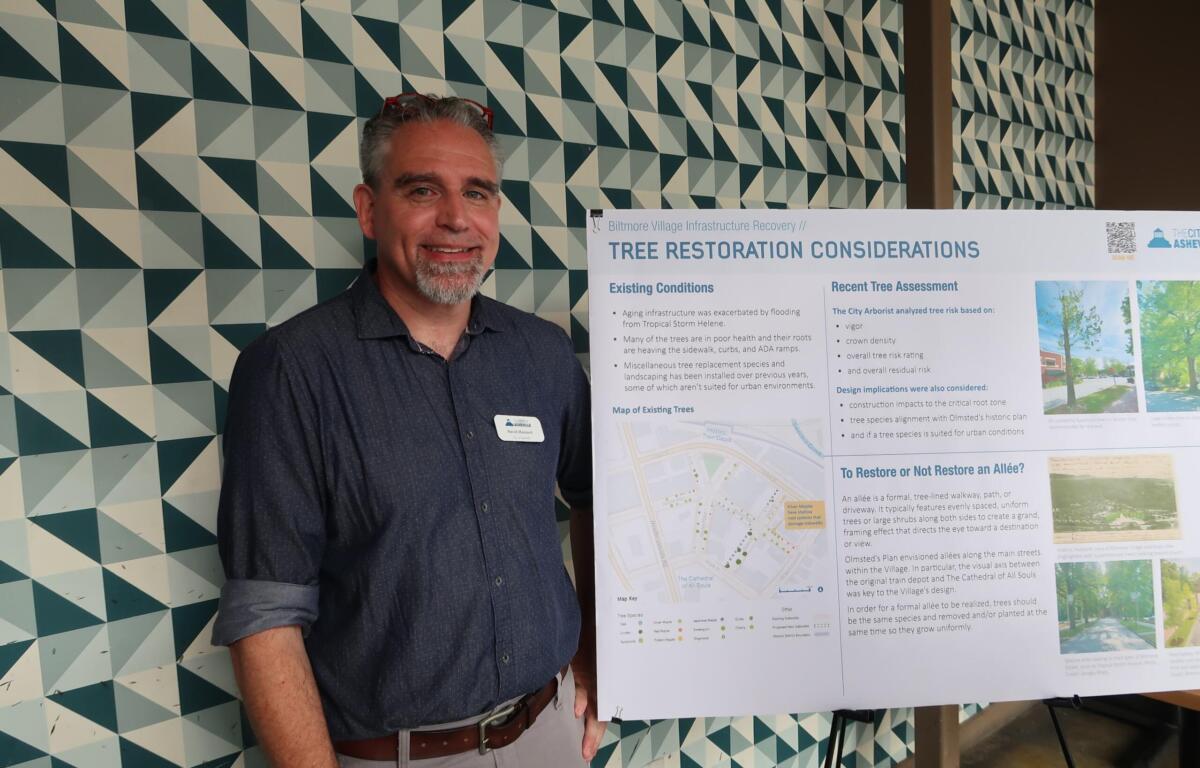
Attendees were given the opportunity to mingle with city planners, review recovery plans on large bulletin boards and share their opinions on plan specifics like tree preservation and sidewalk alterations.
While the city has a good idea of what the neighborhood improvements will entail, nothing is final, explained David Hazzard, an urban designer for the city of Asheville.
“Decisions have not been made. That’s what this whole public input process is,” said Hazzard. “Just looking at all the scientific and engineering-based factors, but then also the more social and community factors.”
Hazzard and other city planners at the meeting encouraged attendees to share their feedback through comment cards or the project website, www.publicinput.com/bv_helene, where other members of the public are invited to bring Biltmore Village input.


Hazzard explained that the improvements slated for Biltmore Village are infrastructural. The city received a $2.5 million grant from the United States Department of Commerce to do the restoration work.
“What that work looks like is restoring the brick sidewalks and bringing them into compliance with accessibility codes, meaning trip hazards and the ramps and so forth, to make sure that they are off their current codes when we repair and restore those brick sidewalks,” Hazzard said. “In addition to that, we’ll be working at resetting and restoring the granite curbing in the core area.”


Hazzard said that restoration of Biltmore Village will fuse modern upgrades with historic detail. Some of the outlined ideas were based off of original designs by landscape architect Frederick Olmsted.
“What we’re looking at in the restoration of the infrastructure is, is there areas where we can bring back some of the elements of Olmsted’s original plan? Largely, key components of that plan were the actual views, when people arrived on the train station, looking at All Soul’s Church,” Hazzard said.
Another thing the planners must consider is what to do about the trees of Biltmore Village. Many of the trees in the neighborhood are over 100 years old, but create hazards out of compliance with ADA standards, such as roots breaking through the sidewalk.
“We’re looking at tree health and weighing how much should we try to restore it from its historic perspective? And how much do we look at just safety risks and restoring it from an infrastructure stance?” Hazzard shared. “That’s what we’re looking for today. Input from the community to make sure that we understand the community’s desires.”
For more information, visit www.publicinput.com/bv_helene.