



ASHEVILLE, N.C. (828newsNOW) — The Buncombe County Board of Commissioners approved a new multiyear funding agreement for public schools, reviewed an external financial audit and received updates on public health, tourism and zoning during its Tuesday, Jan. 6, meeting.
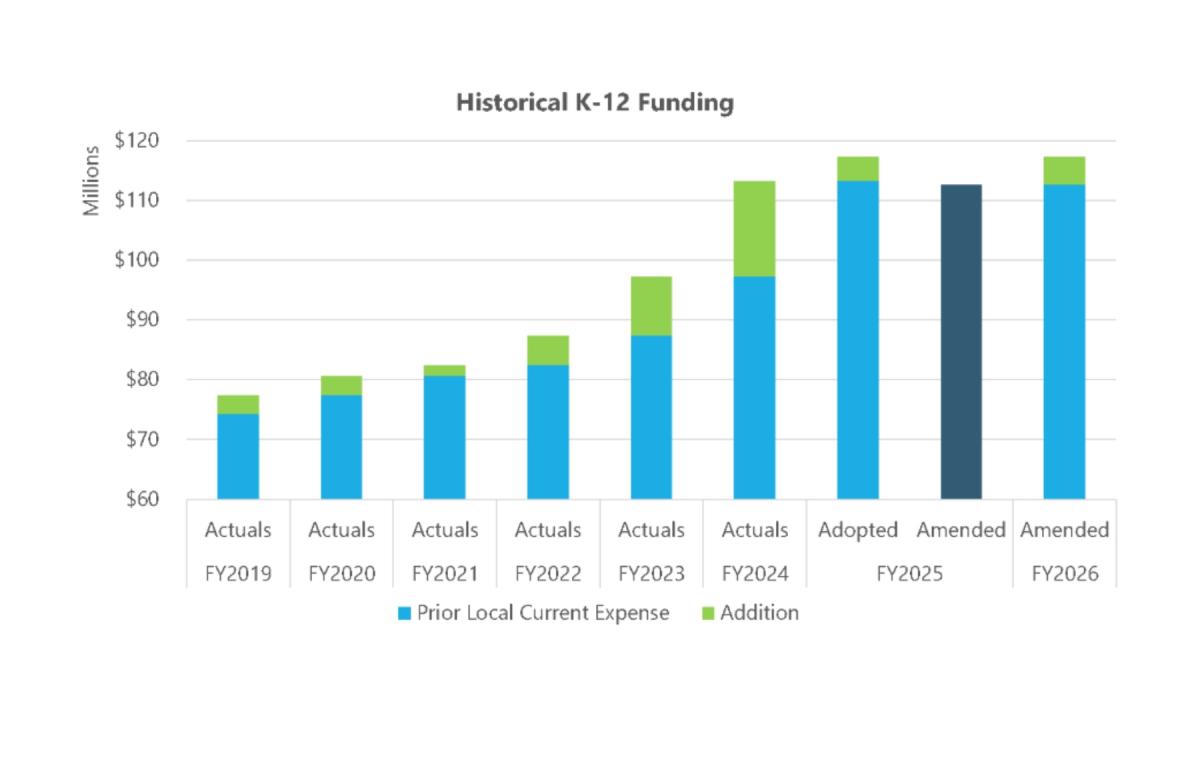
Commissioners approved a three-year agreement outlining a funding formula for Asheville City Schools and Buncombe County Schools. Under the plan, school funding will equal 37.76 percent of the county’s combined 12 months of property and sales tax revenues from March through February preceding the fiscal year. Based on last year’s revenues, the formula would provide about $119 million for schools, with funding expected to grow annually.
Funds would be divided between the two systems based on average daily membership, with approximately 85 percent allocated to Buncombe County Schools and 15 percent to Asheville City Schools. The agreement includes an automatic adjustment: if certified enrollment increases by more than 2 percent from the prior year, the base funding percentage will rise by 0.5 percent; if enrollment drops by more than 2 percent, the percentage will decrease by the same amount.
County officials said the agreement adds predictability to school funding, the largest expense in the county’s general fund, which has grown to $117 million, up from $87 million in fiscal year 2023. The agreement notes that public school funding is primarily a responsibility of the state legislature and may be modified or terminated by future boards.
Both school systems also presented performance updates.
Buncombe County Schools reported students earned more than 19,000 hours of college credit, 31 schools met or exceeded growth targets, and the cohort graduation rate reached 91.4 percent, above the statewide average of 88 percent. The district reported an ACT composite score of 19.1, compared with the statewide average of 18.2.
Asheville City Schools reported a 93 percent cohort graduation rate, a dropout rate of 1.08 percent, and third-grade reading proficiency of 61 percent, exceeding the statewide rate of 47 percent. The district also reported that 72 percent of students scored 19 or higher on the ACT, compared with 55 percent statewide.
In a public health update, Buncombe County Health Director Dr. Ellis Matheson confirmed three cases of measles involving siblings in the same household. The family had recently traveled to Spartanburg County, South Carolina, where a large measles outbreak is ongoing. The cases are the first confirmed measles cases in Buncombe County in decades.
Commissioners also recognized Cooperative Extension Director Holly Jordan, who received the 2025 Governor’s Award for Excellence for Outstanding State Government Service. The award cited efforts including disaster-related donation drives, agricultural supply deliveries and assistance to farmers and families following Hurricane Helene.
The Tourism Development Authority reported that lodging sales for fiscal year 2025 declined 23 percent from the previous year. Despite the drop, officials said Asheville and Buncombe County continued to receive national recognition as travel destinations. The TDA plans to invest $12.4 million in hotel tax revenue into eight community projects and has awarded $2.2 million through the Always Asheville Fund to support local businesses. Officials also projected upcoming conferences and sporting events in 2026 could generate about $12 million in direct spending.
Commissioners also reviewed results from the county’s fiscal year 2025 external audit, which received an unmodified, or clean, opinion. The audit reported a $1.6 million increase in the general fund balance and a reduction in long-term debt to $396.5 million. The county maintains triple-A bond ratings from major credit agencies.
In other business, commissioners unanimously approved a rezoning request for 13.1 acres near Ferry Road from R-1 to R-3 residential, citing consistency with the county’s 2043 Comprehensive Plan.