


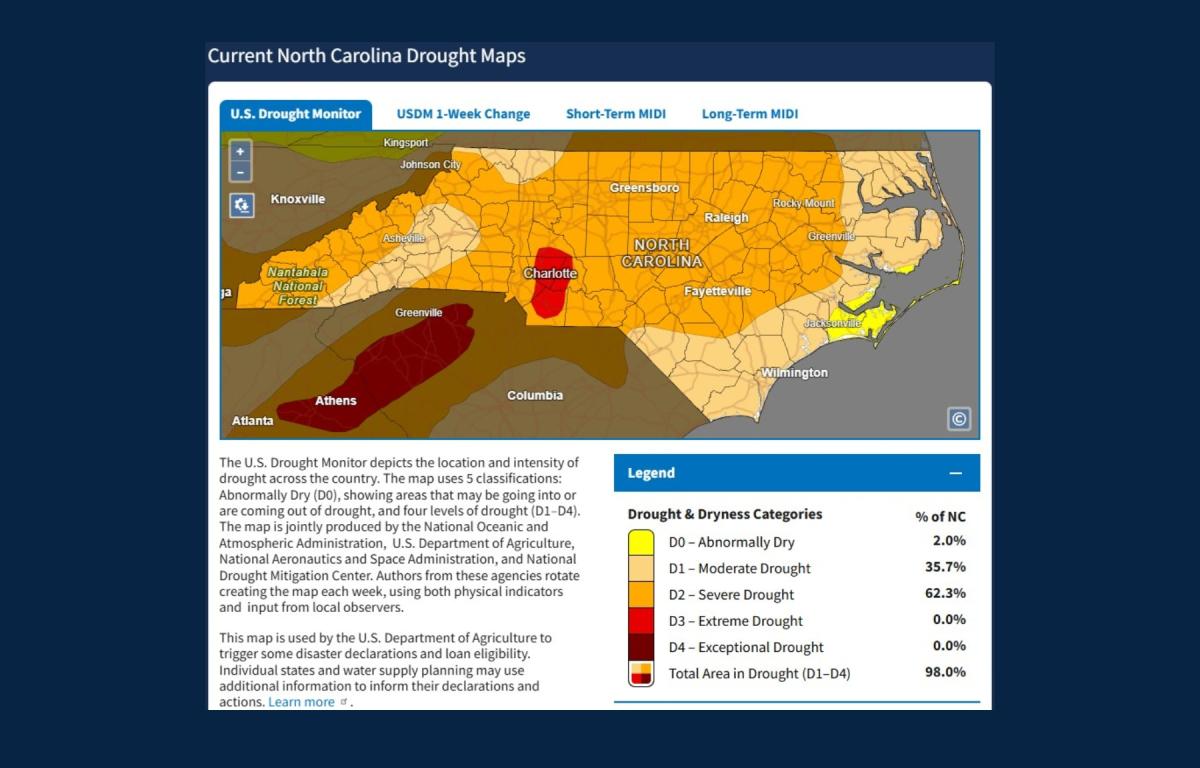

ASHEVILLE, N.C. (828newsNOW) — Drought conditions intensified across Asheville and much of Western North Carolina this week, with new data showing the vast majority of the region locked in severe dryness despite recent snowfall.
The latest update from the U.S. Drought Monitor shows 98 percent of North Carolina is now experiencing some level of drought. More than 62 percent of the state is classified in “Severe Drought” (D2), including Buncombe and many surrounding mountain counties.
In Western North Carolina, Buncombe, Haywood, Henderson, Madison, McDowell, Mitchell, Yancey, Avery, Watauga, Ashe, Wilkes, Caldwell, Burke, Rutherford, Polk, Transylvania, Jackson, Macon, Swain, Graham and Cherokee counties are all experiencing drought conditions ranging from moderate to severe, according to the report.
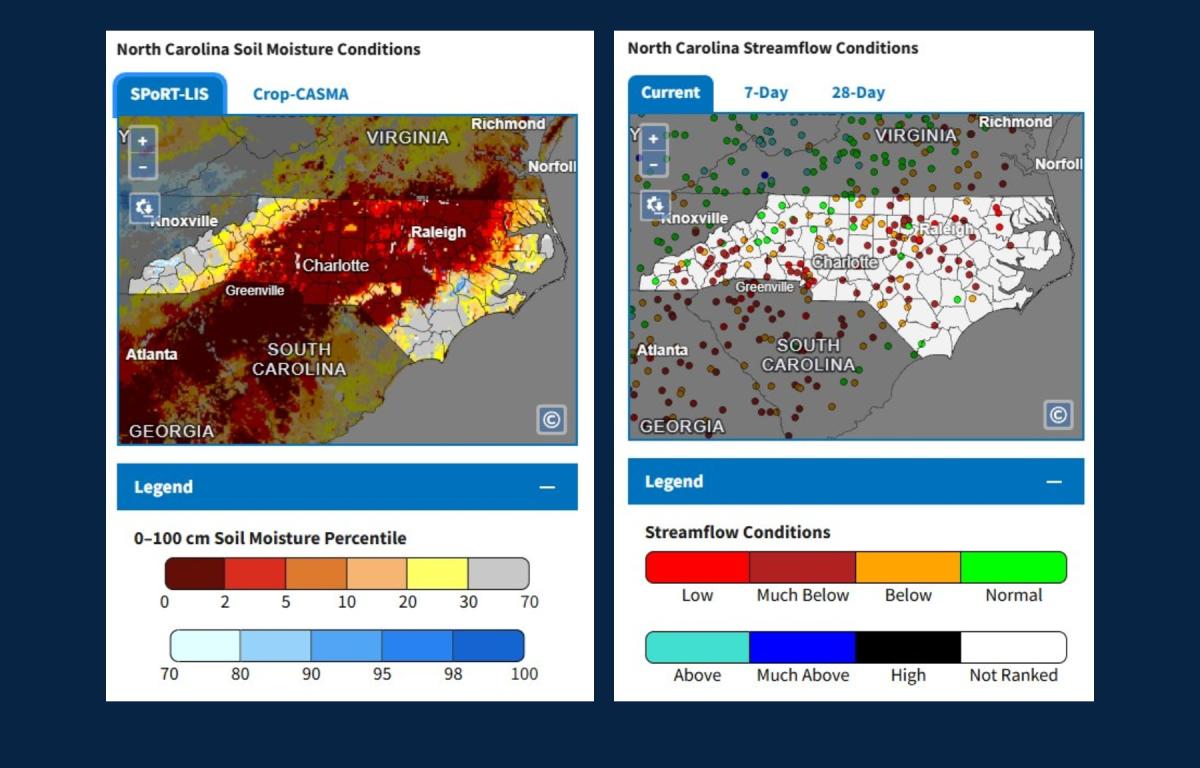
Buncombe County, home to Asheville, is listed in severe drought, while Henderson and Transylvania counties are in moderate drought. Across the mountains and foothills, streamflows are running well below normal, and soil moisture levels remain extremely low for this time of year.
Meteorologists say recent winter weather has done little to ease the growing moisture deficit.
North Carolina has received several rounds of snow over the past two weeks, with some higher elevations picking up more than a foot. But snow totals can be misleading when it comes to drought relief.
An inch of snow does not equal an inch of rain. Because snow contains air pockets between flakes, it typically melts down to much less liquid water. Under the standard 10-to-1 snow-to-liquid ratio used by meteorologists, 10 inches of snow melts to about 1 inch of rain. Drier, powdery snow can yield even less water, while heavier, wetter snow produces slightly more.
As a result, even significant snowfall across the mountains has translated into only modest liquid totals — not nearly enough to erase the long-term rainfall deficit that has been building for months.
Soil moisture maps show parts of central and Western North Carolina ranking in the lowest percentiles compared with historical averages for this time of year. Stream gauges across the region are also reporting low to much-below-normal flows, raising concerns about water supplies and agricultural impacts as the growing season approaches.
While no mountain counties are currently classified in “Extreme Drought” (D3), that designation has emerged in parts of the Charlotte metropolitan area. Forecasters warn that without widespread, soaking rainfall, drought conditions could continue to intensify across western North Carolina in the weeks ahead.