


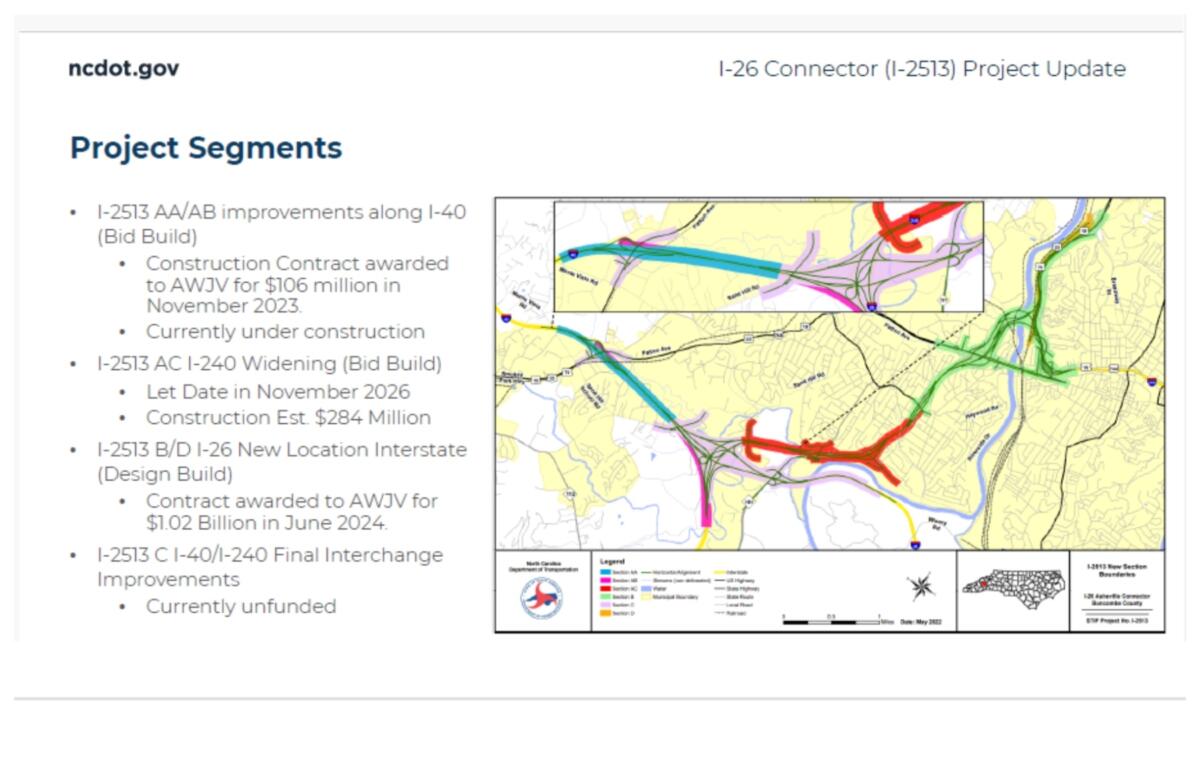

ASHEVILLE, N.C. (828newsNOW) — Federal officials have cleared the way for the next phase of the long-planned I-26 Connector project in Asheville, allowing work on the northern section to move forward, the North Carolina Department of Transportation said.
The Federal Highway Administration recently completed a re-evaluation of the project’s plans, which were updated after a Record of Decision was issued in May 2023. The review found the revisions would not result in significant new environmental impacts requiring additional documentation.
State transportation officials said the approval keeps one of Western North Carolina’s largest infrastructure projects on track.
“This approval reflects continued progress on one of western North Carolina’s most significant infrastructure projects,” Division 13 Construction Engineer Nathan Moneyham said in a statement. “The I-26 Connector will enhance mobility, improve safety and support long-term growth in the region.”
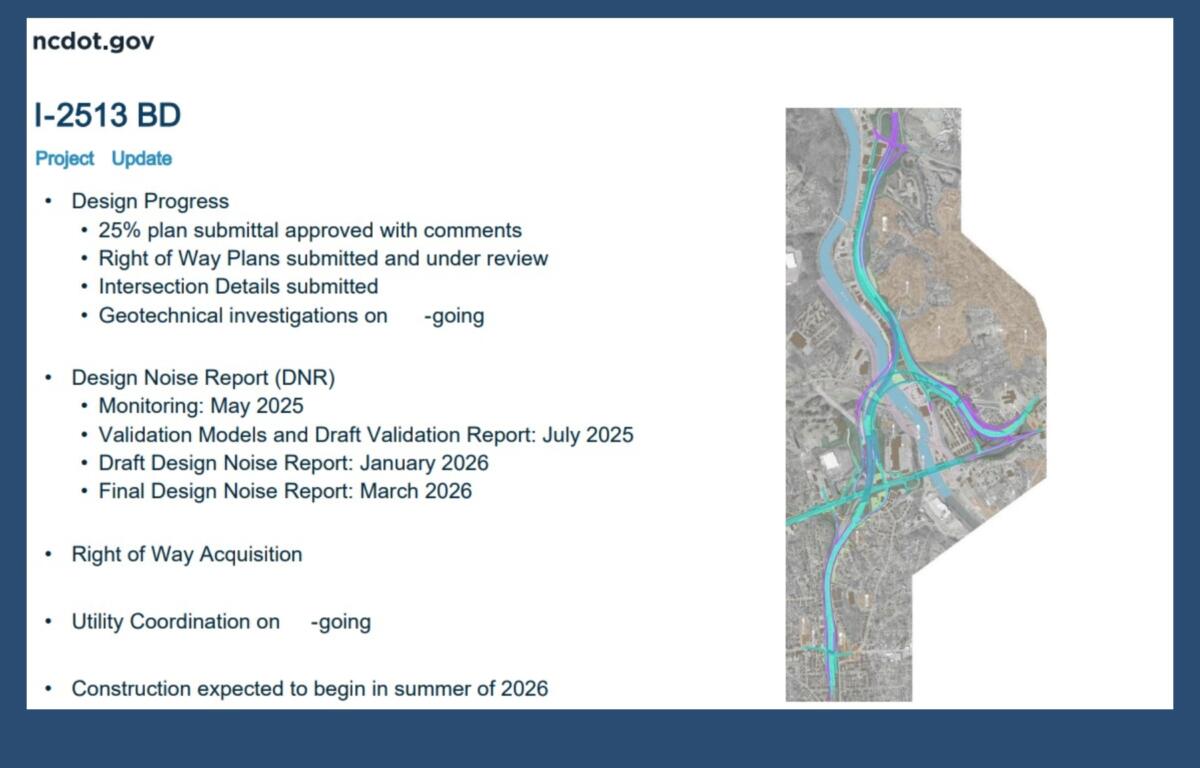
Construction on the northern section, known as I-2513 B and D, remains on schedule. Crews are expected to begin minor work this weekend, including traffic shifts and installation of temporary concrete barriers along Interstate 26 between Hill Street and Broadway Street. Heavier construction is expected to begin next month, with minimal traffic disruptions anticipated.
The northern section, the largest portion of the project, will connect Interstate 26 in southwest Asheville to U.S. 19/23/70 northwest of the city. The connector is intended to improve safety, ease congestion and modernize infrastructure along one of the region’s busiest corridors.
Planned improvements include widening I-26 and I-240 from four to six lanes between Haywood Road and Patton Avenue, upgrading interchanges at Haywood Road and Broadway Street, improving Riverside Drive and constructing a new interstate alignment for I-26 and the I-26/I-240 interchange.
The re-evaluation also reviewed potential noise barriers identified in earlier studies. Officials said no significant changes to noise abatement are expected, though a final design report is still being developed.
More information about the project is available through the North Carolina Department of Transportation.ates.