


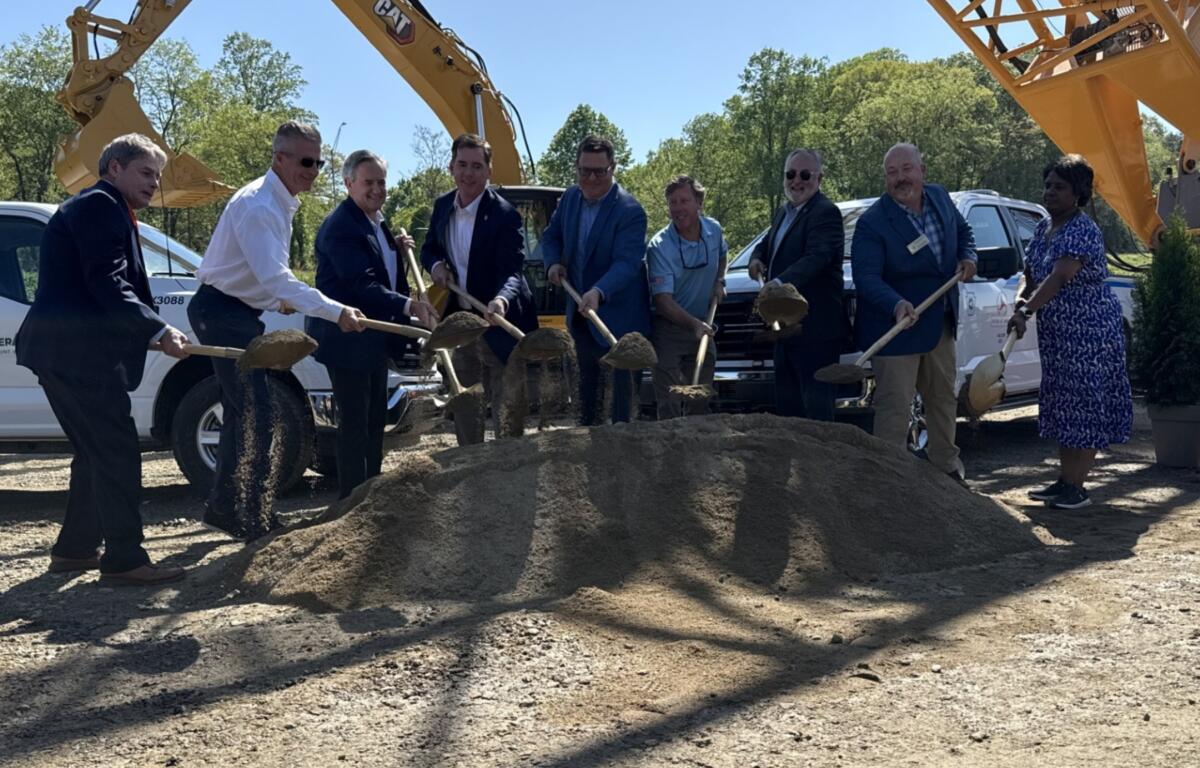

ASHEVILLE, N.C. (828newsNOW) — A project decades in the making reached a major milestone Thursday as the North Carolina Department of Transportation held a groundbreaking ceremony for the Interstate 26 Connector in Asheville.
The long-anticipated project is designed to improve safety, reduce congestion and strengthen regional connectivity across western North Carolina. Once complete, the connector will link Interstate 26 south of Asheville with U.S. 19/23/70 north of the city, creating a continuous interstate route between the mountains and the Port of Charleston, South Carolina.

“This project has been a long time coming,” NCDOT Secretary Daniel Johnson said. “The I-26 Connector reflects years of planning, collaboration, and community input. When complete, it will improve how people and goods move through this corridor while better connecting Asheville’s communities and supporting future growth.”
The overall project is now estimated to cost between $1.8 billion and $2 billion, a sharp increase from earlier projections. When the concept first emerged in long-range plans in 1989, no firm total cost was established. By the 1990s, planning documents generally described the project as costing between $600 million and $800 million.
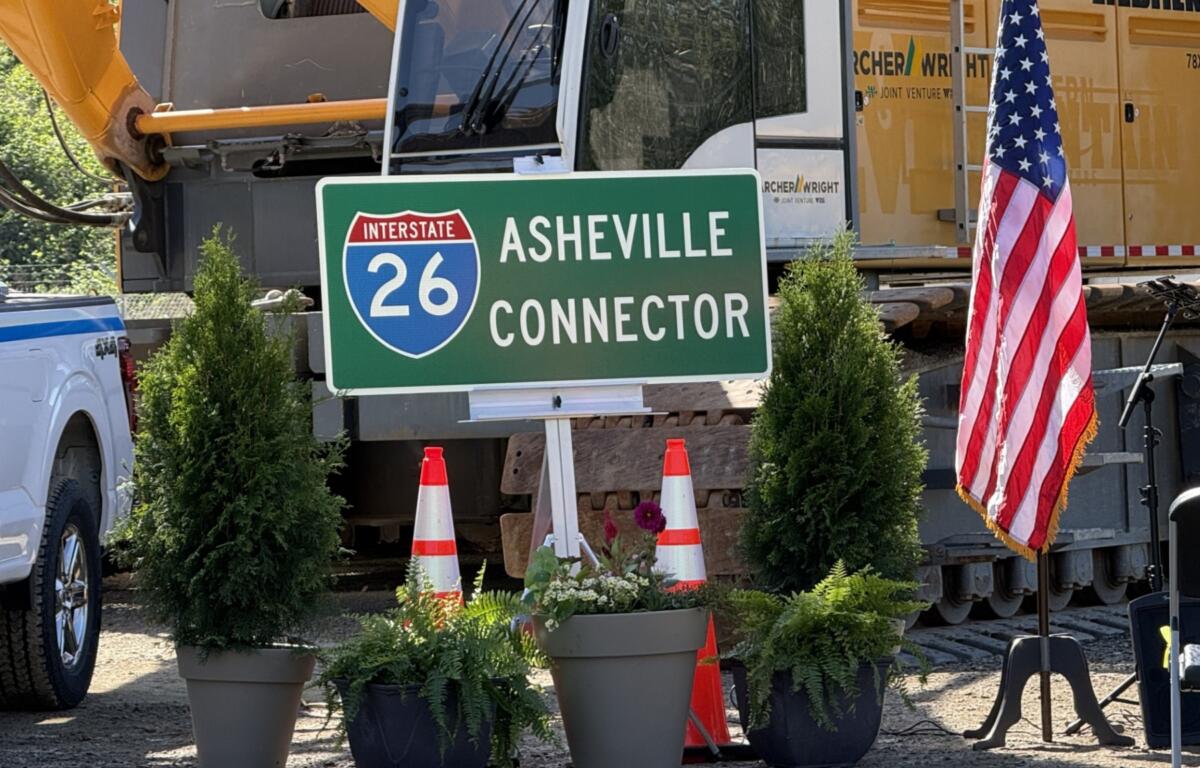
In 2024, NCDOT awarded a $1.15 billion contract for the project’s most complex portions — Sections B and D — which had been projected to cost about $915.8 million. Preliminary work has already totaled roughly $100 million.
Construction is now underway on the northern and southern sections, with the full project expected to be completed in late 2031.
Officials say the connector will address longstanding safety and congestion issues along the existing corridor, particularly at the Bowen Bridges, where interstate and local traffic merge.
“This is one of the most complex and important projects in our region,” Division 13 Engineer Tim Anderson said. “We’ve worked closely with local partners and the community to deliver a project that improves mobility while aligning with Asheville’s long-term vision.”
In addition to roadway improvements, the project includes multimodal upgrades such as new interchanges, bridge construction, multi-use paths and enhanced pedestrian and bicycle connections.

“This project goes beyond moving vehicles,” Division 13 Construction Engineer Nathan Moneyham said. “It will improve daily travel for drivers, pedestrians and cyclists by creating a more connected transportation network.”
Moneyham said one of the biggest risks to keeping the project on schedule — utilities and right-of-way — has been addressed early.
“We’ve tried to get out in front,” he said. “We’ve done early property acquisitions and have been coordinating with utility providers for years to make sure they’re ready to move when we are.”
He said the department has been working with utility companies, including Duke Energy, for nearly a decade to reduce potential delays.
“From a schedule perspective, we feel good about where we are,” Moneyham said. “Issues will come up, but we’re positioned to address them and minimize the impact as much as possible.”
Despite the scale of the project, he expressed confidence in the 2031 completion timeline.
“It’s a long time and a lot can change, but based on what we know today, we’re confident,” he said.
Officials emphasized that early construction will largely take place outside of existing travel lanes, meaning drivers should not expect major disruptions right away.
“The majority of work for the next year or two will be outside of traffic,” Moneyham said. “What drivers see today is largely what they’ll continue to see, aside from some ramp closures.”
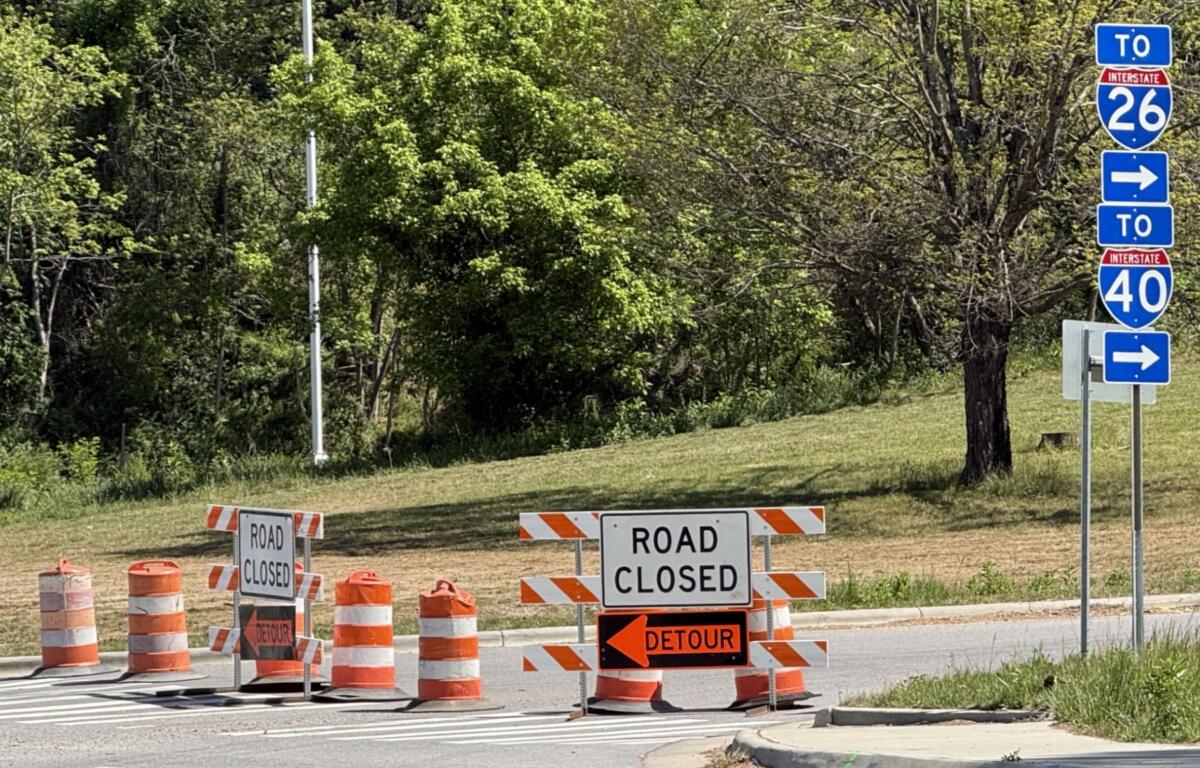
Closures already underway or planned include the Riverside Drive entrance ramp to I-240/I-26 and the Hill Street off-ramp, with a closure of the Westgate flyover ramp expected in the coming weeks to make room for bridge foundation work.
Crews are preparing to begin major foundation construction, including more than 300 drilled shafts for new bridges, with visible activity expected to ramp up through the summer.
Moneyham said the project is being built in phases, with right-of-way acquisition and relocations continuing as construction progresses.
“All property owners have been contacted, and that process will continue throughout the year,” he said. “We prioritize relocations based on where construction is happening first.”
He added that additional, unfunded portions of the connector, including Section C, are still moving through the state’s planning and funding process.
“Our hope is that it moves forward through the STIP process with local input,” Moneyham said.


Beyond highway improvements, officials highlighted the project’s long-term benefits for local connectivity, particularly for pedestrians and cyclists.
“It’s been a long-standing priority from the community,” Moneyham said. “Once interstate traffic is separated from local roads, it opens the door for greenways, bike lanes and better connections between neighborhoods.”
Those multimodal improvements are expected to come in later phases, likely after 2029, once major bridge work is complete and traffic patterns shift.
State transportation leaders emphasized the connector’s long-term impact on the region’s growth and infrastructure.
“We’re proud to deliver a project that will serve western North Carolina for generations,” Johnson said. “It will make a lasting difference for this region.”