


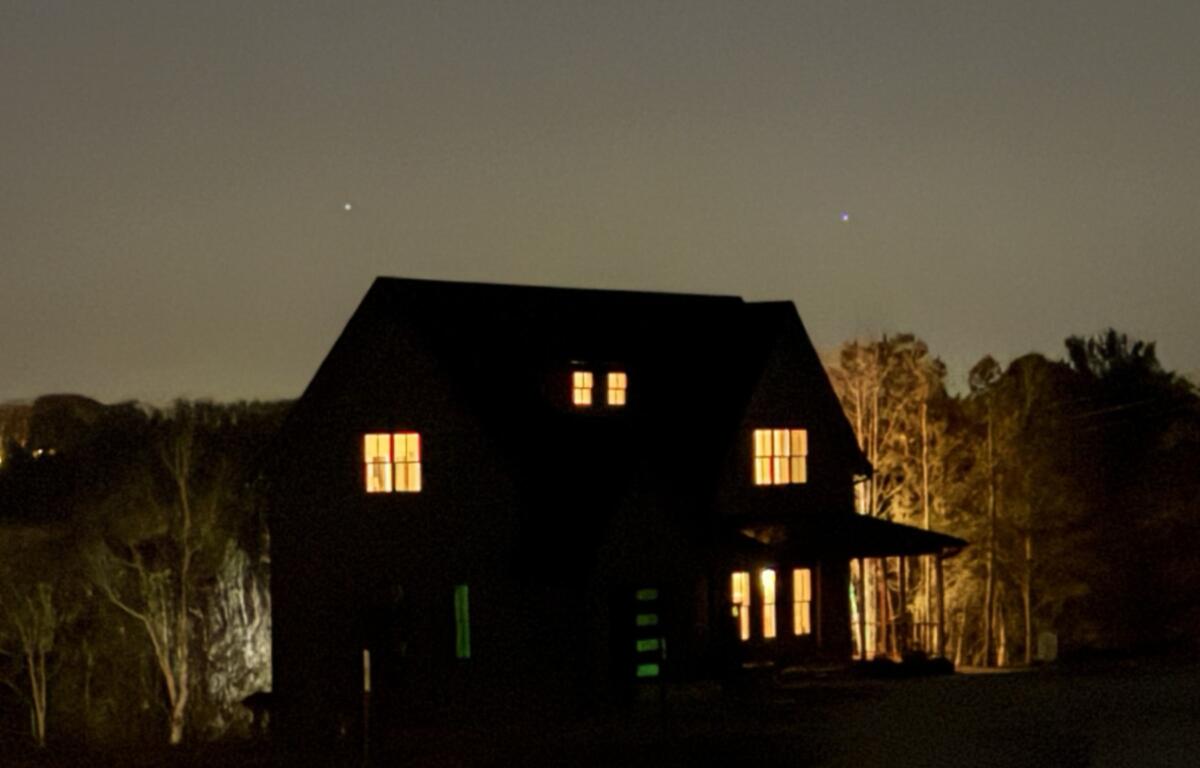

ASHEVILLE, N.C. (828newsNOW) — As dusk settles over the Blue Ridge Mountains this spring, millions of birds take to the night skies over Western North Carolina on a remarkable migration north.
From March through May, waves of songbirds — including warblers, tanagers and orioles — pass over the Asheville area, navigating by the stars as they return to breeding grounds farther north. Peak migration typically occurs in late April and early May, when the skies can carry hundreds of thousands of birds in a single night.
But conservation groups say a growing threat on the ground is making that journey more dangerous: artificial light.
Organizations including Audubon North Carolina and the Blue Ridge Audubon Chapter and local wildlife advocates are urging residents and businesses to reduce nighttime lighting during migration season, part of a broader “Lights Out” effort aimed at protecting birds as they travel.
“Many of these birds migrate at night, and artificial light can disorient them,” advocates with Audubon North Carolina say. “Instead of staying on safe migratory paths, they can be drawn into urban areas where they face a much higher risk of colliding with buildings.”

CLICK HERE FOR MORE INFORMATION ABOUT BIRD MIGRATIONS
Bird collisions with structures — often caused by bright lights and reflective glass — are a leading source of bird mortality in the United States. Studies estimate that more than 1 billion birds die each year from such impacts.
While tall buildings in major cities are often associated with collisions, experts say residential homes collectively pose a significant risk because of their sheer number.
“Since there are so many more single-family homes and structures spread out across the state, they actually pose a greater threat to our migratory birds, but also the greatest opportunities for folks to make a difference for birds in their own homes,” Audubon North Carolina Executive Director Curtis Smalling said in a news release.
Advocates say simple changes can have an immediate impact.
Residents are encouraged to turn off outdoor decorative lighting and floodlights overnight, particularly between 11 p.m. and 6 a.m., when migration activity is highest. Drawing curtains or blinds can reduce indoor light spilling outside, while angling outdoor lights downward or installing motion sensors can further limit unnecessary illumination.
Reducing lighting in upper floors of buildings and avoiding overly bright new lighting installations are also recommended.
Local birding groups say Asheville’s location along a major migratory corridor in the southern Appalachians makes community participation especially important.
Early arrivals typically begin appearing in March, including purple martins and black-and-white warblers. By April, ruby-throated hummingbirds and a wider variety of warblers move through the region. Late April into May marks the height of migration, with colorful species like tanagers and orioles passing overhead.
Advocates say the “Lights Out” message is simple: darker skies can save birds’ lives.
“With just a few small changes,” they say, “people can help ensure these birds make it safely to the places where they will nest and raise the next generation.”