


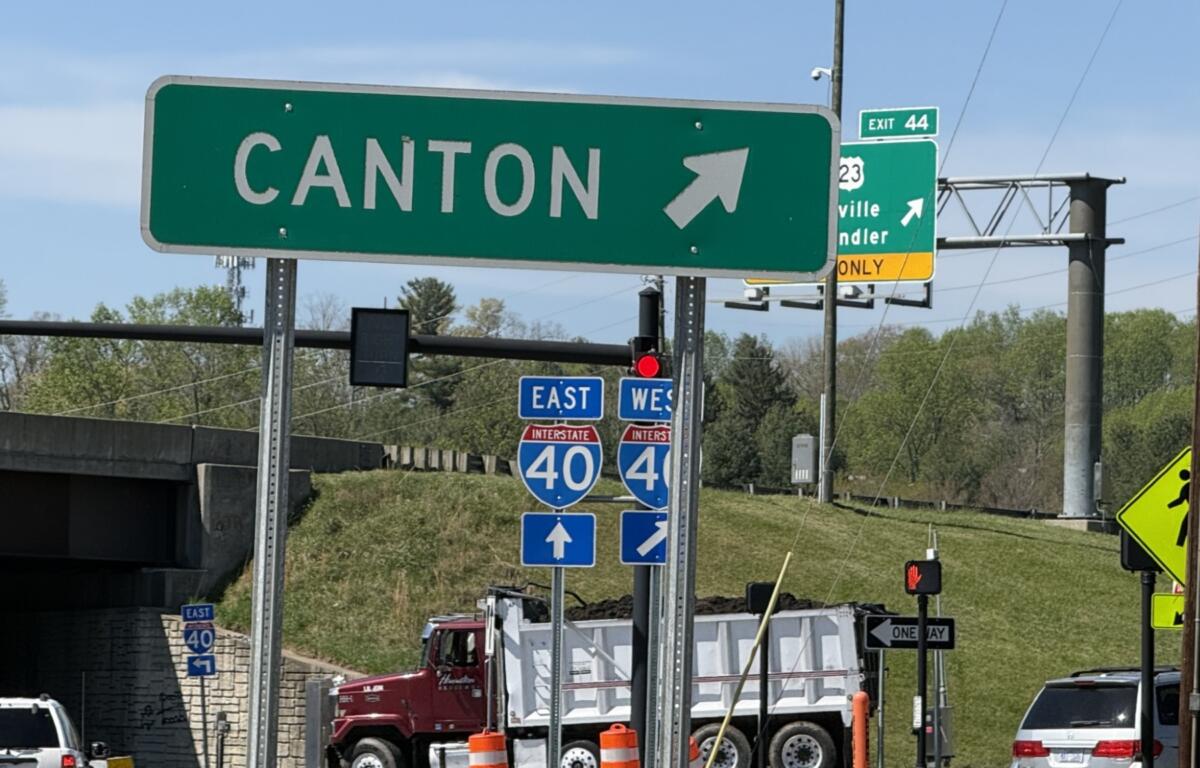

ASHEVILLE, N.C. (828newsNOW) — A proposal to add express toll lanes to a 16-mile stretch of Interstate 40 between Asheville and Clyde could help ease traffic congestion, though local leaders say the project is still in its early stages.
The plan would widen I-40 from Exit 27 in Clyde to Exit 44 in Asheville, expanding the corridor to six or eight lanes. The project is estimated to cost between $700 million and $850 million, with potential completion in the mid-2030s. Toll revenue would be used in part to accelerate construction.
The idea stems from a January 2024 request by the Land of Sky Regional Planning Organization and the French Broad River Metropolitan Planning Organization for the North Carolina Department of Transportation to study express lanes as part of the I-6054 widening project.
In October 2025, NCDOT presented its analysis, which examined two scenarios: adding one express lane in each direction or two express lanes in each direction, under varying growth projections. The study found that toll revenue in either scenario could cover operations and maintenance costs and contribute to upfront construction expenses, though additional funding would still be required, NCDOT officials said.
State transportation officials emphasized they are not advocating for a specific option. In North Carolina, decisions about tolling must originate at the local level through planning organizations.
The project has been submitted for consideration in the state’s next funding prioritization cycle, which will help determine projects included in the 2028-2037 State Transportation Improvement Program.
Haywood County Board of Commissioners Chairman Kevin Ensley, a member of the regional planning organizations, said he believes express lanes could provide some relief for commuters.
Ensley cited 2023 data from the N.C. Chamber of Commerce showing that nearly half of Haywood County’s workforce commutes each day, including about a quarter traveling to Buncombe County, while 22 percent commute into Haywood. Only about 30 percent of workers remain in the county.
“This does not include the self-employed. Now, with the paper mill closing, it adds much more traffic,” Ensley said.
He said the proposed toll lanes would operate alongside existing free lanes and could include incentives such as free access for carpoolers and demand-based pricing.
“The expanded express lanes should help alleviate some of the congestion,” Ensley said, adding that toll revenue could help fund the project more quickly than traditional methods.
Ensley acknowledged he is not a fan of tolls but said commuter frustrations have pushed him to consider alternatives.
“This is the only solution available at this time,” he said.
NCDOT officials said they will continue to work with local planning organizations as they evaluate options for the corridor.