


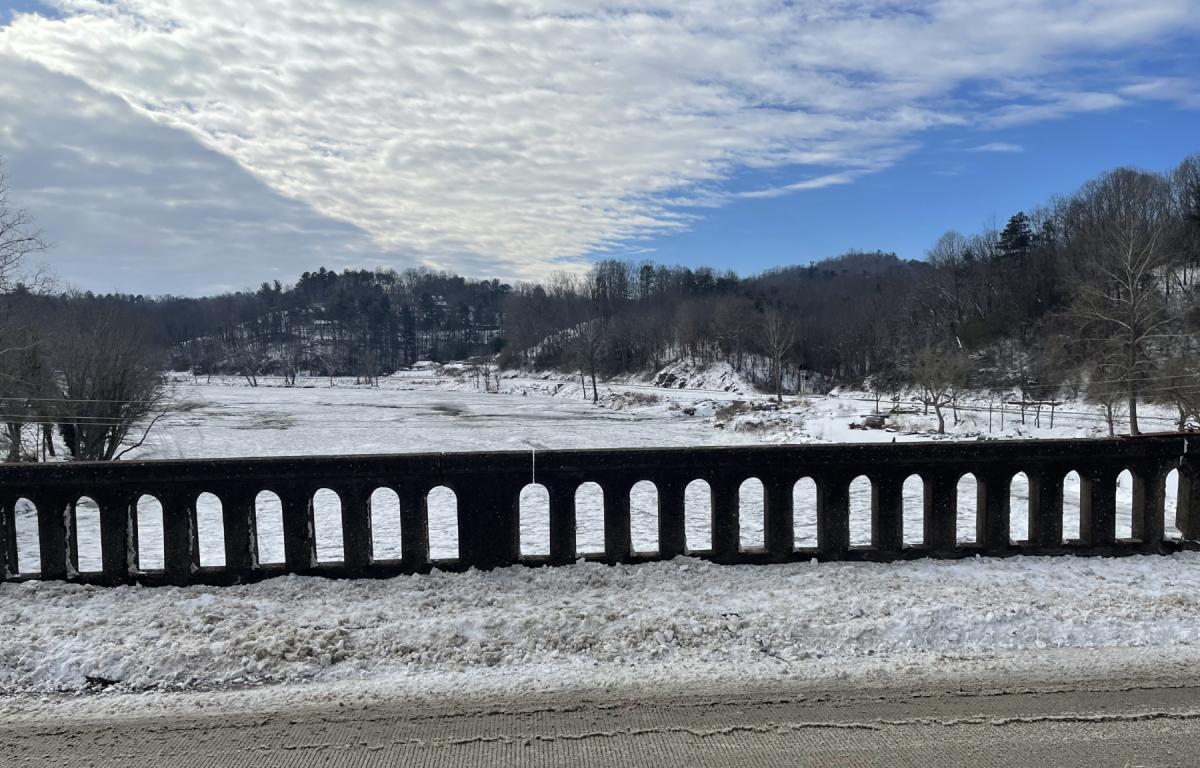

ASHEVILLE, N.C. (828newsNOW) — An intense Arctic blast sent temperatures plunging well below normal across Western North Carolina in late January and early February, producing a rare sight in Asheville: ice forming across portions of the French Broad River.
The cold snap, part of a widespread winter outbreak affecting much of the eastern United States, brought several days of subfreezing temperatures, with lows dropping into the teens and lower 20s. Those conditions were cold enough to overcome the river’s steady flow in some areas, allowing surface ice to form in slower, shallower sections near parks and riverbanks.


While Asheville regularly experiences freezing temperatures during the winter, sustained cold severe enough to significantly ice over the French Broad is uncommon. The river rarely freezes solid in modern times, and when residents say it has “frozen,” they typically mean patches of surface ice rather than a continuous sheet across its width.
Meteorologists note that Asheville’s winters are relatively mild compared with many inland and northern communities. Although temperatures often dip below 32 degrees from mid-October through mid-April, average winter highs frequently rise above freezing, limiting the duration of cold spells. Extended periods of well-below-freezing temperatures — necessary for notable river ice — occur only during particularly strong Arctic outbreaks.
Ice formation was reported Monday in parts of the river near Craggy Bridge, following several days of unusually cold weather. Similar scenes have been documented only a handful of times in recent decades.
The French Broad has experienced notable freezes in the past, including during January 2018, when a rare subzero cold snap led to widespread ice, and during historic cold events in 1940 and the “Great Freeze” of 1918, when ice was reported thick enough to damage structures along the river.
While partial freezing can occur during extreme cold, experts say a complete freeze-over of the French Broad remains a rare event — a reminder of how unusual the recent cold spell has been for the mountains of Western North Carolina.