


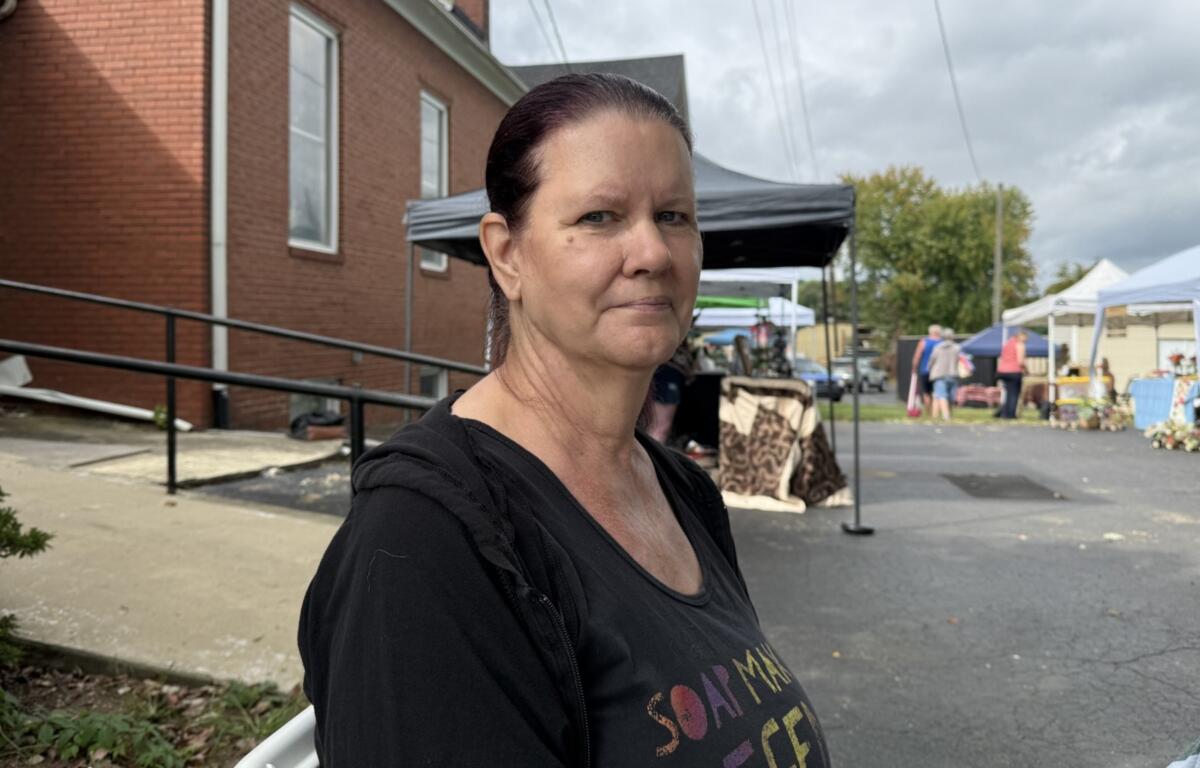

SWANNANOA, N.C. (828newsNOW) — When the water started rising around Deb Maslowski’s Swannanoa home during Tropical Storm Helene, she was watching for it to come from the river.
It didn’t.
“It was coming off the mountain,” Maslowski said. “I never thought it would come off the mountain like that.”
Nearly two years later, Maslowski can still remember how quickly everything changed — the rush to save her goats, the loss of power and communication, roads that became impassable and the uncertainty about whether friends and neighbors were safe.
But she also remembers what happened next.
Neighbors cooked for one another, shared supplies, cleared roads and went from house to house checking to see who needed help.
“The best part that happened — and you probably have heard this from other people — was the community,” Maslowski said.
The water kept rising
Maslowski has lived in the Swannanoa area for about 22 years and had seen flooding before. She wasn’t prepared for what happened during Helene.
She had expected trouble from the river. Instead, water rushed down from the mountain and across her property.
As it rose, Maslowski went outside to check on her goats. One, Abby, was in a lean-to where the water was beginning to climb, so Maslowski got her into the barn.
Then she went inside briefly to change out of her rain-soaked clothes.
By the time she came back out, the barn was flooding. Maslowski found herself wading through water roughly to her waist as she tried to get the goats out.
“In the time that it took for me to go in, change, come back out, the water was already flooding the barn,” she said.
She grabbed the goats by their collars and tried to pull them through the water.
Then she slipped.
“And I thought, ‘This is how I died. This is how I died,'” Maslowski said.
Her sister was on the porch, screaming and crying because she couldn’t see Maslowski or what was happening.
Maslowski doesn’t remember exactly how she got back on her feet. But she did, and she got the goats inside the house.
They spent the next two days in her bathroom, muddy and in the dark.
Her house came remarkably close to flooding, too.
Because of the way the property drains, the house had been built slightly elevated. Maslowski said the water stopped less than an inch from the bottom of it.
“We got really lucky there,” she said.
The barn and sheds weren’t as fortunate. They flooded, and the rushing water washed out her driveway. Nearly two years later, Maslowski said she still has belongings from the storm that she hasn’t finished sorting.
“I don’t care if it’s been two years,” she said. “I’ll get to it.”
‘Nobody knew we were alive’
Then came another problem: Swannanoa was largely cut off.
Maslowski said her power was out for about two weeks. Cellphone and internet service disappeared.
Her father, who was 80 at the time, wanted to come help.
Maslowski told him not to try.
There was a house in one road, she said, a tractor-trailer overturned on another, and Old U.S. 70 was badly damaged.
There was no easy way in or out.
But what Maslowski remembers most was the silence created when communications failed.
“Nobody knew we were alive,” she said. “We couldn’t get ahold of other people to find out if they were alive.”
One person she knew was missing for two weeks before eventually being located at a shelter.
Without phones or internet, there was little way to know what was happening beyond the people residents could physically reach.
So they started checking on one another.
‘We were there for each other’
In the first days after the storm, with roads blocked and emergency crews struggling to reach some places, neighbors became one another’s first line of help.
“We were there for each other,” Maslowski said.
She had charcoal, so she shared it.
With no electricity, she fired up her grill and started cooking meat from her freezer before it spoiled.
A nearby church community center became a supply hub. At first, Maslowski said, people simply brought whatever they had.
“I’ve got this. I’ll share this,” she recalled.
Then, outside supplies began arriving.
Maslowski helped sort donations. People cooked meals together — chili one day, barbecued pork another, whatever was available.
Someone drove through the neighborhood in a utility vehicle with milk and frozen pizzas, stopping at homes to see whether people were OK and whether they needed anything.
That first night, Maslowski ate frozen pizza cooked on a grill.
Later, she created a soap specifically to raise money for recovery. She said it has brought in about $700.
Against the enormous cost of recovering from Helene, she knows that doesn’t sound like much.
But in those first weeks and months, she saw what a relatively small amount of money could do. It could buy propane to help people stay warm. It could buy hamburger for someone preparing meals.
So she kept making soap.
A driveway, some gravel and a few bales of hay
The large-scale recovery from Helene has taken years. But some of the recovery Maslowski remembers happened one driveway, one meal and one neighbor at a time.
Her neighbor Aaron Ewing came by after the storm and saw what the water had done to her driveway.
He repaired the culvert and brought over loads of gravel.
He wouldn’t take any money.
A few days later, Maslowski learned Ewing needed hay for his goats. Someone was already bringing hay to her, so she asked for a couple of extra bales.
She paid for them and sent them his way.
That’s how a lot of things worked after Helene.
People used what they had.
Nearly two years later, Maslowski said some of that closeness has faded as everyday life has returned. She doesn’t see some neighbors as often. But the connection hasn’t disappeared.
“It’s still a strong sense of community,” she said. “It’s wavered, but we’ve still been looking out for each other.”
The connections remain visible in places such as the Swannanoa Market, where residents gather for music, food and locally made goods as the community continues to recover.
For Maslowski, the memories of Helene are still close — standing in waist-deep water, trying to save her goats, wondering whether she would make it back up after falling.
But when she talks about the storm now, she keeps coming back to the people around her.
“I know if something were to happen again, I could call any one of my neighbors and they’d be happy to come and help,” Maslowski said. “I just can’t say enough good about that.”