


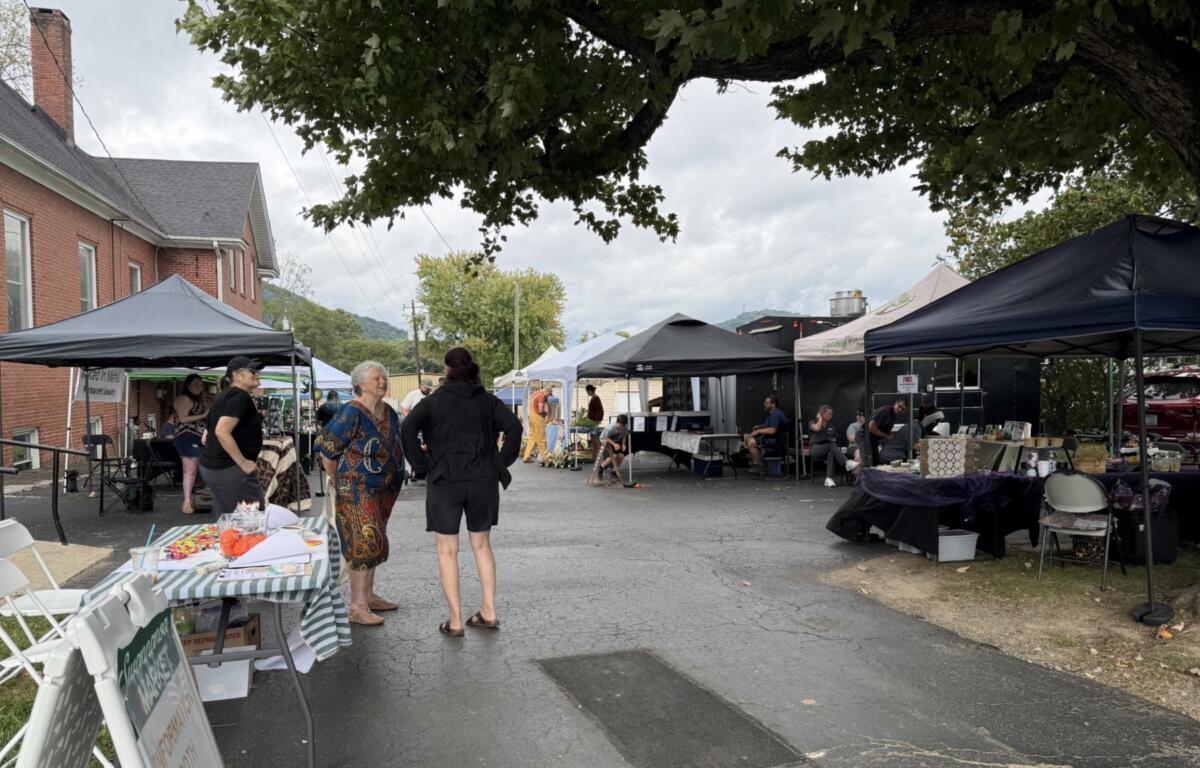

ASHEVILLE, N.C. (828newsNOW) — On a market day in Swannanoa, there is music, locally raised meat, handmade goods and neighbors stopping to talk.
Inside the same building, another kind of recovery is taking place.
Nearly two years after Tropical Storm Helene devastated the Swannanoa Valley, case managers at the Swannanoa Resilience Hub are still meeting one-on-one with people dealing with the storm’s aftermath.
“It’s like we have two sides,” program manager Connie Friend said. “One is the inner side, like the case managers, the case workers. They take care of people, meet with them one-on-one, but that’s not the stuff that the public sees.”
Outside, the hub’s work looks different.
The Swannanoa Market, now in its second year, had been held weekly and is shifting to once a month for the fall. Friend said a typical market includes about 10 to 15 vendors and live music.
The hub has also hosted workshops and other programs throughout the season, ranging from poetry workshops and health screenings to a cooking demonstration by Asheville Kitchen. At that one, participants learned to make ratatouille and got a chance to flip their own crepes.
The organization also provides space for other nonprofits and community groups to hold events and connect residents with services.
“It’s just a very unified effort here,” Friend said.
Recovery behind the scenes
Away from the market, two disaster case managers continue working individually with Helene survivors.
Friend said each generally carries about 30 cases at a time. When a case is closed, another person can be added.
She estimated the case managers have helped about 75 to 100 clients since that work began around February or March, although she cautioned that she did not have an exact number.
Other programs have reached more residents.
A recent back-to-school drive provided about 150 backpacks stocked with folders, paper, composition books and other school supplies.
The hub is also planning an event around the second anniversary of Helene where residents can share stories about surviving the flood and navigating recovery. The event is expected to include information about mental health and ways people can support themselves and others after a natural disaster.
A market born from recovery
The Swannanoa Market grew out of needs that followed Helene.
Residents needed access to local food, while farmers, makers and other small vendors needed places to sell their products and reconnect with customers.
Kylee Plemmons, who works with the hub on social media, said that continues to give the market an economic role in the community.
“I think the economic development is kind of the biggest surprise,” Plemmons said.
Friend said she has watched businesses and property owners continue investing in the community in the time since Helene.
She pointed to improvements being made to property near the hub and to new restaurants and other businesses opening along the corridor.
“It’s these business investments that really make such an impact,” she said.
Neighbors finding their own solutions
Swannanoa isn’t an incorporated municipality and, unlike neighboring Black Mountain, doesn’t have its own town government.
Friend said one of the things she noticed after moving to the community was how residents, nonprofits, businesses and other groups work together on local issues.
“These people have come together and they share resources, share their stories and they really do come up with solutions outside the government,” she said.
Some of those conversations take place at the Resilience Hub.
Community groups use the building for meetings, including the Swannanoa Grassroots Alliance, where residents discuss issues affecting the area. The hub also works with other nonprofits to bring programs and services to Swannanoa.
For Plemmons, seeing people come together wasn’t entirely new. She worked in Red Cross shelters after Helene and saw similar efforts across storm-damaged communities in Western North Carolina.
Swannanoa, she said, has stood out.
“I think just seeing people come together,” Plemmons said. “Swannanoa, I don’t know, they’ve been just kind of a role model for that.”
Nearly two years after Helene, the Resilience Hub still has case managers working with people affected by the storm.
But on market days, there is another measure of where Swannanoa is now: vendors setting up tables, music playing and neighbors gathering again.
“I just think that community feeling that they have here in Swannanoa is really unique,” Friend said, “and really beautiful.”