Editor’s Note: Western North Carolina is rich with untold stories—many resting quietly in local cemeteries. In this Tombstone Tales series, we explore the lives of people from our region’s past whose legacies, whether widely known or nearly forgotten, helped shape the place we call home.
Update (April 2026) Asheville City Council approved renaming McCormick Field to HomeTrust Park this week, prompting renewed discussion about the man behind the name that’s been tied to the Tourists for generations.
ASHEVILLE, N.C. 828newsNOW — Asheville’s historic baseball stadium has a new name. City leaders this week approved renaming McCormick Field to HomeTrust Park through a naming-rights agreement tied to recent renovations and the Asheville Tourists’ lease.
The reaction from the community was immediate. On 828newsNOW’s Facebook page, readers reacted to news of the change.
“They can call it whatever they want to. And we natives will call it McCormick Field until the day we die.”
“Nope, it’ll always be McCormick Field.”
Those comments reflected resistance to change along with the question newer residents may be asking for the first time. Who was Dr. Lewis McCormick?
The man behind the name
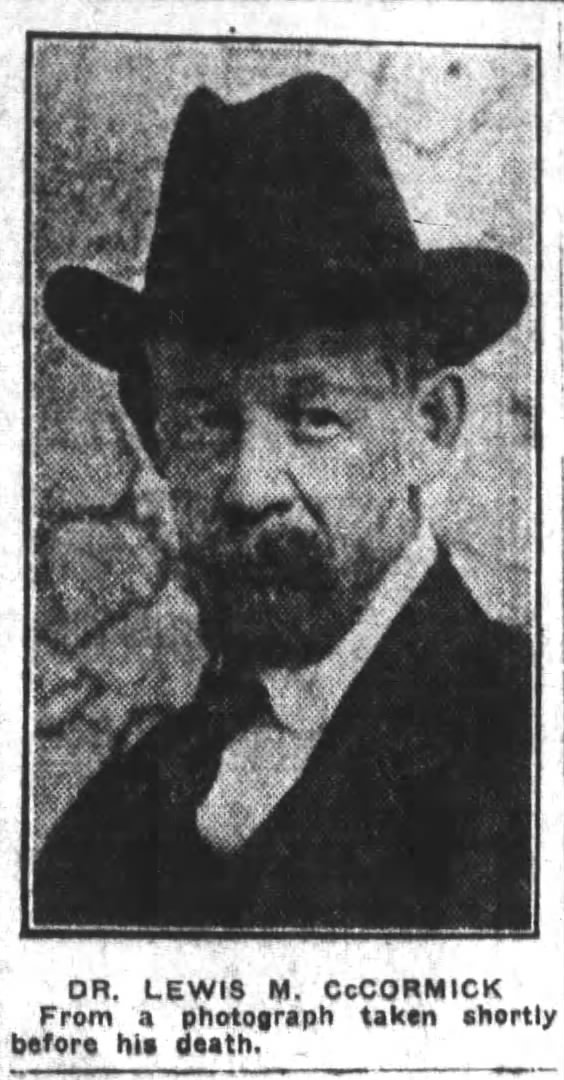
Long before his name was attached to Asheville’s historic ballpark, Dr. Lewis M. McCormick was known as an innovative public health reformer.
Born in 1863, McCormick pursued a broad career with a mixture of science and education. He studied at Oberlin College and later worked with the New York Zoological Society and Smithsonian Institution. His travels took him across Asia, Africa and Europe before he made Asheville home.
By the early 1900s, Asheville was growing as visitors came to the city seeking mountain air and health cures. New homes and businesses were rising but the city faced serious sanitation challenges. At the time, clean water systems were still evolving, and waste disposal was inconsistent. Horses, cows and other livestock were also part of daily life, and their waste created breeding grounds for flies.
To McCormick, the common housefly was more than a nuisance. It was a public health hazard, moving from local fields into kitchens and dining rooms.
In 1905, McCormick became Asheville’s first bacteriologist, placing him at the center of the city’s fight against preventable illness.
The campaign that made him unforgettable
McCormick understood that Asheville would only become healthier if residents took part in the effort. He decided to make public health practical and impossible to ignore.
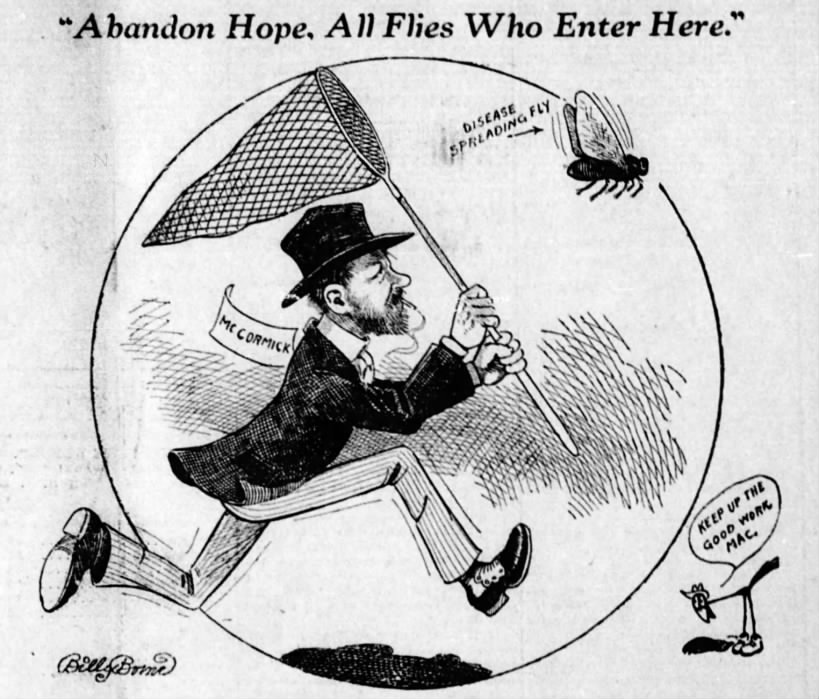
He captured the attention of the city with a campaign he called “Swat the Fly.”
Today the phrase may sound silly and old-fashioned. At the time, it was memorable and rooted in science. McCormick challenged the public to join in the fight against flies which were widely recognized as carriers of dangerous bacteria. As flies moved from animal waste and trash to dinner tables and markets.
Residents were urged to keep properties clean, cover food and kill flies. McCormick gave a group of children fly swatters and encouraged them to go door to door and offer to kill flies for homeowners in exchange for 10 cents. Residents bought in and the campaign worked as the fly population dropped dramatically in Asheville.
McCormick turned disease prevention into something everyone could understand. He became widely known as “The Fly Man” and created a campaign that inspired health officials to launch their own “Swat the Fly” initiative in cities across the United States.
Why Asheville named a ballpark after him
Despite initially being mocked by journalists, McCormick’s initiative was eventually recognized as a community-driven action that helped save lives in Asheville and across the country.
When McCormick died in January 1922, the same journalists that once ridiculed “The Fly Man”, celebrated the legacy of the man who cared for his community.
When Asheville’s municipal baseball stadium opened in 1924, civic leaders chose to name it McCormick Field to preserve the legacy of the hero of public health.
For over a century, the McCormick name has been woven into Asheville history. Many who attended Tourists games may not have known or remembered who the field was named for, but each visit connected them to a man played an important role in Asheville’s history.
A legacy larger than a name change
Whether locals embrace the new name or continue calling it McCormick Field, the recent discussion has reminded the community why the stadium carried the name in the first place.
McCormick died in 1922 and is buried at Riverside Cemetery in Asheville.
Visitors walking Riverside Cemetery may pass his grave without realizing they have often spoken his name. For generations, it was heard at baseball games, printed on tickets and carried through family memory. The sign at the stadium may be new, but Dr. McCormick’s name still belongs to Asheville’s story.
Visit Riverside Cemetery in Asheville, North Carolina
-
Haunted Asheville and WNC: Ghost stories, eerie legends and mysterious places

From Asheville’s historic landmarks to mountain trails, old cemeteries and Appalachian folklore, explore the ghost stories and mysterious places that have become part of Western North Carolina’s history.
-
Tombstone Tales: Bascom Lamar Lunsford’s remarkable life

The Asheville lawyer, folklorist and festival organizer spent decades preserving Western North Carolina’s songs, dances and mountain traditions.
-
Tombstone Tales: A Fairview grave says James Brevard ‘became a seraph.’ Who was he?
Buried at Cane Creek Cemetery in 1847, the farmer, postmaster and state legislator left a public record that helps explain an extraordinary epitaph.
-
Tombstone Tales: The Reems Creek pitcher who played one game in the Major Leagues
Richard “Rome” Chambers became the first known Western North Carolina native to play Major League Baseball before returning home to Buncombe County, where he died just one day before his 27th birthday.
-
Tombstone Tales: A Revolutionary War veteran’s grave in Mitchell County tells a WNC story for July Fourth
At Kona Baptist Church Cemetery, a memorial to George Silver carries the story of American independence into the Toe River Valley and a family legacy deeply rooted in Western North Carolina.