


Editor’s Note: Historic Churches of Western North Carolina is an ongoing 828newsNOW series exploring the sacred spaces that helped shape mountain communities. Many of these churches began as small mission chapels or neighborhood gathering places. Their histories reveal how faith, culture and daily life intertwined across Western North Carolina. By documenting these buildings and the congregations connected to them, we hope to preserve part of the region’s church history and honor the people whose stories continue to shape the mountains today.
WEST JEFFERSON, N.C. -St. Mary’s Episcopal Church stands along Beaver Creek School Road, a small white-frame chapel with a red front door that has welcomed the West Jefferson community for more than a century. The church has its roots in the early missionary work of the Episcopal Church in Ashe County and grew into a mission parish in the 1920s. Over time, St. Mary’s became a gathering place shaped by rural life, Sunday worship and a congregation committed to service.
The church’s story changed in the spring of 1972 when Father J. Faulton Hodge met artist Benjamin Long. The meeting was brief, but it ended with an understanding that Long would create a fresco for the church at no cost. Two years later, Long contacted Father Hodge and said he was ready to begin.
Ben Long Frescoes of Western North Carolina: A Visitor’s Guide – Asheville’s 828 News NOW
Long was a Statesville native who had served in the Marine Corps and deployed to Vietnam before traveling to Florence, Italy, to train under classical fresco master Pietro Annigoni. His work required pigments applied directly to wet plaster, a demanding technique few modern artists practiced.
St. Mary’s became the first church in Western North Carolina to welcome his work. The first fresco, Mary Great with Child, was completed in 1974. Long depicted Mary visibly pregnant, an uncommon portrayal in Western art. He used his pregnant wife as the model, which gave the image a striking human quality that drew strong reactions when it was unveiled.
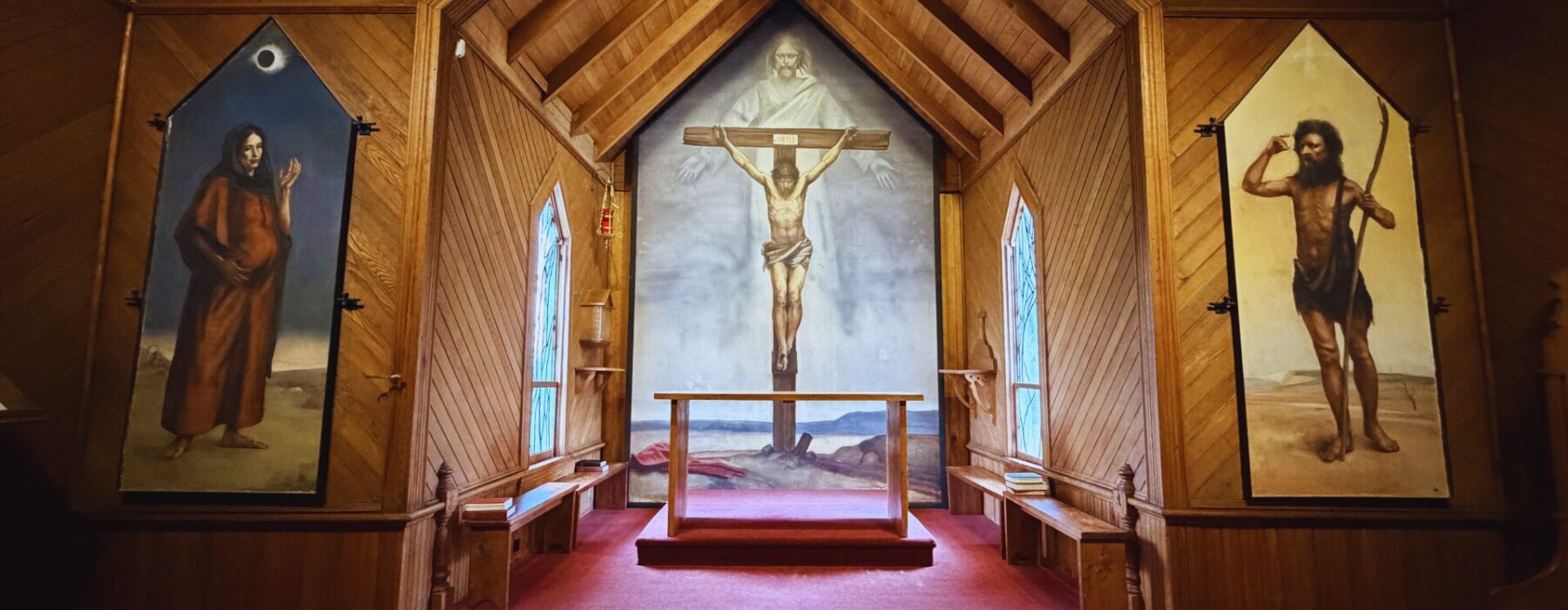
Long returned in the summer of 1976 to paint John the Baptist, then completed Mystery of Faith in 1977. Parishioners recalled that he sometimes continued painting during services, stepping down only long enough to receive communion before returning to his work. Many of the figures in the frescoes were modeled on local residents, rooting the scenes in the life of the community.
These three frescoes reshaped how St. Mary’s was seen in the region. What had been a quiet rural chapel became an annual destination for thousands of visitors drawn to the intersection of faith, art and local history. The murals later helped establish a broader fresco trail through Western North Carolina, now part of the Blue Ridge Heritage Trail.
St. Mary’s remains an active worshiping community. The parish alternates services between St. Mary’s and Holy Trinity in nearby Glendale Springs, where both congregations form the Episcopal Parish of the Holy Communion. The church keeps its doors open during the day so visitors can pray, reflect and view the frescoes.
St. Mary’s also engages in local outreach, pastoral care and community support, continuing a long history of serving Ashe County. The church remains open daily, inviting visitors to pause, reflect and connect in a quiet space where art and devotion meet.
The story of St. Mary’s is about a congregation willing to trust an artist, a remote church becoming a tourist destination, and a community that continues to live out its mission through the works that decorate its sanctuary. A full guide to the Ben Long frescoes along the Blue Ridge Heritage Trail is available here.