Editor’s Note: Western North Carolina is rich with untold stories—many resting quietly in local cemeteries. In this Tombstone Tales series, we explore the lives of people from our region’s past whose legacies, whether widely known or nearly forgotten, helped shape the place we call home.
BLOWING ROCK, N.C. (828newsNOW.com) — In a quiet cemetery in Blowing Rock, a gray stone bearing the name Lewis Trexler stands as a reminder of one of the town’s most shocking killings. The monument’s carved symbols tell the story of a death that stunned the mountain community and sparked widespread outrage.
According to newspaper accounts published in July 1912, Trexler was killed during an altercation that began over a small unpaid account totaling less than seventy-five cents. The dispute unfolded in a local poolroom, where Trexler confronted Alonzo Hartley, who was playing billiards, and asked him to settle the debt.
Witnesses said words were exchanged, with Hartley dismissing the amount as trivial. The argument escalated and Hartley drew a loaded billiard cue and struck Trexler on the right side of the head above the ear. Trexler fell to the floor. Instead of stopping, Hartley jumped on him, beating his face and dragging him across the room. When bystanders intervened, Hartley allegedly stomped Trexler’s face with the heel of his shoe.
Trexler died from his injuries within three hours.
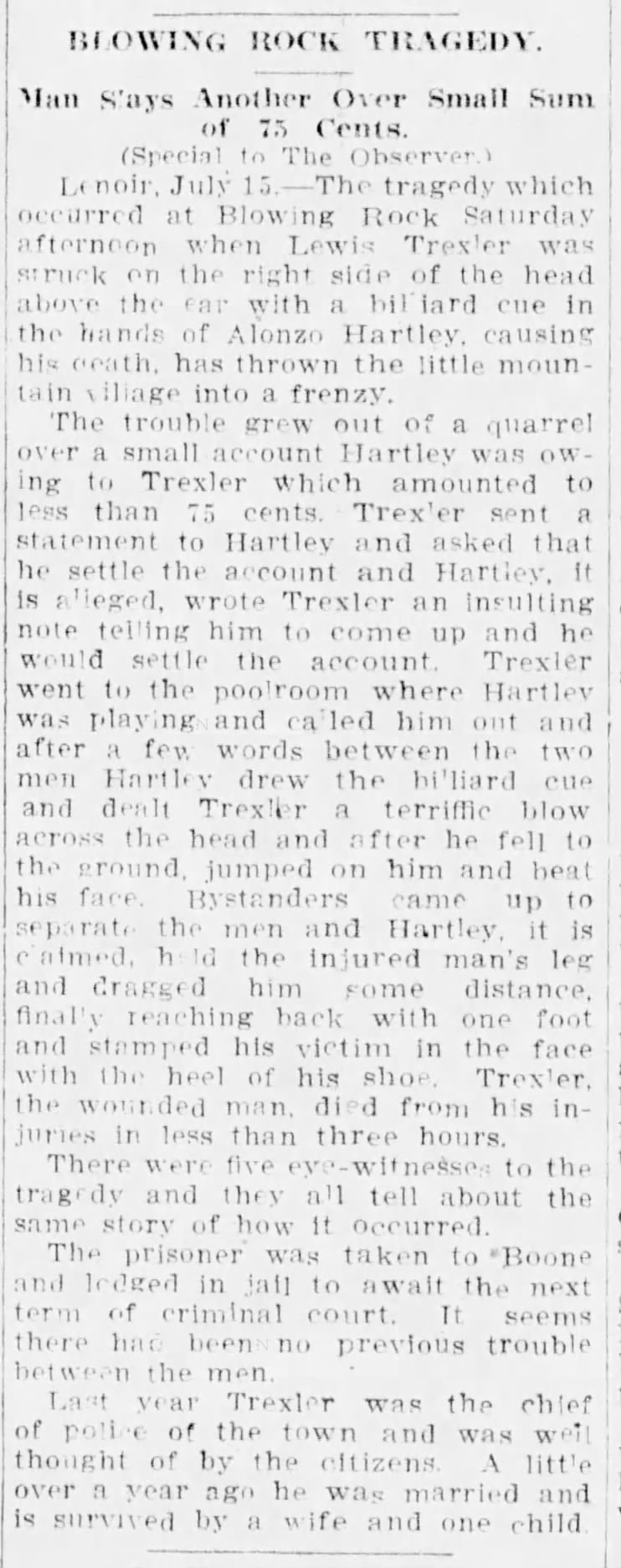
Regional newspapers described the town of Blowing Rock as “greatly enraged,” with some residents openly calling for Hartley to be lynched. Law enforcement moved swiftly, transferring Hartley to Boone, where he was jailed to await the next term of criminal court.
Trexler’s death carried added weight because of his standing in the community. The former chief of police in Blowing Rock had been married just over a year and was survived by his wife and their young child.
The legal proceedings advanced quickly. In September 1912, just months after the killing, Hartley pleaded guilty to manslaughter. Court records show he was sentenced to 10 years state prison, bringing a formal conclusion to a case that had deeply shaken the mountain town.
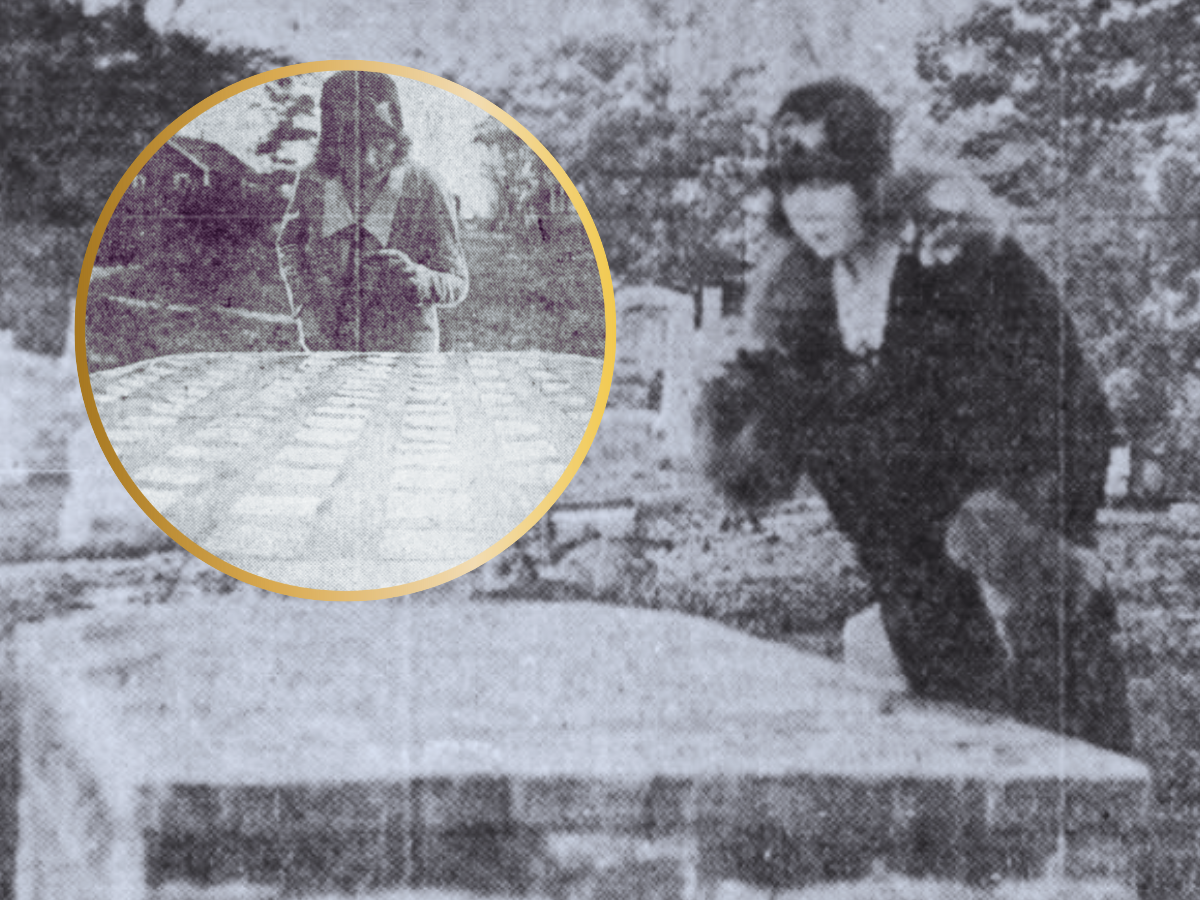
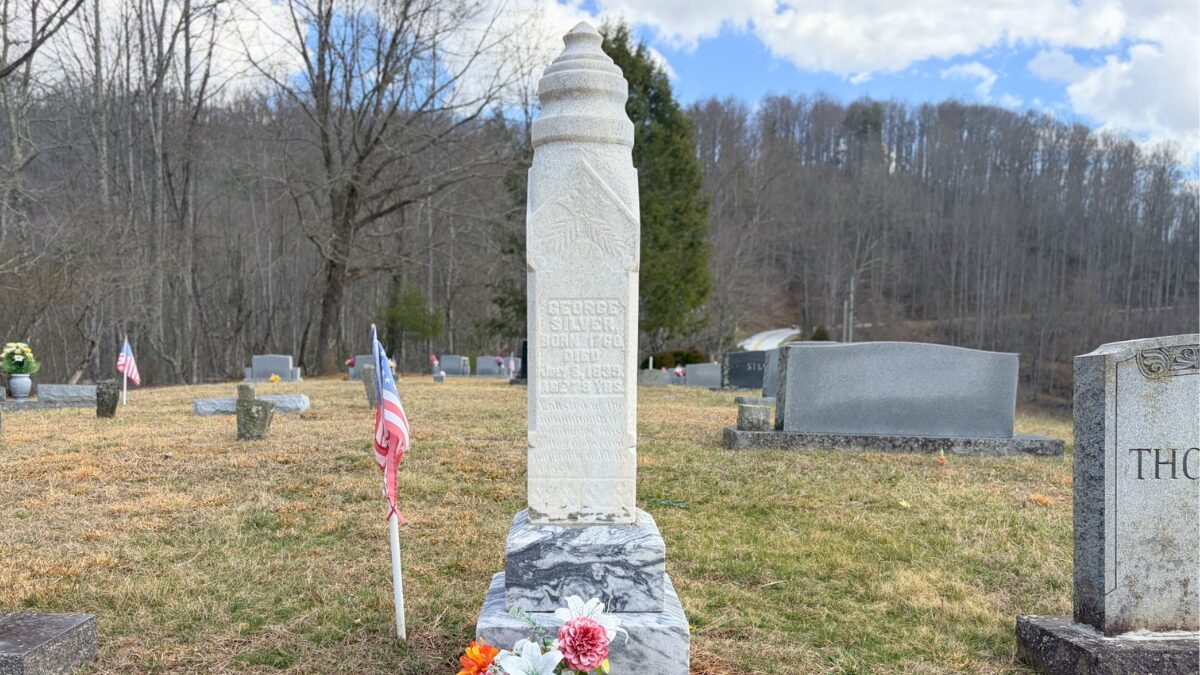
Today, Trexler’s grave offers a quiet reflection on the violence that shattered Blowing Rock in the summer of 1912. Carved into the stone is a dove in flight above open gates, framed by an arch, a classic Christian symbol representing the soul’s passage into heaven. Beneath it are the words, “God defends the right.”
The inscription reads as both faith and protest. Trexler’s life ended not by illness or age, but by a sudden, brutal act over a debt measured in coins. A reminder of how quickly ordinary moments can turn tragic, and how even the smallest disputes can leave lasting scars.
-
Haunted Asheville and WNC: Ghost stories, eerie legends and mysterious places

From Asheville’s historic landmarks to mountain trails, old cemeteries and Appalachian folklore, explore the ghost stories and mysterious places that have become part of Western North Carolina’s history.
-
Tombstone Tales: Bascom Lamar Lunsford’s remarkable life

The Asheville lawyer, folklorist and festival organizer spent decades preserving Western North Carolina’s songs, dances and mountain traditions.
-
Tombstone Tales: A Fairview grave says James Brevard ‘became a seraph.’ Who was he?
Buried at Cane Creek Cemetery in 1847, the farmer, postmaster and state legislator left a public record that helps explain an extraordinary epitaph.
-
Tombstone Tales: The Reems Creek pitcher who played one game in the Major Leagues
Richard “Rome” Chambers became the first known Western North Carolina native to play Major League Baseball before returning home to Buncombe County, where he died just one day before his 27th birthday.
-
Tombstone Tales: A Revolutionary War veteran’s grave in Mitchell County tells a WNC story for July Fourth
At Kona Baptist Church Cemetery, a memorial to George Silver carries the story of American independence into the Toe River Valley and a family legacy deeply rooted in Western North Carolina.