Editor’s Note: Western North Carolina is rich with untold stories—many resting quietly in local cemeteries. In this Tombstone Tales series, we explore the lives of people from our region’s past whose legacies, whether widely known or nearly forgotten, helped shape the place we call home.
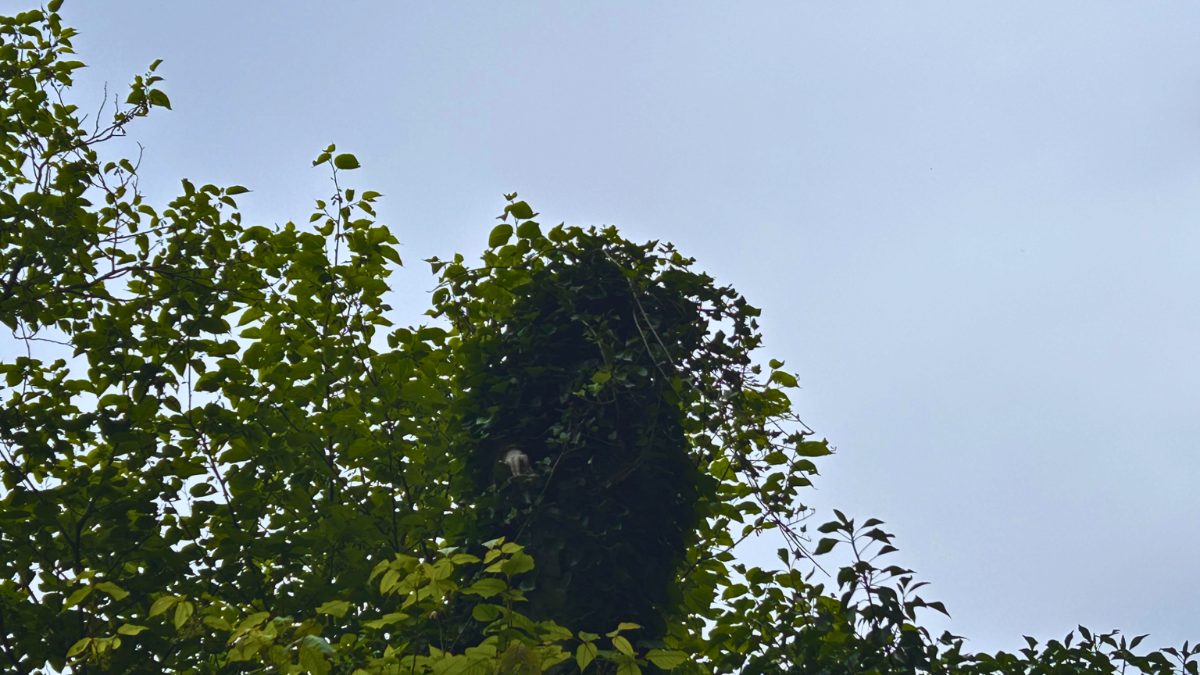
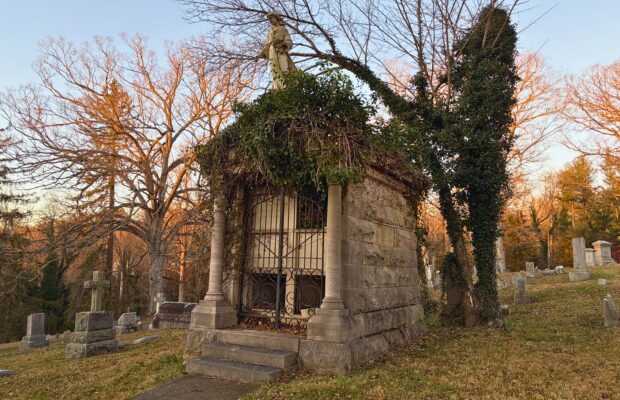
ASHEVILLE, N.C. (828newsNOW.com) — In Asheville’s historic Riverside Cemetery, one particular mausoleum draws attention for what rests above it: a marble angel perched on the roof. She’s only fully visible in winter, when the ivy that covers her through the warmer months dies back and reveals her face once again.
The marble angel sits at the top of the McElveen mausoleum. In summer, she nearly disappears beneath the ivy. As cooler weather sets in and the vines die back, she becomes visible again, briefly seen before spring covers her in green once more.
It’s a quiet seasonal rhythm atop a mausoleum that holds a much bigger story.
A mausoleum for the Pace and McElveen families
The vault is most commonly referred to as the McElveen mausoleum, named for Ella Pace McElveen, whose name is carved above the door. Born in Tennessee in 1860, Ella married George Wyche McElveen, an Atlanta businessman. She died in Asheville on June 9, 1899, at the age of 39.
Social columns in local newspapers often mentioned Ella and her husband visiting family in Asheville. Like many well-off families across the South, they spent summers in the city, attracted by its cool mountain air and reputation as a place for rest and healing.
The mausoleum, built shortly after Ella’s death, became a family tomb. It saw another interment in 1902, when Joseph Branner McElveen, George’s younger brother, died at age 42.
While most assume the story stops there, a quiet newspaper correction from 1921 adds a final layer.
A third name, a forgotten return
In January 1921, Mrs. Parolee Blevins Pace died at her home in Waco, Texas. A short item in the Asheville Citizen noted that her daughter and niece were traveling with the body, transferring trains in East Tennessee to continue to Asheville, where they intended “to place the body in the Pace mausoleum.”
Parolee was Ella McElveen’s mother. Her return to Asheville, more than two decades after her daughter’s burial, confirms the mausoleum was used at least once more, long after many believed it had been abandoned.
It also shows how families remembered this vault. In public records, it’s the McElveen mausoleum. For those who knew the people buried there, it remained the Pace mausoleum.
The angel on top
Visitors often search Riverside Cemetery for what they call the Wolfe angels: Carrara marble statues tied to the work of W.O. Wolfe, a local monument dealer and father of novelist Thomas Wolfe. Wolfe imported the figures from Italy, having never quite mastered the art of carving faces himself. One of those angels famously inspired Look Homeward, Angel, a novel rooted in memory, grief, and the weight of what’s left behind. The figure above the McElveen tomb is believed to be among the angels that may have inspired it.
Most of the year, visitors walk past the mausoleum without noticing the statue above. English ivy covers the roofline, growing thick through the summer and only revealing the angel when colder weather slows the vine’s spread. The angel’s hidden presence gives the structure a mythic quality, seen only when nature allows it.
Each winter, when the marble angel returns to view, Riverside reminds us that even the quietest stories have watchers.
-
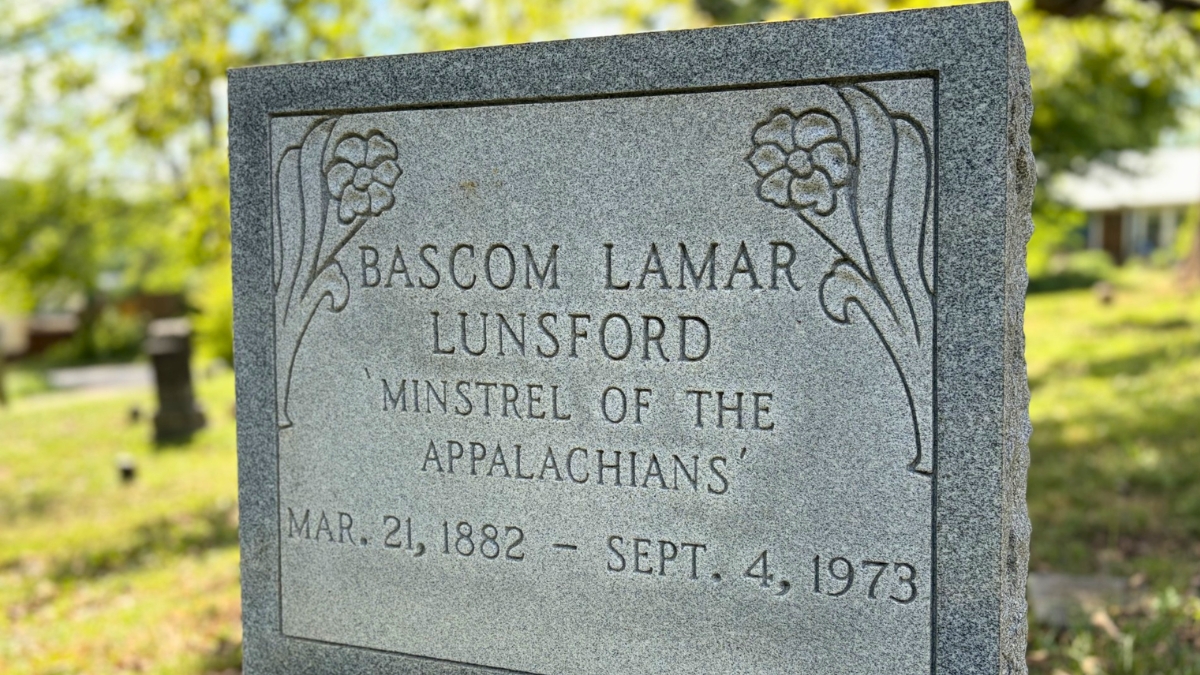
Tombstone Tales: Bascom Lamar Lunsford’s remarkable life

The Asheville lawyer, folklorist and festival organizer spent decades preserving Western North Carolina’s songs, dances and mountain traditions.
-
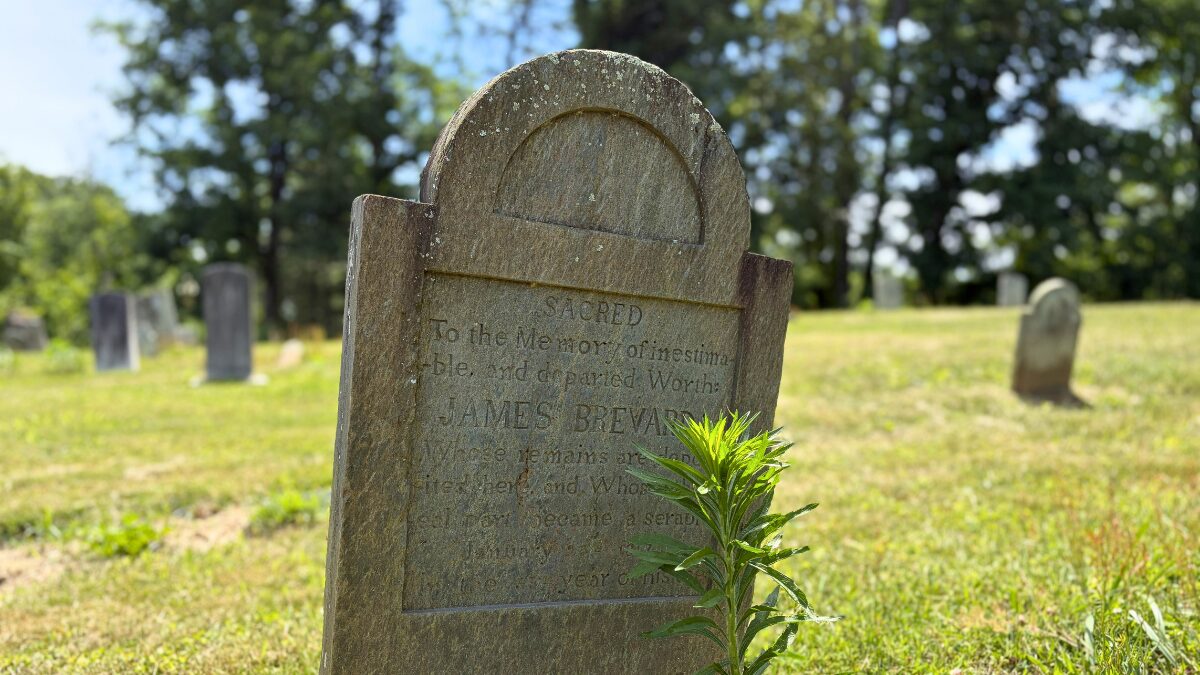
Tombstone Tales: A Fairview grave says James Brevard ‘became a seraph.’ Who was he?
Buried at Cane Creek Cemetery in 1847, the farmer, postmaster and state legislator left a public record that helps explain an extraordinary epitaph.
-
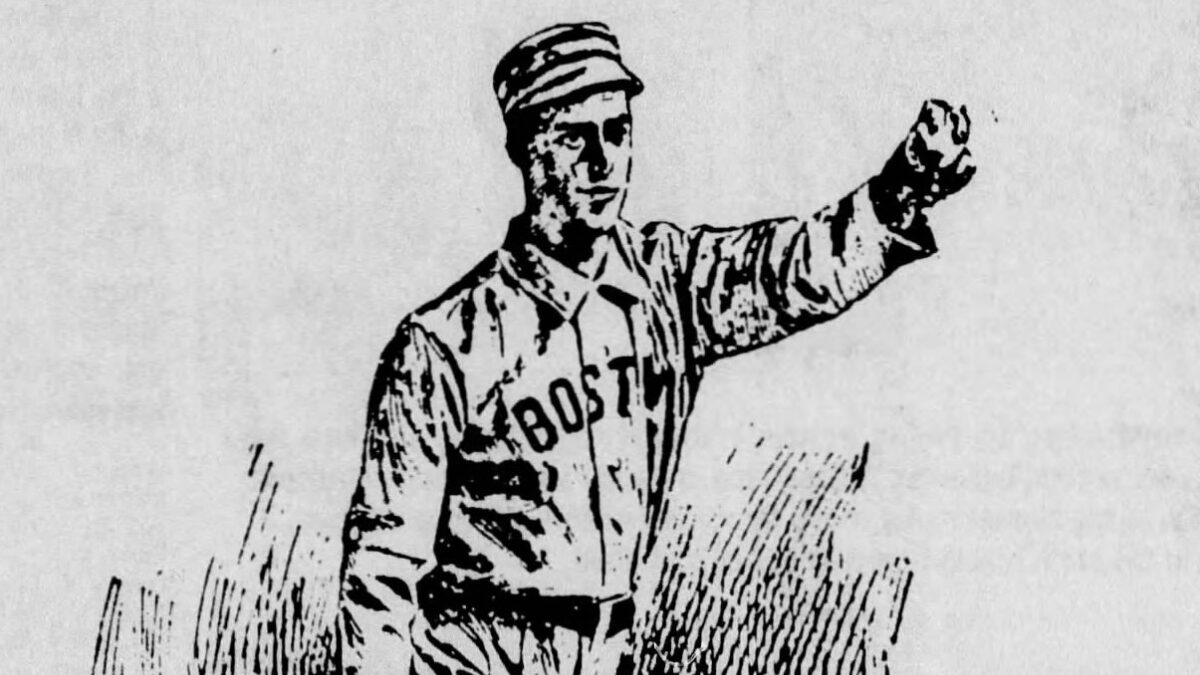
Tombstone Tales: The Reems Creek pitcher who played one game in the Major Leagues
Richard “Rome” Chambers became the first known Western North Carolina native to play Major League Baseball before returning home to Buncombe County, where he died just one day before his 27th birthday.
-
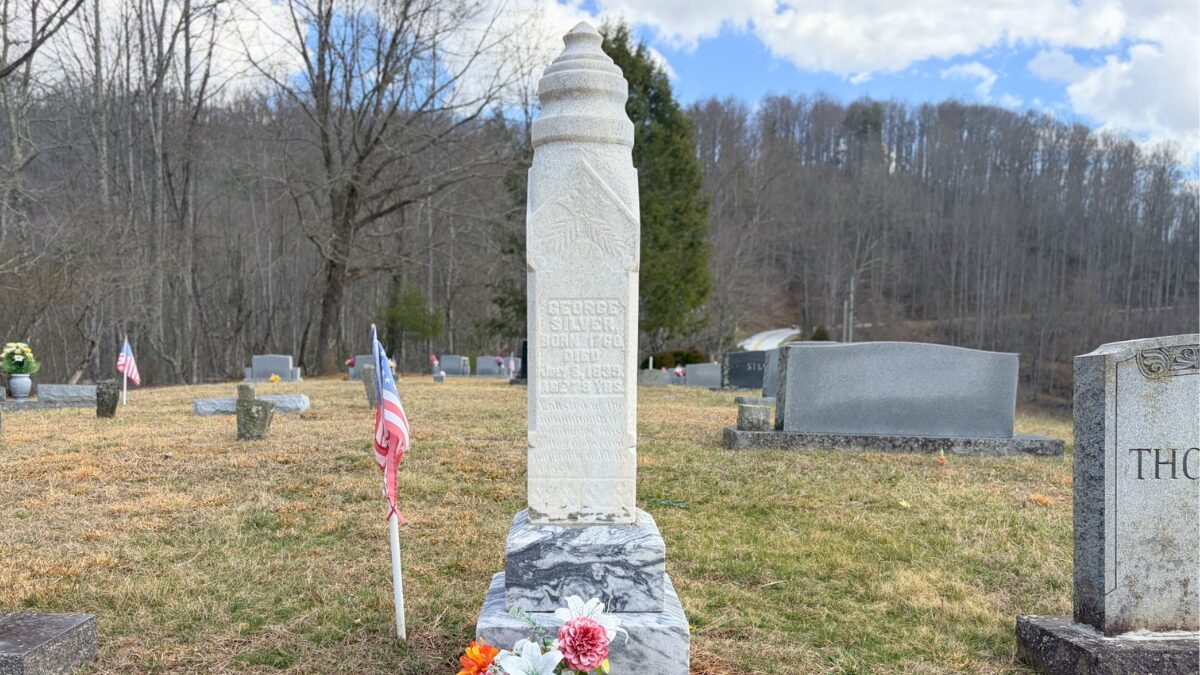
Tombstone Tales: A Revolutionary War veteran’s grave in Mitchell County tells a WNC story for July Fourth
At Kona Baptist Church Cemetery, a memorial to George Silver carries the story of American independence into the Toe River Valley and a family legacy deeply rooted in Western North Carolina.
-
Tombstone Tales: Flat Rock grave links to Declaration of Independence signer
As America marks its 250th anniversary, a grave at St. John in the Wilderness Cemetery connects Flat Rock to one of the signers of the Declaration of Independence and a young man remembered not for his famous name, but for his character.