Editor’s Note: Western North Carolina is rich with untold stories—many resting quietly in local cemeteries. In this Tombstone Tales series, we explore the lives of people from our region’s past whose legacies, whether widely known or nearly forgotten, helped shape the place we call home.
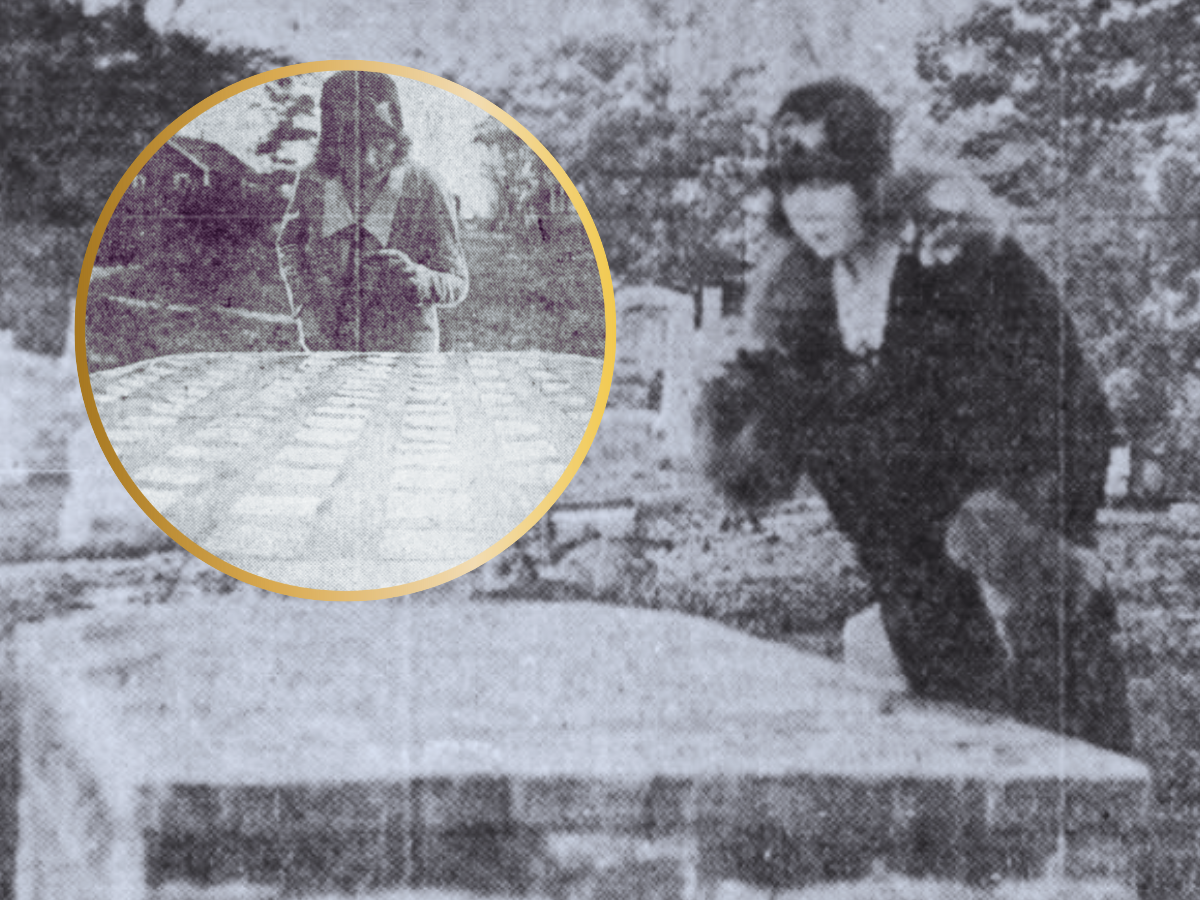
ASHEVILLE, N.C. (828newsNOW.com) — One of Riverside Cemetery’s most striking mausoleums belongs to Franklin Silas Terry, an industrial leader of the electric age, and his wife, Lillian Slocomb Emerson Terry.
Born May 8, 1862, in Ansonia, Connecticut, Franklin Terry emerged from the nation’s rapidly expanding manufacturing economy to become a leading figure in the early incandescent lamp industry. He helped consolidate lamp manufacturers that later became part of General Electric, where he served as a vice president. His work placed him among the architects of America’s electrified future, lighting homes, streets and factories at the turn of the 20th century.
Colleagues described Terry as shrewd and humane, a leader who believed industrial progress did not have to come at the expense of workers. That philosophy carried into his philanthropy. During World War I, Terry organized and personally supported aid efforts for French orphans and wounded soldiers, overseeing care and education for displaced children. The depth of his involvement earned him the nickname “American Godfather”.
By the 1910s, Terry’s life had developed a strong Western North Carolina chapter. He began acquiring land in the mountains and eventually built a sprawling Tudor-style estate known as “In the Oaks” in Black Mountain. The property included recreational amenities unusual even for wealthy estates of the era, including a gymnasium, bowling alley and swimming pool, and became a social center for prominent visitors.
It was in North Carolina that Terry married Lillian Slocomb Emerson, born July 19, 1880, in Fayetteville. She was known for her independence and curiosity, traits that set her apart in an era when women of her social class were often expected to remain out of public view. In 1922, she became the first woman to drive an automobile to the summit of Mount Mitchell, then a rugged and demanding journey.
The couple’s final resting place reflects both their wealth and their taste. The Terry mausoleum is designed in a classical style common among affluent families in the early 20th century, drawing heavily on Greco-Roman artistic traditions meant to convey permanence, dignity and memory.
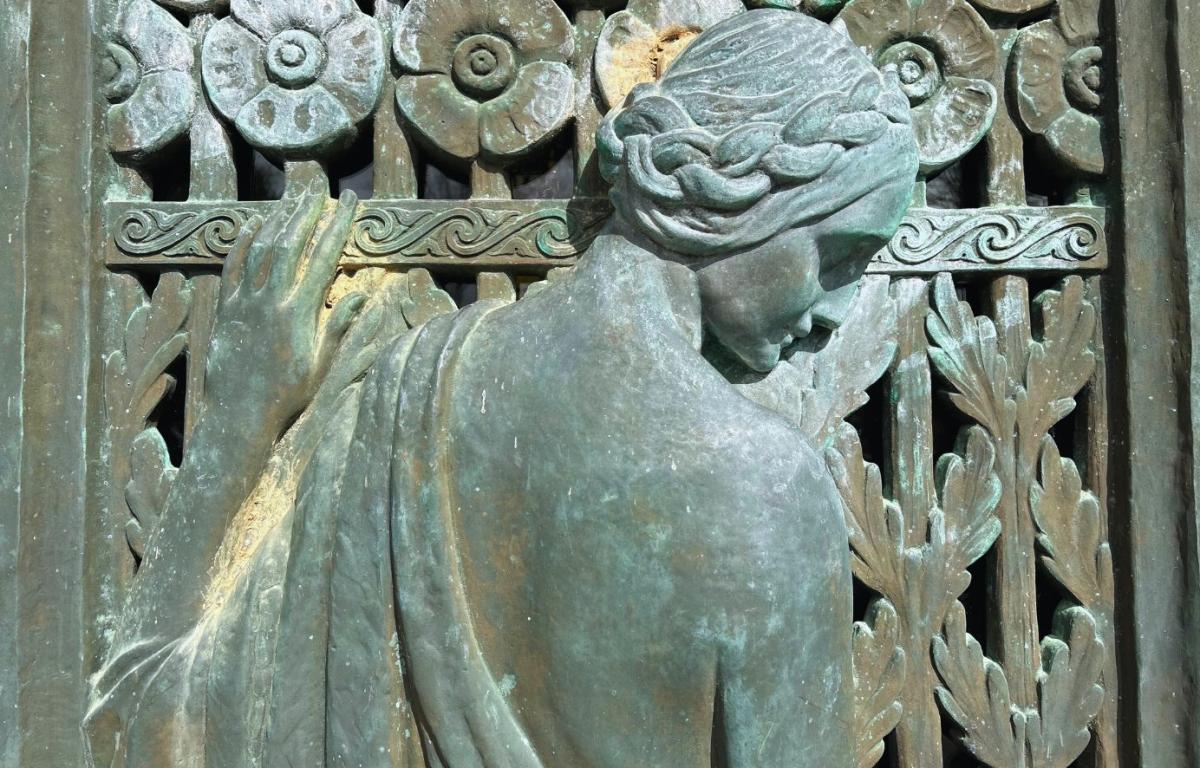
Bronze relief panels form the visual heart of the structure. A classically styled female form with flowing drapery and a bowed head is framed by floral and acanthus motifs. Such imagery was widely used in funerary art of the period to symbolize mourning, reflection and eternal rest.
Over time, the bronze has developed a green patina, the result of natural oxidation that now enhances the sculpture’s texture and age.
Franklin Terry died July 24, 1926, at age 64 after suffering a stroke at his Black Mountain home. His burial in Riverside Cemetery placed him among Asheville’s most prominent dead.
Lillian Terry continued to divide her time between North Carolina, New York and Florida until her death on April 21, 1954, when she was killed in an automobile accident near Bartow, Florida. She was later interred beside her husband.
Today, the Terry mausoleum stands as a reminder of an era of industrial success, civic responsibility and classical ideals.
-
Haunted Asheville and WNC: Ghost stories, eerie legends and mysterious places

From Asheville’s historic landmarks to mountain trails, old cemeteries and Appalachian folklore, explore the ghost stories and mysterious places that have become part of Western North Carolina’s history.
-
Tombstone Tales: Bascom Lamar Lunsford’s remarkable life

The Asheville lawyer, folklorist and festival organizer spent decades preserving Western North Carolina’s songs, dances and mountain traditions.
-
Tombstone Tales: A Fairview grave says James Brevard ‘became a seraph.’ Who was he?
Buried at Cane Creek Cemetery in 1847, the farmer, postmaster and state legislator left a public record that helps explain an extraordinary epitaph.
-
Tombstone Tales: The Reems Creek pitcher who played one game in the Major Leagues
Richard “Rome” Chambers became the first known Western North Carolina native to play Major League Baseball before returning home to Buncombe County, where he died just one day before his 27th birthday.
-
Tombstone Tales: A Revolutionary War veteran’s grave in Mitchell County tells a WNC story for July Fourth
At Kona Baptist Church Cemetery, a memorial to George Silver carries the story of American independence into the Toe River Valley and a family legacy deeply rooted in Western North Carolina.