Editor’s Note: Western North Carolina is rich with untold stories—many resting quietly in local cemeteries. In this Tombstone Tales series, we explore the lives of people from our region’s past whose legacies, whether widely known or nearly forgotten, helped shape the place we call home.
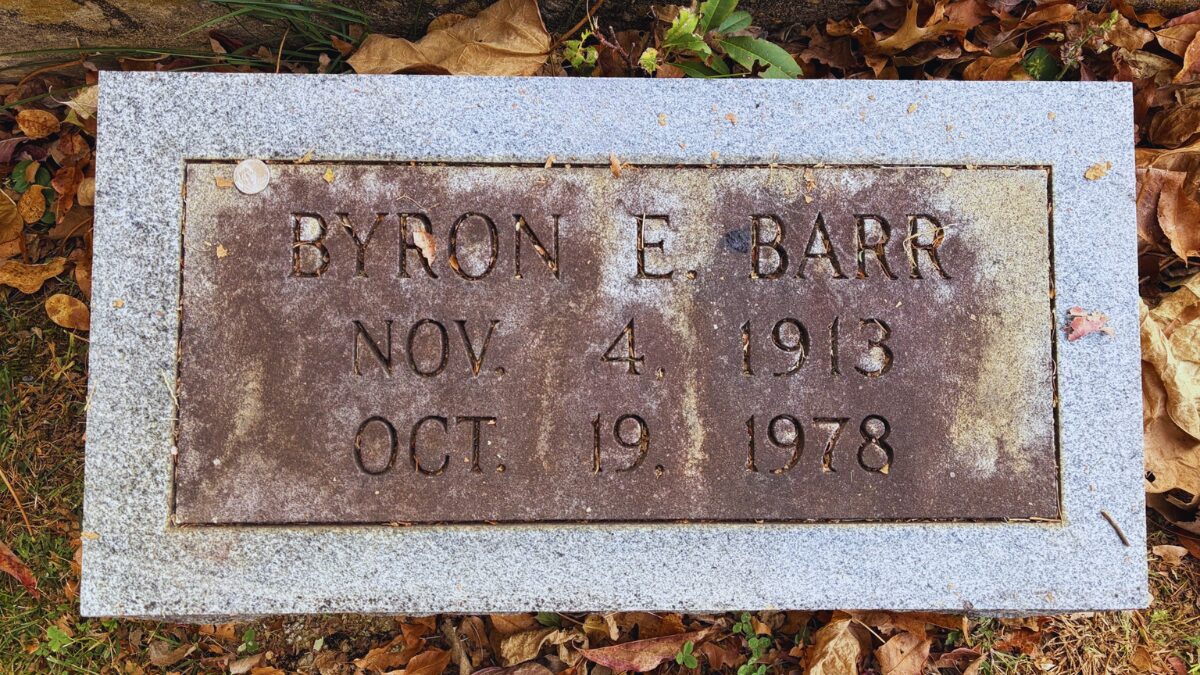
WAYNESVILLE, N.C (828newsNOW.com) — In a quiet corner of Green Hill Cemetery, beneath a modest headstone etched with the name Byron E. Barr, lies one of Hollywood’s most complicated stars. Known to the world as Gig Young, the Oscar-winning actor built a career on charm, wit and sophistication. His life ended in a violent murder-suicide that stunned the entertainment industry.
His grave in Waynesville offers no hint of the fame he once carried. Instead, it reflects the life he lived before Hollywood, a life rooted, in part, in the mountains of Western North Carolina.
A Hollywood Life With Humble Beginnings
Born Nov. 4, 1913, in St. Cloud, Minnesota, Byron Elsworth Barr grew up far from the glamour of the film industry. His parents, John and Emma Barr, moved frequently for work. They eventually settled in Washington, D.C., where Young discovered acting in high school. A scholarship to a playhouse in Pasadena, California led to a meeting with a Warner Bros. Studio executive and film roles followed. He was renamed after a character he played in the 1942 film The Gay Sisters.
Gig Young became known for his smooth delivery and comedic timing. He earned Academy Award nominations for Come Fill the Cup in 1952 and Teacher’s Pet in 1959. His defining performance came in 1969 when he won the Oscar for Best Supporting Actor for his haunting role as the cynical emcee in, They Shoot Horses, Don’t They?
Behind the scenes, Young’s personal life was marked by instability due to his battle with alcoholism and insecurity.
A Career Unraveled
By the 1970s, Young’s drinking had become widely known in the industry and cost him roles. He was fired from Mel Brooks’ Blazing Saddles after just one day on set due to alcohol‑related issues. Roles grew scarce, and the actor who once commanded top billing found himself drifting between minor parts and personal crises.
His love life was equally turbulent. Young married five times, including a high‑profile union with actress Elizabeth Montgomery, known for her iconic role in the hit television show, Bewitched.
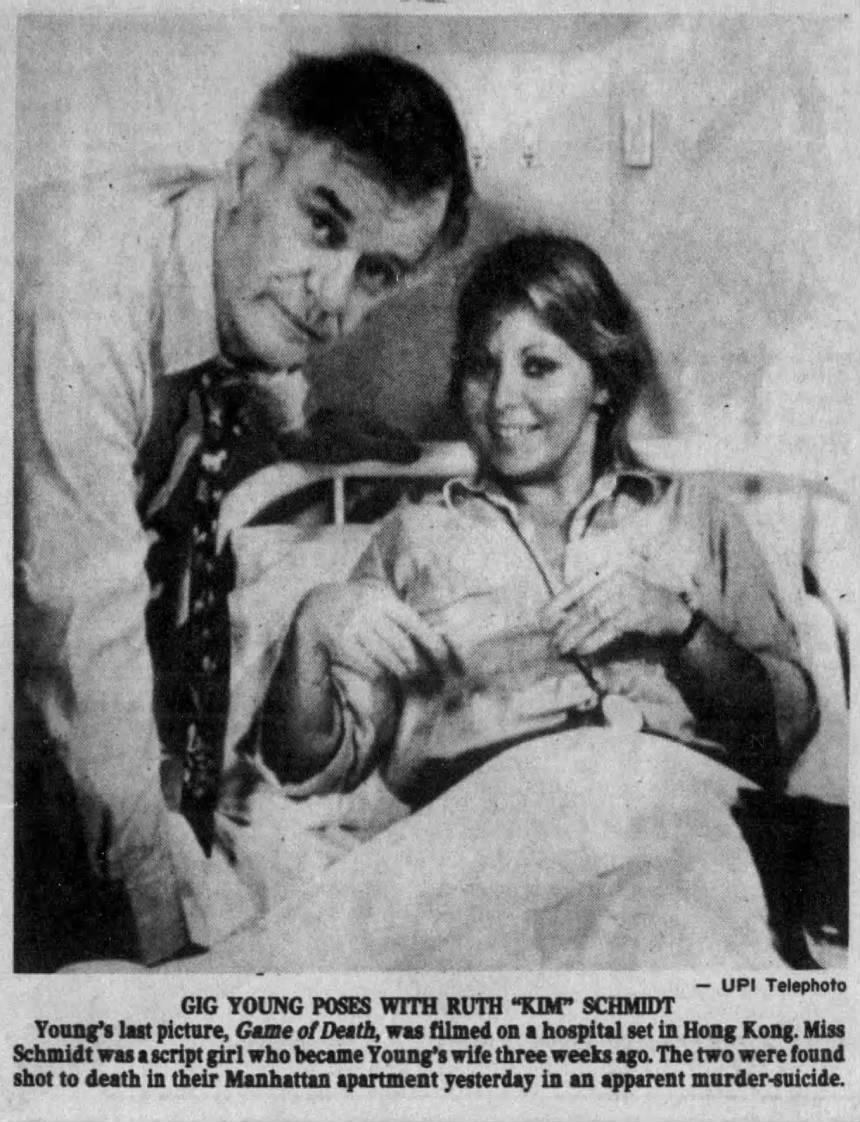
In 1978, at the age of 64, Young met 31‑year‑old Kim Schmidt. The script supervisor worked on The Game of Death with Young. By September, the couple married.
The marriage lasted just three weeks.
A Shocking End in Manhattan
On Oct. 19, 1978, police were called to the couple’s apartment in a historic building on West 57th Street in Manhattan. Inside, officers found Schmidt dead from a gunshot wound. Young was found nearby, also dead, with the weapon beside him.
Investigators ruled the case a murder‑suicide.
The news stunned Hollywood. Young’s public persona as a suave, witty and controlled man had long masked the private chaos that friends and colleagues later revealed. His death became one of the most infamous tragedies in entertainment history, a grim coda to a career marked by brilliance and instability.
A Quiet Resting Place in Western North Carolina
Although Young lived most of his life far from the Blue Ridge Mountains, his family chose to bury him in the Barr family plot in Waynesville.
The family had deep roots in Western North Carolina, particularly in Haywood County. Several members of Young’s extended family lived, worked and were buried in the region throughout the late 19th and early 20th centuries. The family plot at Green Hill Cemetery was established long before Young found fame, and it became the resting place for multiple relatives over the decades.
Even after the Barrs moved north for work, they maintained ties to Waynesville with family gatherings, funerals and visits keeping the connection alive. When Young died in 1978, his surviving relatives chose a quiet burial in the mountains over burial in Hollywood.
Today, visitors to Green Hill Cemetery find a simple marker that blends in with the surrounding stones. There is no mention of Gig Young, no reference to his Oscar and no hint of his tragic ending.
Legacy of a Troubled Talent
Gig Young’s legacy remains a study in contradictions. He was a gifted performer whose work still resonates, especially his Oscar-winning portrayal of desperation and spectacle in They Shoot Horses, Don’t They? His personal struggles, addiction, failed marriages and the violent end to his final relationship, continue to complicate how he is rememebered.
For Western North Carolina, his grave adds a surprising chapter to local history. It ties the mountains to a story of Hollywood glamour, artistic triumph and human tragedy. It is a reminder that even the brightest stars can fall in the most unexpected places.
-
Haunted Asheville and WNC: Ghost stories, eerie legends and mysterious places

From Asheville’s historic landmarks to mountain trails, old cemeteries and Appalachian folklore, explore the ghost stories and mysterious places that have become part of Western North Carolina’s history.
-
Tombstone Tales: Bascom Lamar Lunsford’s remarkable life

The Asheville lawyer, folklorist and festival organizer spent decades preserving Western North Carolina’s songs, dances and mountain traditions.
-
Tombstone Tales: A Fairview grave says James Brevard ‘became a seraph.’ Who was he?
Buried at Cane Creek Cemetery in 1847, the farmer, postmaster and state legislator left a public record that helps explain an extraordinary epitaph.
-
Tombstone Tales: The Reems Creek pitcher who played one game in the Major Leagues
Richard “Rome” Chambers became the first known Western North Carolina native to play Major League Baseball before returning home to Buncombe County, where he died just one day before his 27th birthday.
-
Tombstone Tales: A Revolutionary War veteran’s grave in Mitchell County tells a WNC story for July Fourth
At Kona Baptist Church Cemetery, a memorial to George Silver carries the story of American independence into the Toe River Valley and a family legacy deeply rooted in Western North Carolina.