


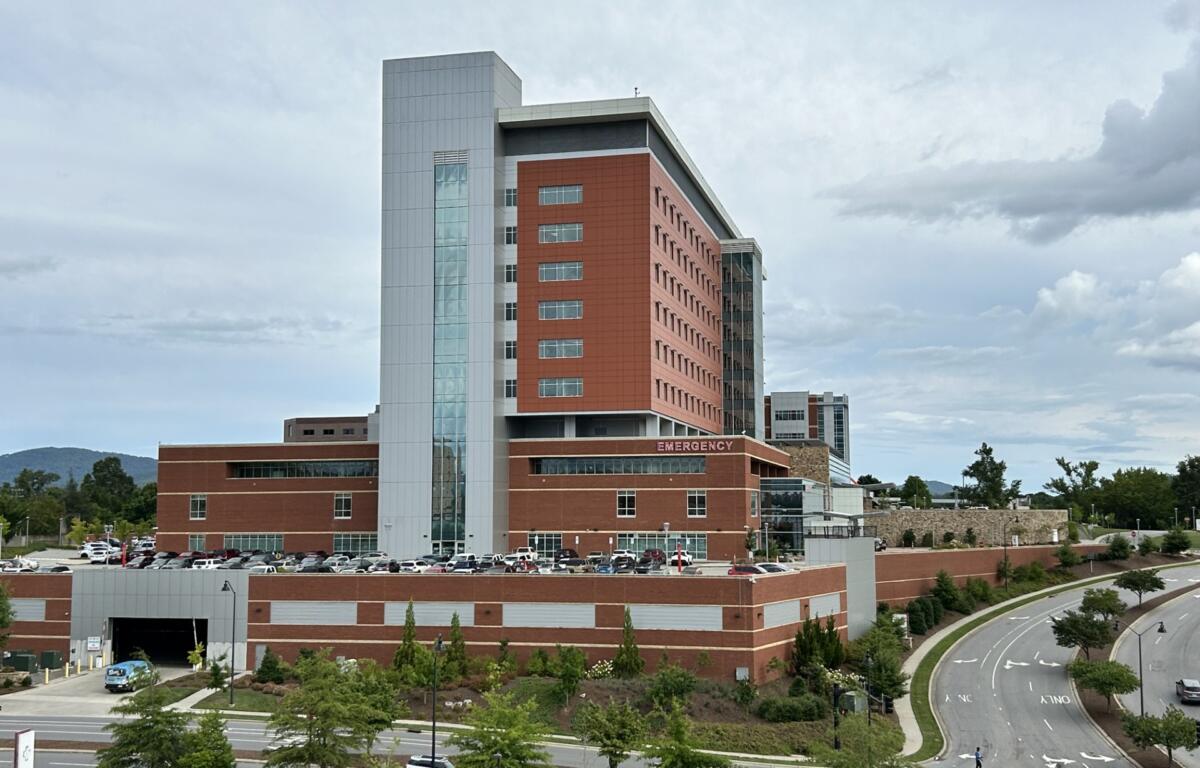

ASHEVILLE, N.C. (828newsNOW) — Community members gathered Tuesday evening to hear updates on oversight of the Mission Health system and share concerns about care in Western North Carolina during a public meeting hosted by Dogwood Health Trust and the independent monitor reviewing HCA Healthcare’s compliance with the 2019 hospital sale agreement.
The meeting comes months after Mission Hospital faced federal sanctions for the third time in less than two years. The Centers for Medicare and Medicaid Services placed the hospital in “immediate jeopardy,” a designation used when deficiencies pose a potential threat to patient safety and one of the most serious findings a hospital can receive.
Dogwood Health Trust officials said the meeting was intended to explain the monitoring process and connect community members directly with representatives from state regulators, the North Carolina attorney general’s office and HCA Mission Health.
Dogwood Health Trust was created after the 2019 sale of Mission Health to HCA Healthcare. The organization serves 18 counties in Western North Carolina and the Qualla Boundary and has two primary roles: investing in community health initiatives and overseeing compliance with the asset purchase agreement tied to the hospital system’s sale.
To help carry out the oversight role, Dogwood hired Affiliated Monitors Inc. in April 2024 to serve as the independent monitor reviewing whether HCA is meeting the obligations outlined in the sale contract.
Independent monitor Jerry Coyne said the agreement signed in 2019 defines the responsibilities HCA must meet but cannot be changed by the monitoring team.
“Our job is to measure compliance with the agreement and provide the public with a fair and accurate assessment,” Coyne said.
If the monitor finds violations, the contract allows enforcement through the courts rather than fines or penalties. A judge could order HCA to comply with the agreement if a violation is confirmed.
A lawsuit filed by the North Carolina attorney general seeking clarification on some provisions of the agreement is still pending. Coyne said the case could help determine how the contract should be interpreted when hospital services are reduced but not eliminated.
“There’s an open question about how much a service can be reduced before it is considered discontinued,” he said.
The monitoring team said it is focusing on three major areas of the agreement: maintaining certain protected services at Mission Hospital, remaining in good standing with Medicare and Medicaid and providing charity care.
Coyne said the monitor considers repeated “immediate jeopardy” findings by federal regulators an important factor when evaluating whether a hospital remains in good standing.
Although Mission Health has continued participating in Medicare and Medicaid, the monitor said repeated regulatory issues raise questions about compliance with the agreement’s requirements.
The team is also reviewing how charity care has changed since a statewide law expanded hospital financial assistance programs to cover medically necessary care rather than only emergency care.
The independent monitor’s next public report, which will review data from 2025, is expected to be released this summer after review by Dogwood Health Trust.
Officials said community feedback plays an important role in the monitoring process. The team collects information from HCA as well as patients, health care workers and residents across the region.
“We rely on community engagement to understand what people are experiencing,” Coyne said.
Representatives from the North Carolina Department of Health and Human Services also spoke at the meeting, outlining how the state investigates hospital complaints and conducts inspections on behalf of federal regulators.
Deputy General Counsel Lee Miller said complaints about hospitals can be filed by patients, staff members or members of the public and can be submitted anonymously.
Once received, complaints are reviewed and prioritized based on their severity. Investigations may include unannounced inspections, medical record reviews, interviews with staff and patients and on-site observations of hospital operations.
If deficiencies are identified, the hospital must submit a plan of correction outlining how it will fix the problems and prevent them from happening again. Regulators can impose penalties or, in severe cases, terminate the hospital’s ability to participate in Medicare.
Community members attending the meeting were encouraged to speak directly with representatives from HCA, state regulators and the independent monitor to share their experiences with the Mission Health system.
Dogwood Health Trust officials also highlighted the organization’s broader investments across the region. Since its creation in 2019, the foundation said it has invested nearly $700 million in more than 850 organizations focused on health, housing, education and economic opportunity in Western North Carolina.
Last week, Dogwood also announced a $10.5 million investment in federally qualified health centers that serve more than 200,000 residents, many of whom lack health insurance.