


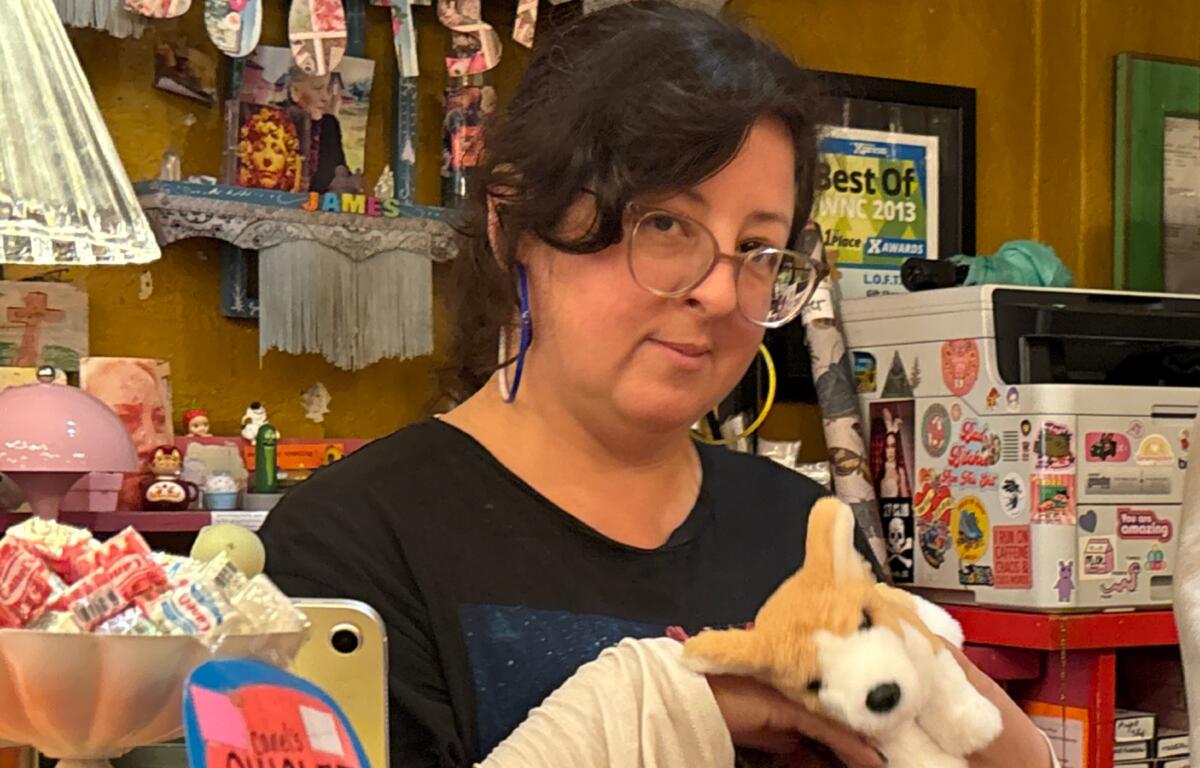

ASHEVILLE, N.C. (828newsNOW) — On a mild afternoon in downtown Asheville, the sidewalks were filled with a familiar mix: tourists snapping photos, musicians tuning guitars and service workers weaving between shifts. It doesn’t feel like a “no-go zone,” as a recent Fox News article suggested. Instead, for many who live and work here, the reality is more complicated — and far less dire.
“I think downtown is cute, quaint,” said Nic Krieger, who has worked in the area for 15 years. “I love the trees, the mix of green space and buildings.”
Krieger said Asheville’s challenges — including homelessness — are not unique.
“That comes with the territory of any city,” Krieger said, adding that she’d like to see more housing options for service industry workers. Without it, many employees commute from surrounding towns, adding to parking and traffic issues.
That concern came up repeatedly in conversations with people downtown: not whether the area is dangerous, but whether it still belongs to the people who keep it running.
A downtown worker who has lived in Asheville for about a year and a half said the city often feels geared more toward visitors than residents.
“It seems that downtown is for tourists almost exclusively,” he said. “I wish Asheville would invest more in its community that already exists.”
He said the city’s character — its music, arts and independent spirit — comes from the people who live and work there every day. But rising costs make that increasingly difficult.


Longtime resident Kira L., who has lived in Asheville for nearly three decades, pushed back strongly on the idea that downtown is unsafe.
“I’ve lived here for 28 years. I’ve never had anything happen,” she said. “It’s a safe place.”
Still, she acknowledged visible drug use and homelessness are real issues the city needs to address.
“That is not OK,” she said of seeing drug users nod off on the sidewalks. “They need to do something about that.”
Like others, Kira said she would like to see city leaders slow the pace of hotel development and invest more in infrastructure and housing for residents.
“A city dedicated only to tourism doesn’t feel good,” she said
Others offered a range of perspectives on policing. Some said they rarely see officers downtown, while others questioned whether increasing police presence is the right approach.
“I feel very safe,” said Nora Millar, a 13-year resident. “I don’t think there should be an increased police presence. I think there could be more social workers or people trained in crisis response.”
Business owner Gary Pittillo, who works along Haywood Street, said he regularly encounters unhoused individuals and believes the issue has gone largely unaddressed.
“I’m probably in the worst of it,” he said, rattling of names of nearby facilities for the unhoused. “I see homeless through here all the time.”
He said the problem is complex and unlikely to be solved quickly. “It’s not going to be something that’s corrected like this,” he added, gesturing with his hand.
For some, the debate misses the bigger picture.
Peter Campo, who commutes from South Carolina to work downtown, said despite its challenges, Asheville remains appealing. “In general, it’s a great little town,” he said.
Online, many commenters on an 828newsNOW post also pushed back on the “no-go zone” characterization, describing it as exaggerated and out of step with their own experiences.
“Downtown is fine,” one commenter wrote. “Yes, there are homeless people, but that’s a result of broader policy issues.”
Another said they don’t avoid downtown out of fear. “I just like being home where it’s quiet,” the commenter wrote, adding a lighthearted note.
Several described their interactions with unhoused individuals as non-threatening. “I’ve been approached a couple of times recently — nothing aggressive,” one person wrote. “A no-go zone? I don’t think so.”
Others pointed out that Asheville’s challenges are not unique. “Every city has this problem,” one commenter wrote. “You just have to be aware of your surroundings.”
Some emphasized compassion. “People fall on hard times,” one wrote. “Just be kind.”
A few acknowledged concerns about rising homelessness and crime, while still expressing affection for the city. “It’s not perfect,” one commenter wrote, “but it’s still a special place.”
Taken together, the responses paint a nuanced portrait of downtown Asheville: a place balancing growth and identity, tourism and community, prosperity and affordability.
It is not without problems. But for many who know it best, it is far from off-limits.