
EDITOR’S NOTE: Strangeville explores the curious and unexplained stories that have long defined Asheville and Western North Carolina. The region is full of unanswered questions, from old folklore and local legends to eerie encounters, unsolved moments in history, and the true-crime mysteries that still leave people wondering. Each week, we look back with an open mind and a sense of curiosity, trying to understand why some stories take hold and why some can never be explained.
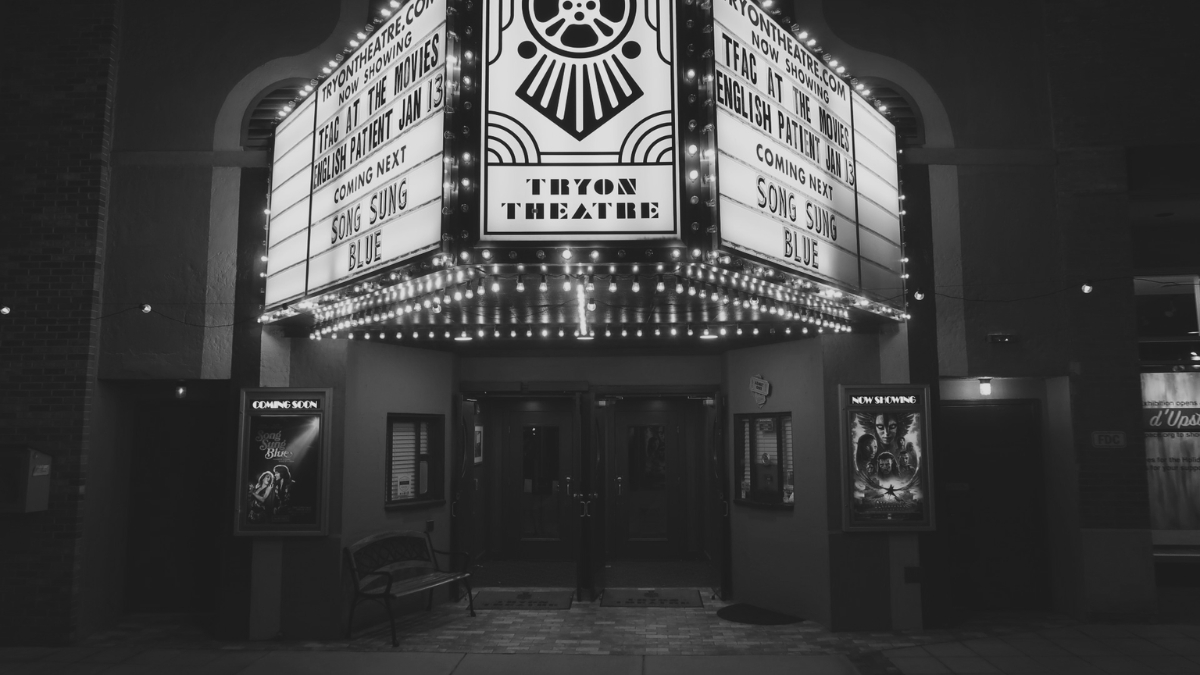
TRYON, N.C. 828newsNOW — The Tryon Theatre has stood as a fixture in downtown Tryon since opening in 1932 and reopening after a fire in 1938. According to local lore, the theater is haunted.
Former employees have reported doors opening and closing on their own. Others have said they felt an unexplained presence when they were alone in the building.
The stories have circulated for years and are usually tied to a killing inside the theater in 1953.
A body in the theater
On the morning of May 24, 1953, projectionist Phletus Pressley arrived at the Tryon Theatre to prepare for the day’s showing.
He found the theater’s manager, Marvin Edward Ball, 30, slumped near a counter in the lobby, in a pool of blood.
Pressley called for help. Local authorities called Coroner Otis Dalton to the scene. Dalton found Ball had been shot in the chin. The bullet passed through his head.
When Dalton opened Ball’s shirt, he found a second wound – a gunshot to the right shoulder that had already been treated, packed with gauze and covered with cloth.
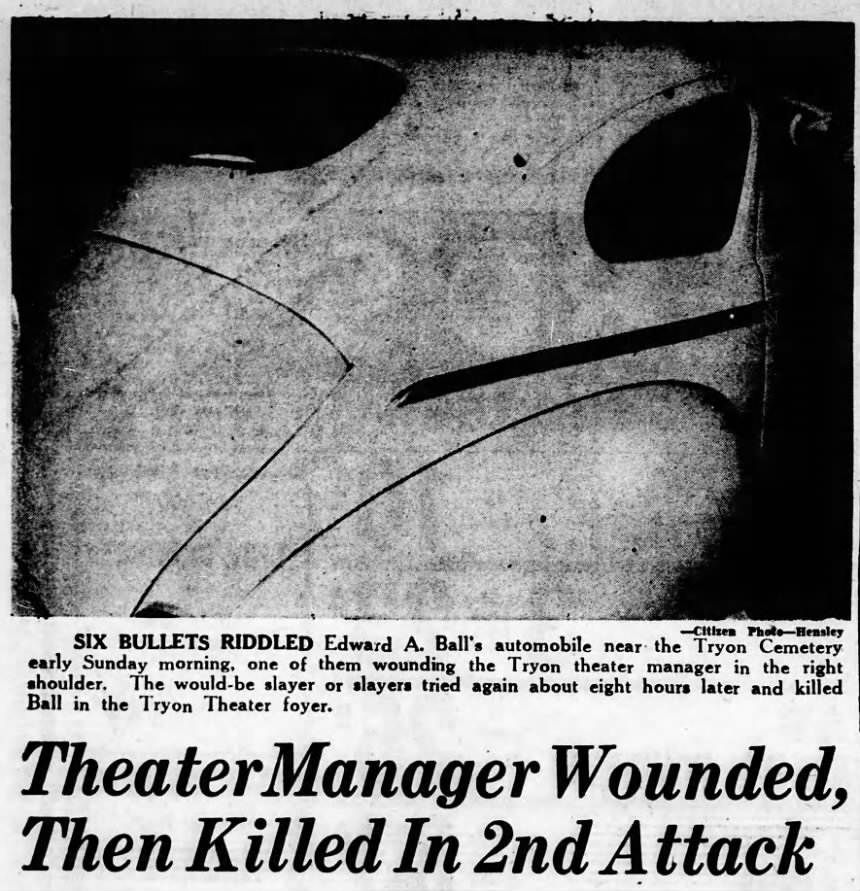
Outside, Ball’s car sat parked near the theater, its body marked by at least six bullet holes.
The investigation
As the investigation began, the case drew attention beyond Polk County, including involvement from the State Bureau of Investigation.
Early reporting in the Tryon Daily Bulletin identified a connection they hoped would solve the case.
Ball had been with Stella Rhodes in the early morning hours before his death.
A confrontation and a chase
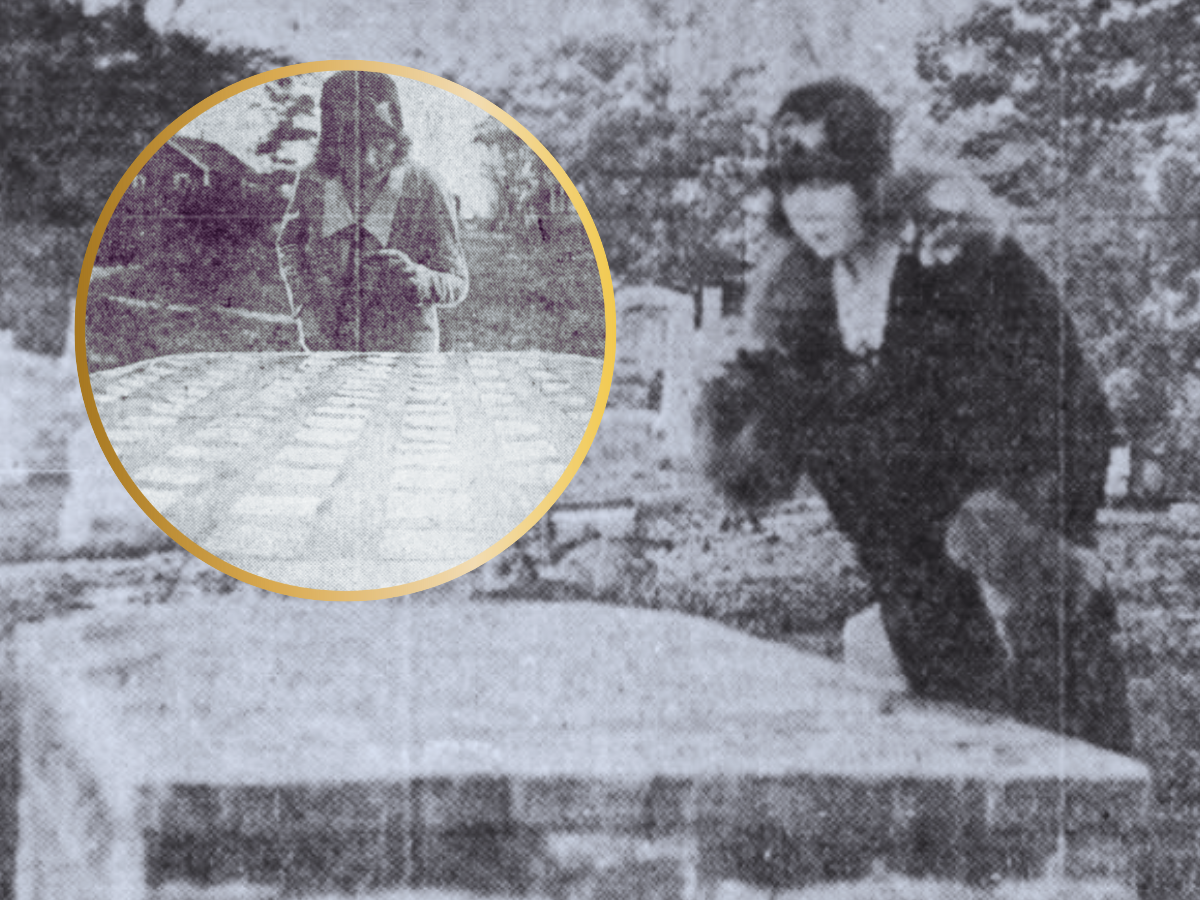
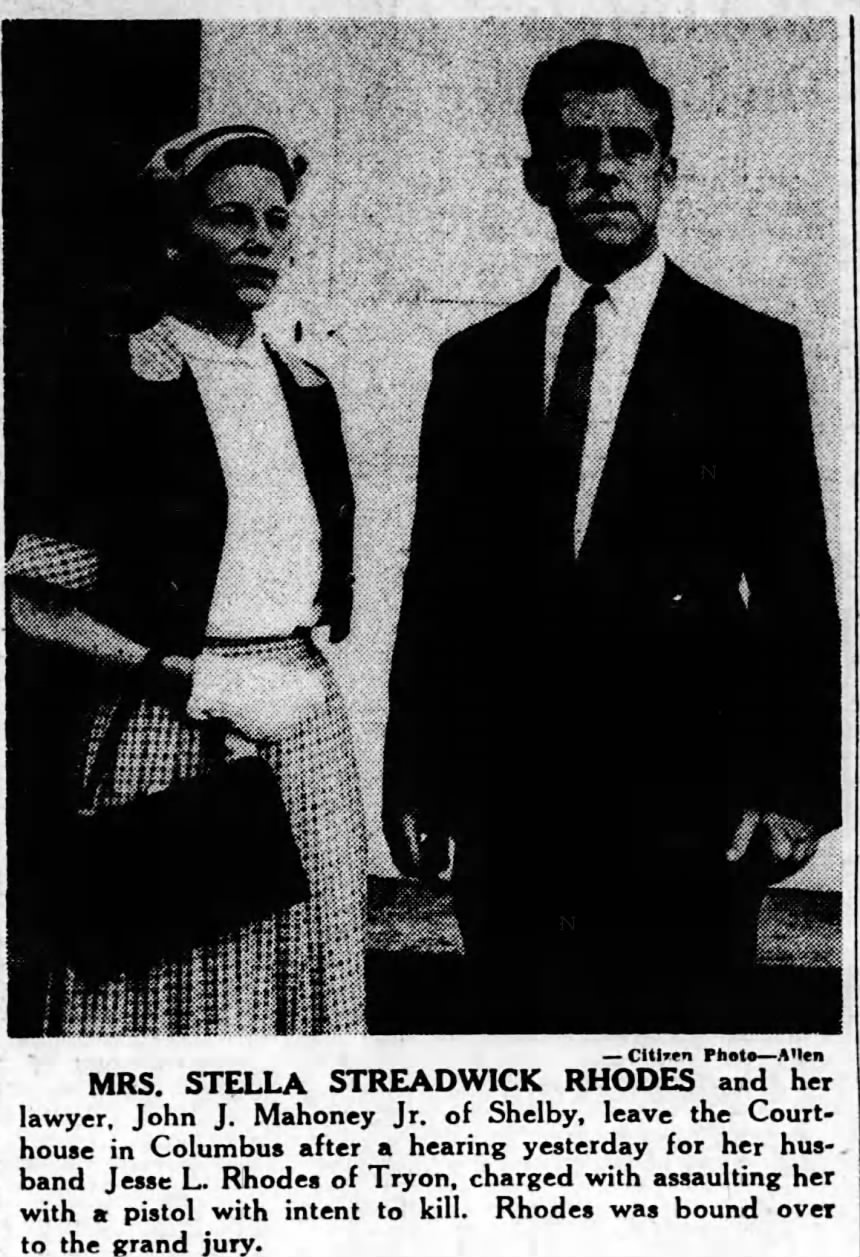
Stella Rhodes told authorities that she and Ball met up in the early morning hours of May 24. They were parked outside her home on Cemetery Street around 2:30 a.m. She said her husband, Jesse Rhodes, approached the car holding a flashlight and fired shots into the vehicle.
She told authorities Ball pushed her down in the seat to protect her. As he drove away, gunfire struck the car and Ball was wounded in the shoulder during the shooting.
According to Stella Rhodes, her husband pursued them along nearby roads, chasing them into South Carolina and back into North Carolina.
After eluding Rhodes, they drove to Landrum, South Carolina, where they searched for a doctor. Unable to find one, they returned to Tryon where Ball sought treatment from a local physician.
Hours later, Ball was dead inside the theater.
The case against Rhodes
Investigators quickly identified Jesse Rhodes as the prime suspect.
The confrontation, the gunfire and the pursuit placed him in direct connection with Ball in the hours before the killing. Ball had been killed with a .38 caliber revolver, Rhodes owned one but told police it had been stolen months before the murder. The murder weapon was never found.
Rhodes was charged in connection with Ball’s death, but a coroner’s inquest determined Ball had died at the hands of “unknown” persons.
The charge against Rhodes was dismissed for lack of evidence, though prosecutors noted the case could be brought again if new evidence emerged. It never was.
A second case, and another dead end
At the same time, a separate case moved forward against Jesse Rhodes.
He was charged with attempting to kill his wife, based on the same events described in her testimony.
The case was sent to Superior Court, but in August 1953, a mistrial was declared.
No justice, and a lasting story
By December, the case – referred to in local newspapers as the “Tryon Mystery” – remained unsolved.
In a letter published in the Tryon Daily Bulletin, the Rev. H. A. Pruyn of Tryon Methodist Church wrote of visiting Ball’s family in Fuquay-Varina. He described a grieving household and a father who had returned from Tryon after being told there was little chance justice would be done.
No one was convicted in Ball’s death.
The legend that followed
The Tryon community moved on. The Tryon Theatre reopened and continues to operate today. (Read more about its modern-day story here.)
The unresolved ending of Ball’s life became part of the theater’s identity. A place where many say they have experienced something they cannot explain.
Historic buildings often hold memory in place for a community.
In Tryon, the story of Marvin Edward Ball is a reminder that what remains unanswered often becomes what is remembered.
-
Haunted Asheville and WNC: Ghost stories, eerie legends and mysterious places

From Asheville’s historic landmarks to mountain trails, old cemeteries and Appalachian folklore, explore the ghost stories and mysterious places that have become part of Western North Carolina’s history.
-
Strangeville: Elvis, Asheville and a tiny Cherokee museum

Just off of Highway 19 on the way down to Cherokee, N.C., eagle-eyed drivers might spot the silhouette of Elvis Presley on the side of a small brown building. Inside, visitors will find the Elvis Museum, owned and curated by Dorothy “Dee” Smith.
-
Strangeville: Revolutionary War Ghosts of the Carolina Backcountry

Ahead of America 250, Revolutionary War folklore links Western North Carolina’s Overmountain Men to ghostly legends from the Battle of Kings Mountain.
-
Strangeville: Harry Gardiner, the ‘Human Fly’ Who Climbed Asheville’s Flat Iron Building
A century before viral stunts, Harry Gardiner drew crowds to downtown Asheville by scaling the Flat Iron Building without ropes — part spectacle, part fundraiser and part civic promotion.
-
Strangeville: Devil’s Den and the outlaw legends of Iron Mountain

On the North Carolina-Tennessee line, Devil’s Den became part of a darker mountain history shaped by moonshiners and outlaws.