


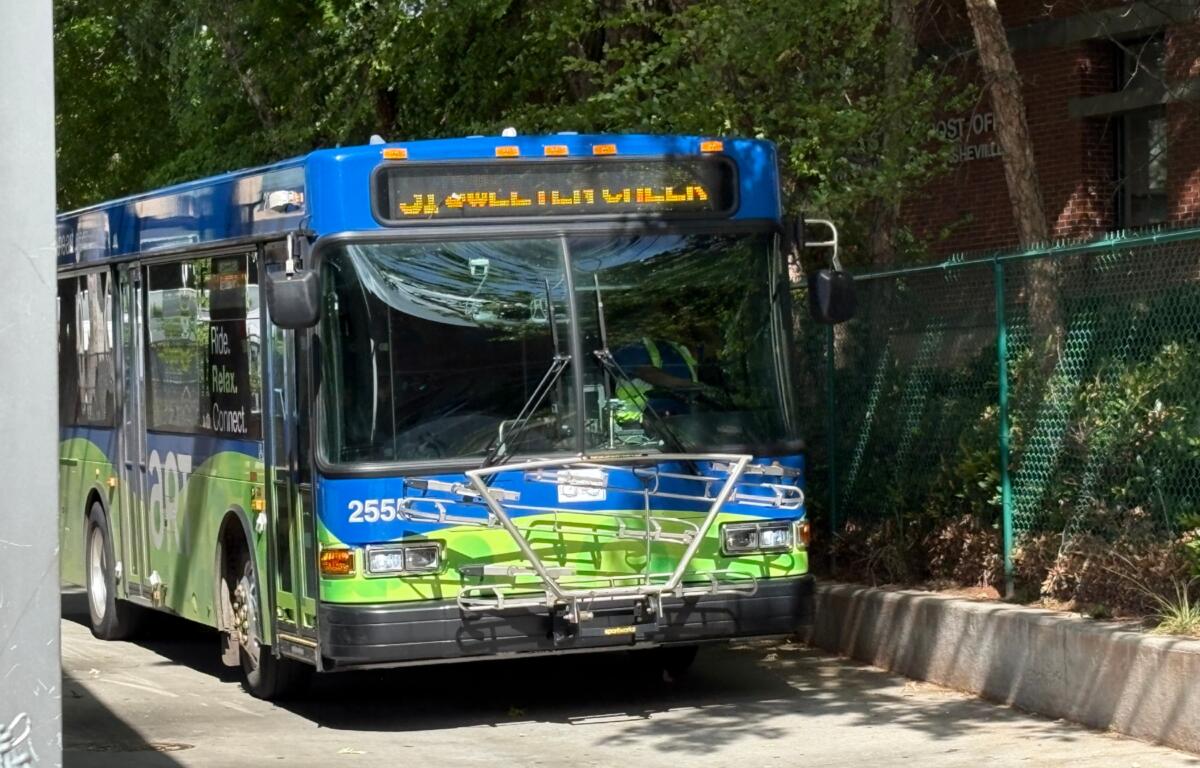

ASHEVILLE, N.C. (828newsNOW) — Riders of Asheville’s city buses are being asked a simple question with a big impact: stay the same or change how transit moves through the city?
The city of Asheville is gathering public feedback on a proposed redesign of the Asheville Rides Transit (ART) network, a system officials say is meant to improve frequency and reliability — even if that means cutting service in some lower-demand areas.
City officials say the draft plan is built around earlier public input and direction from the city of Asheville and would shift the system toward more frequent service on key routes. Some lines would see buses arriving every 15 minutes during peak periods.
But there’s a trade-off: increasing frequency in busy corridors would require pulling service from some neighborhoods to free up buses and drivers.
“We want your input on the future of the ART bus network,” the city said in a public notice. “The draft network is designed to encourage higher ridership by increasing frequency … however, achieving these ridership-focused outcomes requires removing service from some areas.”
The city is calling the effort a Comprehensive Operational Analysis, a long-range review that looks at ridership patterns, population changes and roadway conditions to decide how transit should evolve over the next decade.
Officials say the goal is to better match service with demand — getting more people to jobs, schools and services more efficiently — while maintaining access for public housing and other vulnerable neighborhoods.
The proposed redesign also aims to improve on-time performance and make route connections easier, but city staff acknowledge the changes will not be without disruption.
Transit planners say every system faces the same balancing act: more coverage across a wide area or more frequent buses in fewer places. With limited resources, improving one often means reducing the other.
Public engagement on the draft plan is open through June 28, 2026. Residents can review the proposal and take a survey here.
The city says this is the third round of outreach in the process and is meant to “close the loop” with residents, showing how earlier feedback has been incorporated and asking what may have been missed.
After the survey closes, staff will review responses along with input from meetings and stakeholder sessions before presenting recommendations to the City Council later this year. A final decision is expected in summer 2026.
If approved, changes would not take effect until July 2027, giving riders and agencies time to adjust.
The ART system is expected to continue evolving alongside Asheville’s growth, with officials saying transit planning must adapt to shifting development patterns, population density and commuting needs.