


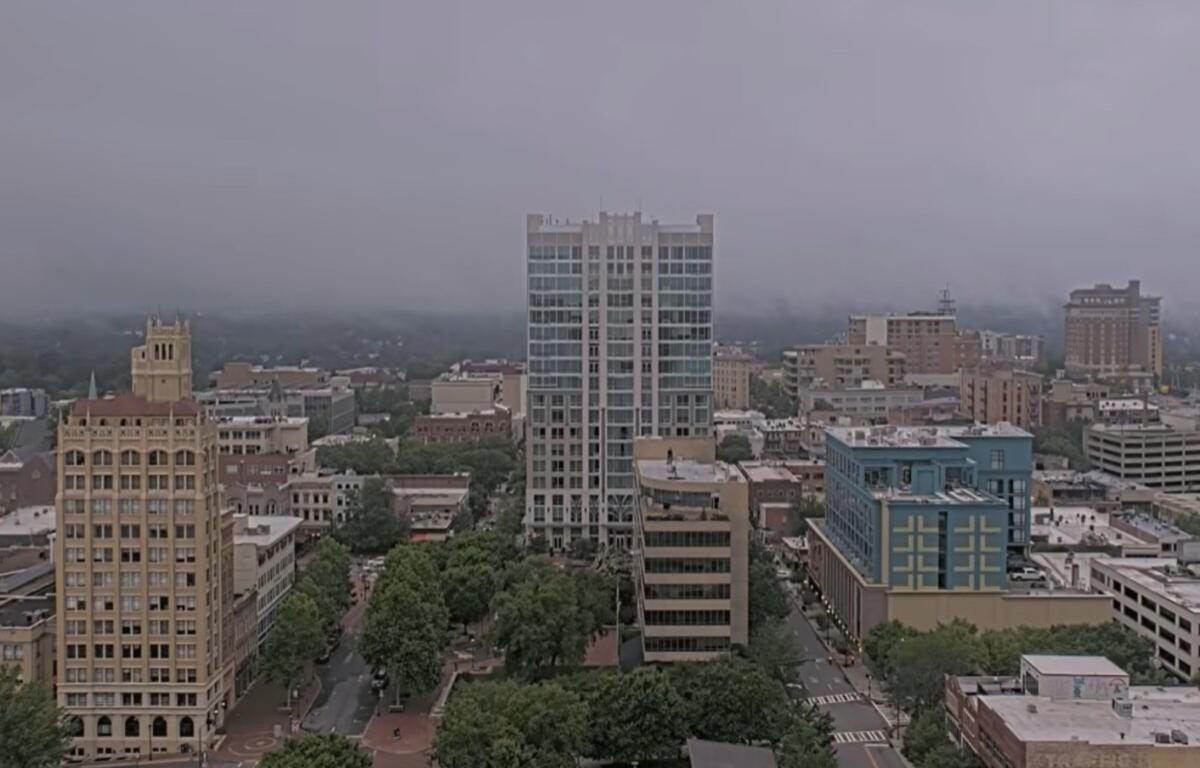

ASHEVILLE, N.C. (828newsNOW) — Asheville leaders spent much of Thursday’s agenda briefing looking ahead at two decisions that could shape the city’s future for years: whether to pursue new federal Opportunity Zones and how to move forward with a sweeping rewrite of Asheville’s development rules.
The discussions come as the city continues balancing economic recovery from Tropical Storm Helene, a persistent housing shortage and concerns about displacement in historically underserved neighborhoods.
City staff told council members they are preparing to launch a years-long update of Asheville’s Comprehensive Plan and Unified Development Ordinance, while also facing a fast-approaching federal deadline to nominate census tracts for the newly revamped Opportunity Zones 2.0 program.
Major zoning rewrite moving forward
Planning Director Stephanie Dahl said the city has completed its consultant selection process for a comprehensive update of the Living Asheville Comprehensive Plan and a complete rewrite of the city’s Unified Development Ordinance, or UDO.
The city received eight proposals and has selected a top-ranked consulting team. Contract negotiations are expected to conclude in time for council consideration in late July.
The project will update growth policies, development standards and zoning regulations while incorporating new priorities such as housing affordability, climate resilience, hazard mitigation and anti-displacement strategies.
The comprehensive plan update is expected to be completed by fall 2027, while the UDO rewrite is targeted for completion by the end of 2028.
Dahl said the effort will help Asheville modernize regulations that guide everything from housing development to stormwater management.
“There’s not a lot of lots out there anymore,” she said, noting the city will analyze where infrastructure improvements could support future growth.
Council members asked why the city was hiring outside consultants for the work rather than handling it in-house.
Dahl said such projects are typically outsourced because they require specialized expertise ranging from zoning law and planning to stormwater engineering and code writing.
“This is very much not an unusual practice whatsoever,” she said, adding that consultants bring experience from communities across the country while allowing the city to avoid hiring additional permanent staff for a temporary project.
Opportunity Zones spark debate
A more immediate decision involves the federal Opportunity Zones program, which Congress renewed last year and made permanent.
The program offers tax incentives designed to encourage private investment in qualifying low-income census tracts.
Under the updated rules, Buncombe County is eligible to submit up to four census tract nominations to the state by Sunday. Any approved designations would take effect Jan. 1, 2027.
Economic Development Division Manager Rachel Taylor said staff is recommending only one nomination — a downtown Asheville census tract — while presenting two other areas for council discussion.
Staff described the downtown tract as the strongest candidate because it aligns with city plans that encourage housing, mixed-use development and economic activity in areas already served by existing infrastructure and transit.
The conversation quickly turned to concerns about displacement.
Council members questioned whether Opportunity Zones have contributed to rising property values and redevelopment pressure in some neighborhoods and whether the city has enough information about the impacts of the program’s first iteration.
Taylor acknowledged the city has had little time to fully evaluate those effects before the state’s June 21 deadline.
“We don’t have the time required for community engagement regarding this nomination,” Taylor told council members.
Staff said previous Asheville projects that reportedly used Opportunity Zone financing included The Duke apartment development downtown, Artful Way and several commercial projects, many of them market-rate developments.
Council Member Sage Turner said the discussion raises broader questions about how Asheville balances investment and neighborhood preservation.
“I don’t want us to not have any,” Turner said of the Opportunity Zones, arguing the program remains a tool that can help attract investment.
Other council members expressed concerns about designating tracts that include or border neighborhoods identified in recent anti-displacement studies as vulnerable to redevelopment pressure.
Vice Mayor Annette Mosley said she was uneasy with expanding the program into additional neighborhoods without more information about its impacts.
Council members appeared most supportive of nominating the downtown tract while expressing reservations about other potential designations.
No formal vote was taken Thursday. City Manager DK Wesley said staff sought council feedback before deciding whether to submit nominations.
The state will ultimately review recommendations from municipalities and submit final nominations to the U.S. Treasury Department.
Other business
Council members also received an update on complaints about noise from pickleball courts at Malvern Hills Park in West Asheville.
Parks and Recreation Director D. Tyrell McGirt said the local pickleball association supports moving the court closing time from 10 p.m. to 9 p.m., matching operating hours at the city’s Montford pickleball facility.
The city plans to notify users of the change.