


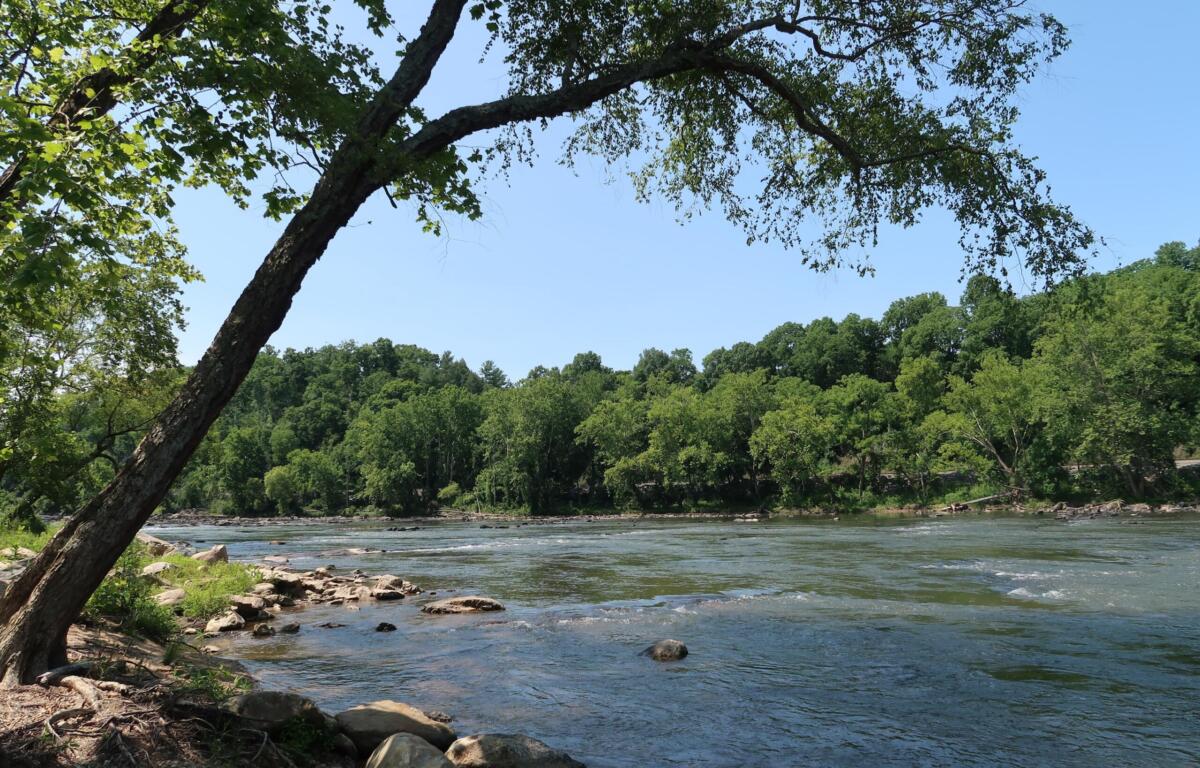

ASHEVILLE, N.C. (828newsNOW) — The French Broad River has long played a big part in summer recreation for Asheville. However, a year and a half after Tropical Storm Helene swept debris, garbage and more into the river, is it safe to swim? Local conservation nonprofit MountainTrue provided an update.
“I think that’s a great question to be asking. We want people to be able to recreate safely out there, particularly on the French Broad River,” said Jon Stamper, MountainTrue River Clean-up Operations Director. “What I can say at this point is, a huge amount of work has been done by a lot of entities, including MountainTrue, to get these rivers back to a state where they’re safe to go out and recreate in.”
Stamper said that MountainTrue has removed almost 5 million pounds of debris from the river to date.
“A lot of that has been focused on areas where people recreate, whether it’s swimming, or tubing, or kayaking or whatever,” Stamper said. “There’s still stuff out there, particularly on the river banks, but, as of now, we’re feeling really good about recreation.”
Is there still debris in the French Broad River?
Though Mountain True, the United States Army Corps of Engineers and other contractors have removed millions of pounds of debris from the river, there are still a few things to be mindful of, Stamper said.
1. Wear closed-toe shoes
Stamper said that his 91 MountainTrue crew members still wear closed-toe shoes, keeping their feet safe on the unpredictable riverbed.
2. Report trash and water debris
“If people are finding trash or finding debris, particularly debris in the water, they can report that to us. That is exactly what we are here for,” Stamper said. “Our goal is to clean up the rivers, particularly places where people recreate and where guides make their money and make their livings.”
If landowners or other members of the public find garbage or debris in the river, they are able to report it to MountainTrue here.
3. Watch for entrapment hazards
Stamper said that his crews have worked diligently to remove “entrapment hazards,” or objects that can snag hands and feet in the water.
“That’s the kind of stuff that we’re looking for every day to get out of there, and I’m thankful and happy to report, at this point, we’re not really finding that kind of stuff anymore,” Stamper said. “We’re finding stuff that’s still on the riverbed, like PVC pipe and other pieces of trash, but the big loops of PVC pipe that can entangle you? We’ve gotten a lot of that out.”
Is the French Broad River clean?
While debris has become less of a problem for French Broad water recreation, monitoring the cleanliness of the water is a constant process.
Hartwell Carson, Clean Waters Director at MountainTrue, said that while water quality can vary, the French Broad has recovered “remarkably well” after the storm.
“I dare say if you went out there now, and you didn’t know what it used to look like, you might have a hard time really seeing that the hurricane had it. The vegetation’s grown back, the clean-up has been robust and the water quality has really recovered nicely,” Carson said. “As far as whether it’s safe to, you know, take a bath in the river, it really depends on the weather.”
Big rain events can spike the pollution levels in the river. Checking the muddiness of the water is a good way to judge its cleanliness.
“Usually, the general rule of thumb, if the water’s super muddy, the pollution levels are higher, and if it’s not muddy, then I’d say it’s pretty clean,” Carson said.
There are also several digital resources available for surveying water cleanliness, including The Swim Guide, an online map displaying river health around the country.
For instance, a July 6, 2026, test of the water in the French Broad River at Pearson Bridge “failed to meet water quality standards,” according to the site.
Meanwhile, a test at Woodfin Silver-Line Park, located around a mile and a half upriver, “meets water quality standards,” according to its own July 6 test.
Find the latest water data at www.theswimguide.org/find.
There is also French Broad Water Quality, an E. coli tracker based around the French Broad River at Pearson Bridge. Monitor the E. coli levels at www.frenchbroadwaterquality.com.
Future of the French Broad
Last summer, the Clean Waters team took a trip down the French Broad from its headwaters in Rosman, N.C., to Douglas Lake near Pigeon Forge, Tennessee.
“Even last year, we were pretty impressed, given what Helene did, how good things were looking,” Stamper said. “Well, from there, they’re looking even better, because we put a whole ‘nother year’s worth of effort into continuing to clean up.”
Stamper said that the work is far from over, but river is in far better shape than it was.
“We have more work to do for sure,” Stamper said. “But at this point, we’re really proud and really happy to see the river starting to look like it used to.”
For more information about MountainTrue, visit www.mountaintrue.org.
Read more. . .
-
Asheville man sentenced after gun linked to 4 shootings
Zyon Jacobs, 21, received 21 months in federal prison for illegally possessing firearms, including one tied to four Asheville shootings
-
$510,000 investment supports health care access in Western North Carolina
UnitedHealthcare funding will support Western Carolina Medical Society programs that connect uninsured patients with specialty care, provide medical interpreter services and support medical professionals across the region.
-
During Deal Days, you can get lifetime access to ChatGPT, Gemini, Claude, and more for $70
Asheville and WNC readers can explore multiple AI models and image, voice and video tools with 1min.AI’s lifetime plan. The $69.97 offer ends October 11; monthly credit limits apply.
-
Blue Ridge Parkway to clear Helene debris to reduce wildfire risk
Crews will remove fallen trees and storm debris along 11 miles near Asheville
-
This is not Helene: Why WNC’s rain threat is different
Asheville is more than 2 inches below normal rainfall as tropical moisture approaches, but flooding remains possible