
Editor’s Note: Western North Carolina is rich with untold stories—many resting quietly in local cemeteries. In this Tombstone Tales series, we explore the lives of people from our region’s past whose legacies, whether widely known or nearly forgotten, helped shape the place we call home.
LEICESTER, N.C. (828newsNOW) — Bascom Lamar Lunsford spent much of his life gathering songs from the mountains, carrying them from country communities to recording studios, festivals and even the White House.
When his travels were over, he came back to the mountains.
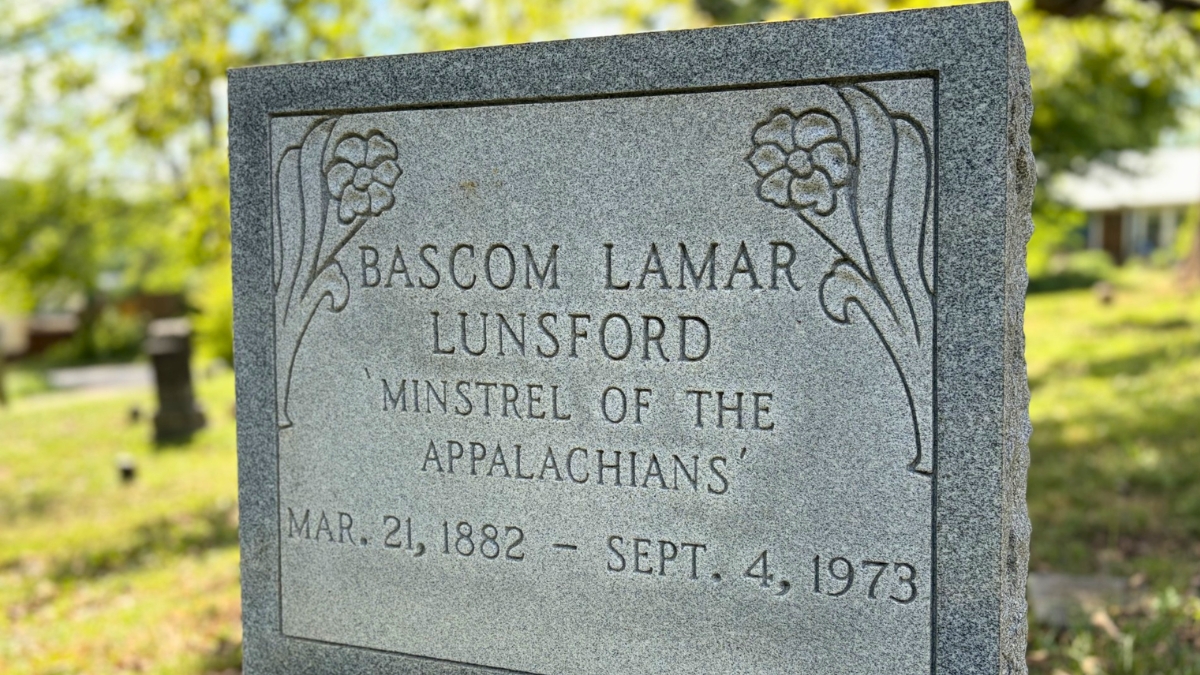
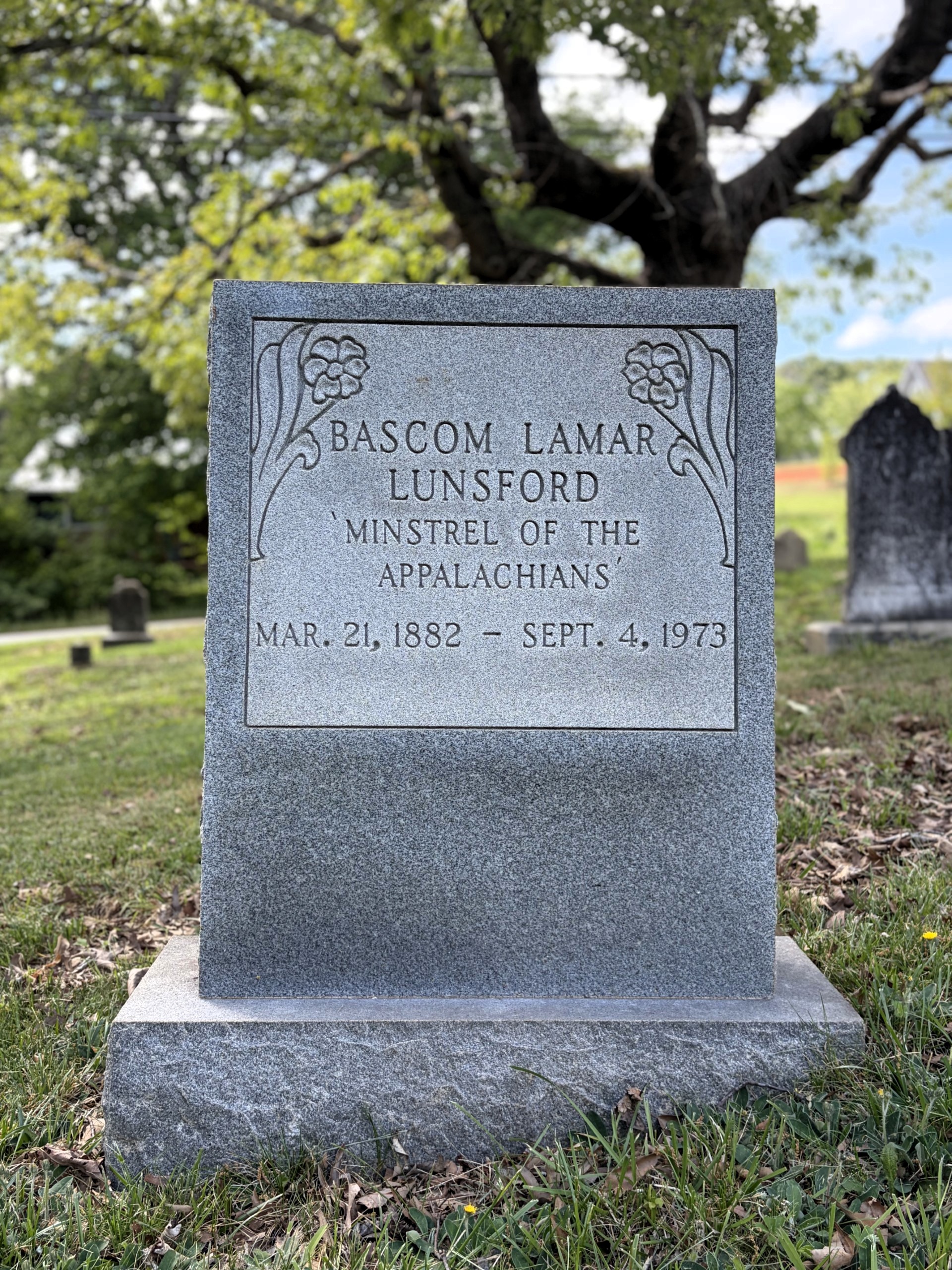
Lunsford, one of Western North Carolina’s most influential collectors and promoters of traditional music, died September 4, 1973, at age 91. He is buried in Leicester Episcopal Church Yard, the Buncombe County community that figured prominently in his life.
He was born March 21, 1882, in Mars Hill to James Bassett and Luarta Leah Buckner Lunsford. His father was teaching at Mars Hill College at the time, and his mother’s family had deep ties to the school. Within a few years, the family moved to Buncombe County, where Lunsford attended schools around Leicester and Camp Hill Academy.
Few people could have predicted the range of work Lunsford would take on.
Lunsford taught school, kept bees and, beginning in 1903, traveled through Western North Carolina and upper South Carolina selling nursery stock. Those trips brought him into homes where people sang old ballads and played traditional tunes. Lunsford listened and learned.
On June 2, 1906, he married Nellie Sara Triplett of South Turkey Creek. They eventually raised one son and six daughters. South Turkey Creek became the family’s longtime home and the place Lunsford returned to as his reputation grew beyond Western North Carolina.
Music was only part of his working life. Lunsford studied law at Trinity College, now Duke University, passed the bar in 1913 and later maintained a law office in Asheville. In 1927, he briefly represented Anna Montague in the high-profile Asheville murder case involving the death of Mary Cooper. The Southern Mysteries series on the Montague trial explores the case in greater detail. He also taught, published a newspaper and worked as a special agent for the U.S. Department of Justice during World War I.
All the while, he kept collecting music.
That work eventually connected Lunsford with some of the nation’s leading folklorists. By the 1920s, Lunsford was gathering songs across the Carolinas and Georgia, building a reputation as a performer and folklorist. He would become widely known as the “Minstrel of the Appalachians,” a title that followed him for much of his life.
But his most visible legacy in Asheville began closer to home.
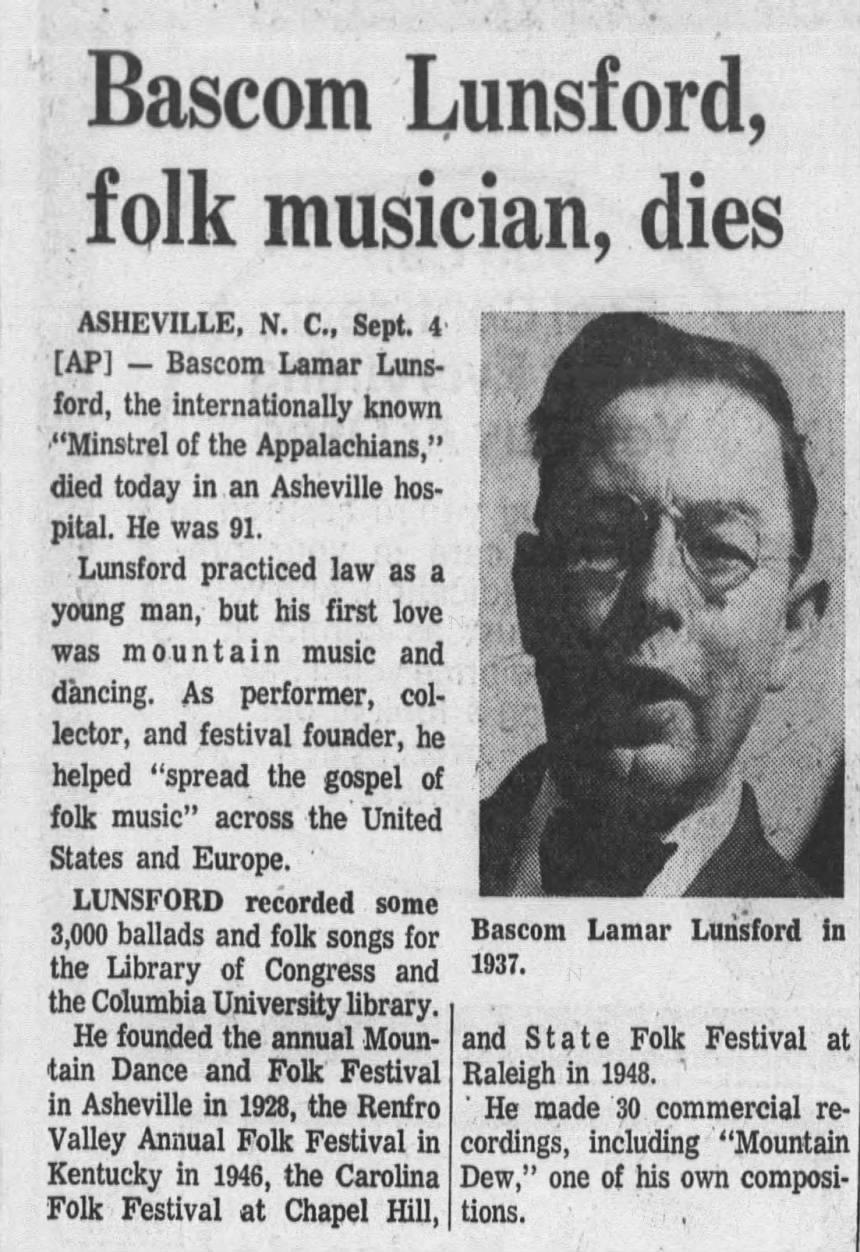
In 1927, the Asheville Chamber of Commerce asked Lunsford to provide traditional musicians and dancers for its Rhododendron Festival. The following year, the presentation became the Mountain Dance and Folk Festival. Lunsford would spend decades organizing festivals and bringing mountain performers before audiences far beyond the region.
One of those audiences gathered at the White House in 1939. Lunsford brought the Soco Gap dancers to perform during the visit of Britain’s King George VI and Queen Elizabeth. Ten years later, he represented the United States at an international folk festival in Venice.
Lunsford suffered a stroke in 1965 and moved from South Turkey Creek to Asheville in 1969. He died the following year, at age 91.
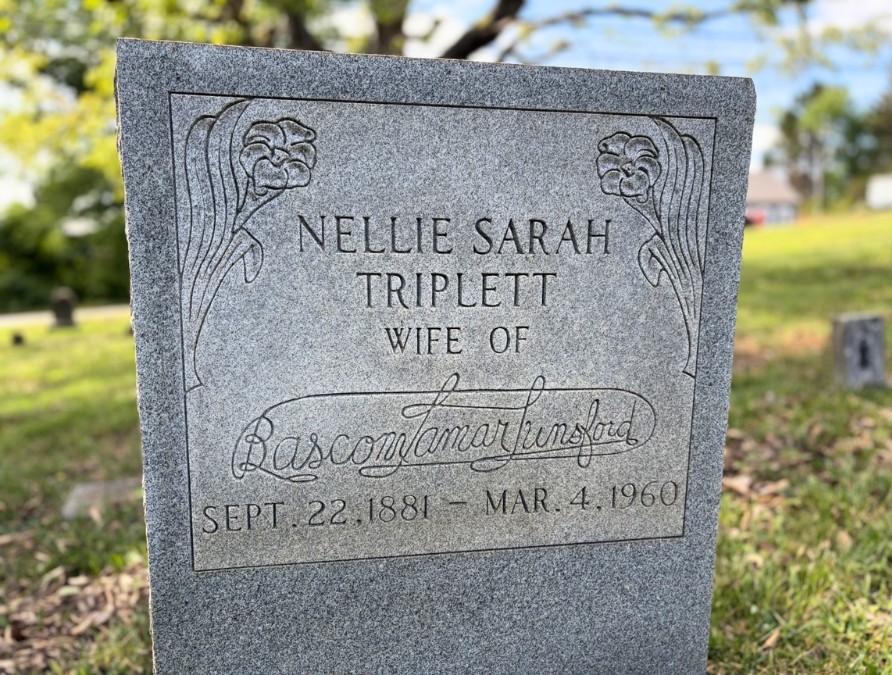
He was buried in Leicester Episcopal Church Yard beside his first wife, Nellie Sarah Triplett Lunsford. His headstone bears the title by which he had long been known: “Minstrel of the Appalachians.” Nellie’s stone carries a more personal detail. Beneath the words “Wife of” is Bascom’s signature carved into the stone.
Much of Lunsford’s work survived because he had planned for it to. In 1958, he gave Mars Hill College books, recordings, scrapbooks and manuscripts in honor of his parents. His will directed that the remainder of his folk music collection go to the college after his death.
And in Leicester, beside the wife whose stone still bears his signature, Lunsford rests in the mountain country whose music he spent a lifetime making sure would still be heard.
-
Tombstone Tales: Bascom Lamar Lunsford’s remarkable life

The Asheville lawyer, folklorist and festival organizer spent decades preserving Western North Carolina’s songs, dances and mountain traditions.
-
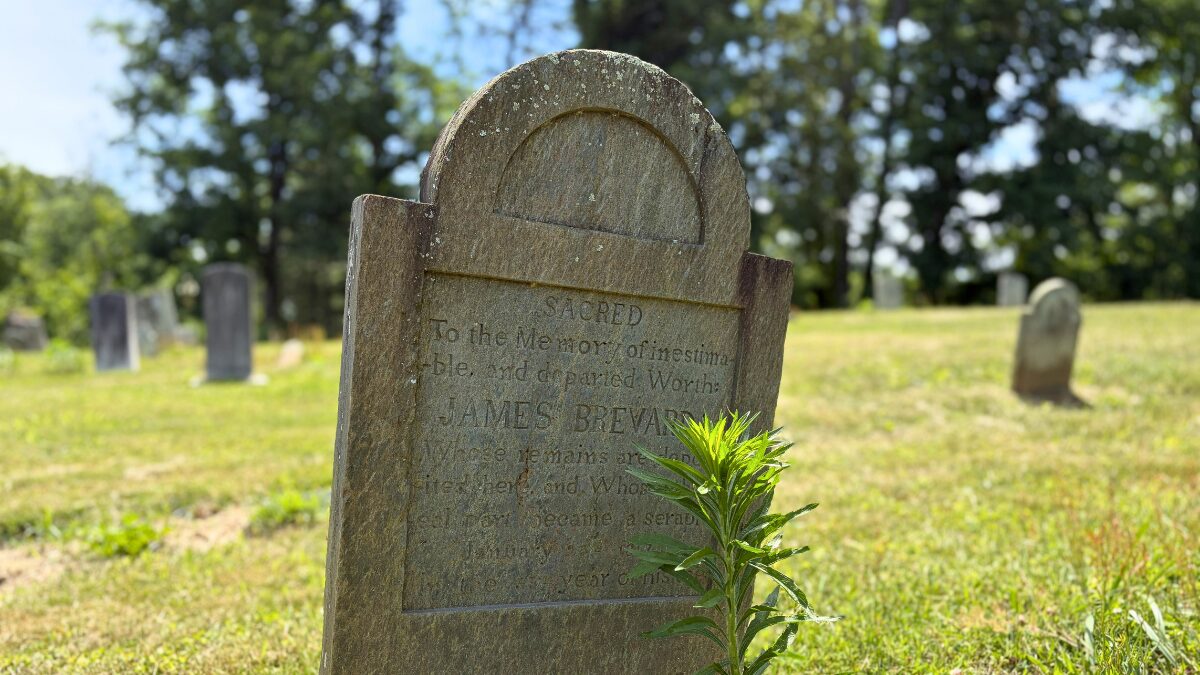
Tombstone Tales: A Fairview grave says James Brevard ‘became a seraph.’ Who was he?
Buried at Cane Creek Cemetery in 1847, the farmer, postmaster and state legislator left a public record that helps explain an extraordinary epitaph.
-
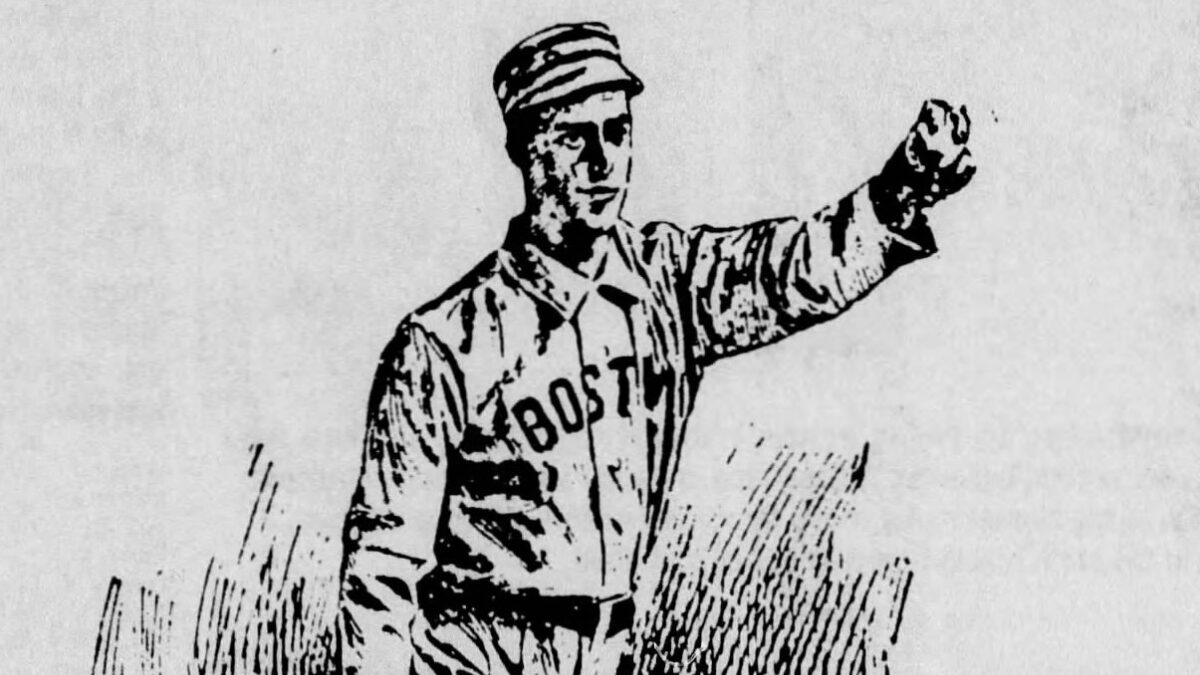
Tombstone Tales: The Reems Creek pitcher who played one game in the Major Leagues
Richard “Rome” Chambers became the first known Western North Carolina native to play Major League Baseball before returning home to Buncombe County, where he died just one day before his 27th birthday.
-
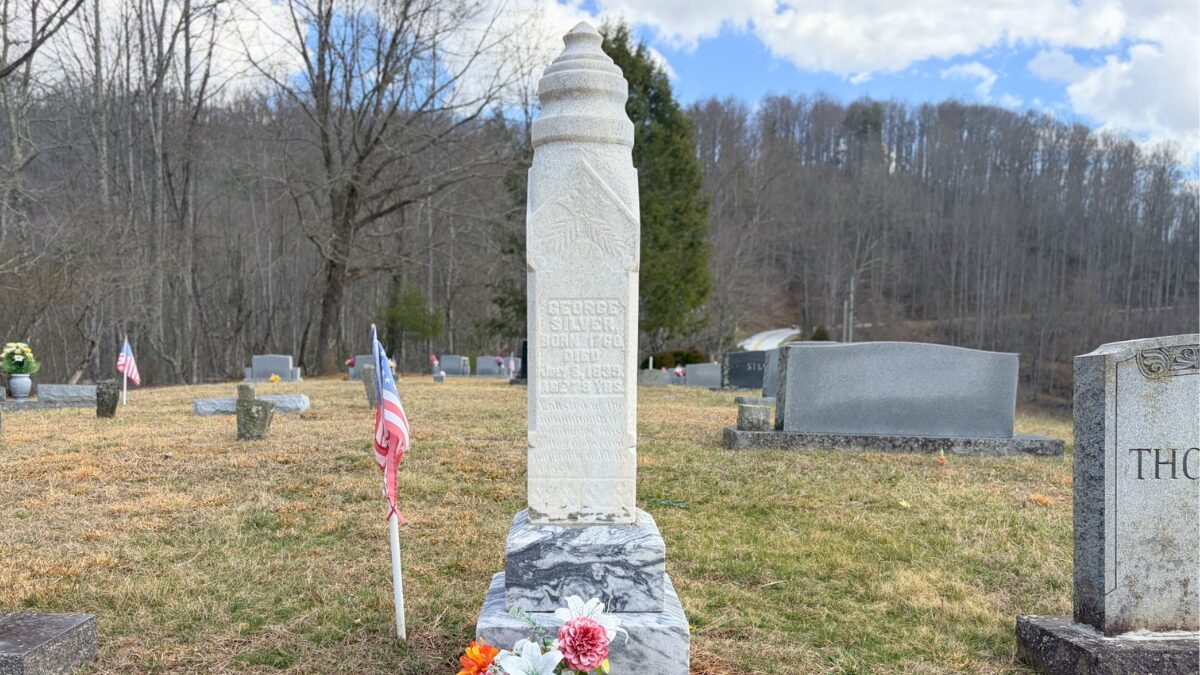
Tombstone Tales: A Revolutionary War veteran’s grave in Mitchell County tells a WNC story for July Fourth
At Kona Baptist Church Cemetery, a memorial to George Silver carries the story of American independence into the Toe River Valley and a family legacy deeply rooted in Western North Carolina.
-
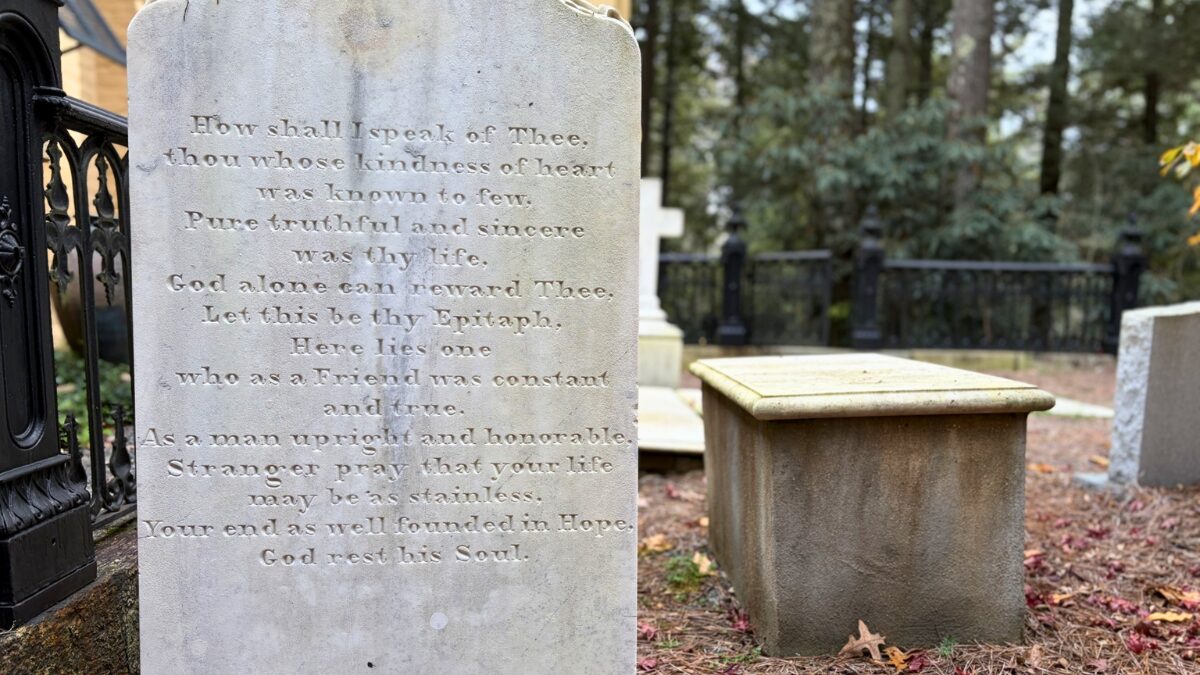
Tombstone Tales: Flat Rock grave links to Declaration of Independence signer
As America marks its 250th anniversary, a grave at St. John in the Wilderness Cemetery connects Flat Rock to one of the signers of the Declaration of Independence and a young man remembered not for his famous name, but for his character.