


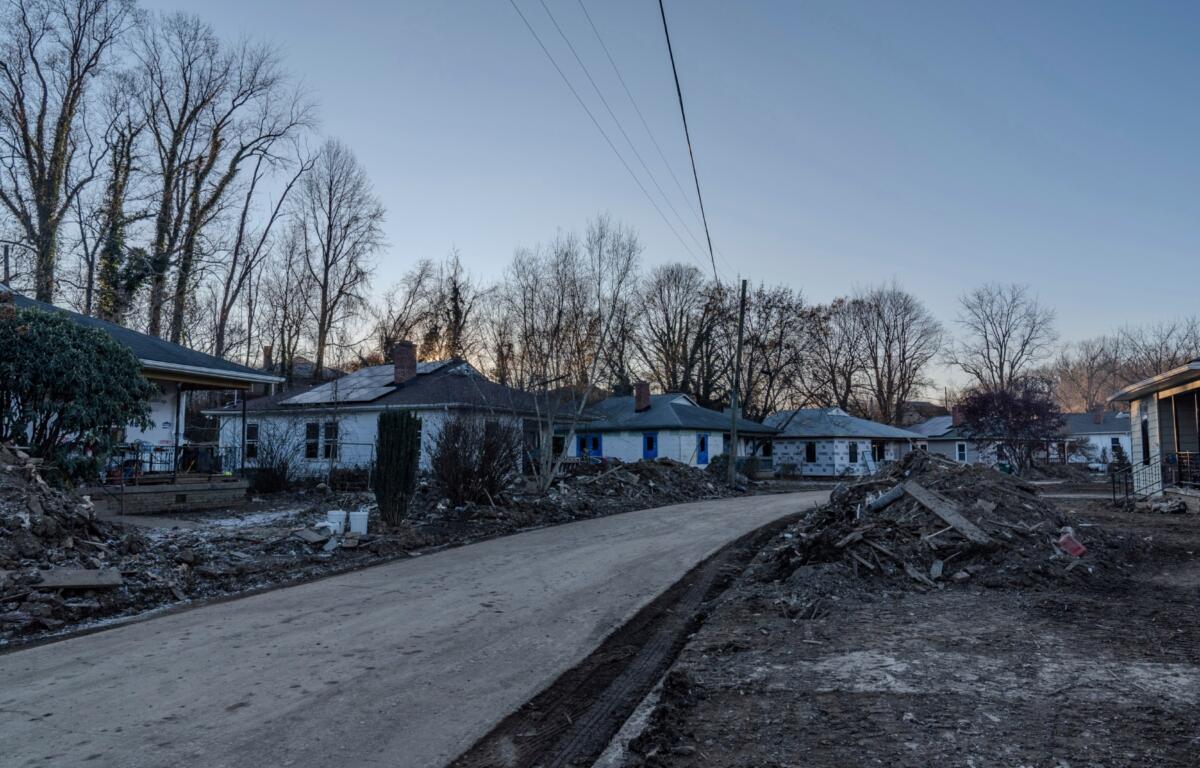

SWANNANOA, N.C. (828newsNOW) — Nearly two years after Tropical Storm Helene destroyed and damaged homes across Buncombe County, hundreds of families are still somewhere between disaster and a permanent place to call home.
Some houses have been repaired or rebuilt. Others are under construction. Some property owners are pursuing government buyouts rather than rebuilding in areas vulnerable to another flood. And some families who initially sought assistance have moved on from recovery programs altogether.
The numbers illustrate the progress made since September 2024 and how much remains unfinished.
During a Sept. 15 briefing to Buncombe County commissioners, County Recovery Officer Kevin Madsen said FEMA’s Individual Assistance program had provided $567.9 million to 161,000 households across Western North Carolina. About 12,600 families received $34 million for repair and replacement needs, including assistance involving homes and private roads and bridges.
But as the second anniversary approaches, some of the emergency programs created after Helene are winding down while longer-term recovery programs continue.
FEMA housing mission ending
FEMA’s housing mission is scheduled to conclude at the end of September, Madsen told commissioners.
N.C. Emergency Management disaster case managers, however, are working with more than 1,100 families across Western North Carolina. Their work has been extended through January 2027, and state officials are considering additional options, Madsen said.
In Buncombe County, the Long-Term Recovery Group also continues helping residents with needs ranging from construction and housing assistance to foreclosure forbearance.
One of the greatest rebuilding efforts is RenewNC, the state’s federally funded housing recovery program.
The county’s Sept. 15 presentation listed 35 homes completed, 29 under construction, 123 in pre-construction and 101 awarded and awaiting their next steps. It also showed 192 households receiving Temporary Relocation Assistance, with 38 in temporary housing at the time the presentation was prepared.
Madsen told commissioners during the meeting that the numbers were already changing as work progressed. He said the number of completed homes had increased to 41, including 39 in Buncombe County outside Asheville and two within the city.
Not every damaged home will be rebuilt
For some property owners, recovery means leaving rather than rebuilding.
Buncombe County has received federal approval for 263 property acquisitions, allowing owners to pursue voluntary buyouts through the Hazard Mitigation Grant Program.
Under the program, eligible owners are compensated based on a property’s pre-Helene fair market value. Once acquired, structures are demolished and the property generally must remain open space, reducing the risk that another home will be lost to a disaster.
County figures show how that process is advancing. Twenty-three properties in the first acquisition group have been purchased and demolished. Of 26 properties in the second group, 24 acquisitions and 19 demolitions had been completed when the county prepared its September update. Another 214 properties had been awarded through two additional groups.
Swannanoa faces a longer housing question
Nowhere is the tension between rebuilding and reducing future risk more apparent than Swannanoa, one of the communities hit hardest by Helene.
Data compiled as part of Buncombe County’s Swannanoa recovery planning show the scale of the disruption. In the 28778 ZIP code, which includes Swannanoa, an estimated 1,542 households — about 26% of households — experienced displacement at some point during the year after Helene.
The storm also took a particularly heavy toll on mobile homes, an important source of lower-cost housing in the community. Planning data show 358 mobile homes were damaged or destroyed, including 74 that were destroyed.
The damage was especially concentrated in some neighborhoods. In Beacon Village, 39 of the neighborhood’s 44 homes sustained some type of damage, according to reporting by The Valley Echo. Twenty-four were submerged to their roofs.
Those losses are now part of a larger discussion about what Swannanoa’s housing should look like after Helene.
Buncombe County’s draft Swannanoa Small Area & Resilience Plan says the storm displaced residents and worsened existing concerns about housing affordability. The plan proposes protecting existing affordable housing while creating additional paths to homeownership.
Among the ideas are a down-payment assistance program for low- and moderate-income households permanently displaced by Helene and a possible rehabilitation grant program for existing homes.
At the same time, planners are recommending future development be steered away from the most hazardous locations.
The draft calls for limiting growth and certain types of development in Special Flood Hazard Areas and considering acquisition of high-hazard or repetitive-loss properties that cannot reasonably be retrofitted.
That creates a recovery challenge that isn’t captured simply by counting new roofs or construction permits. Some properties lost during Helene may never again have homes on them, while rebuilding elsewhere could become part of preserving the community’s housing supply.
What isn’t yet clear is exactly how far Swannanoa’s housing recovery has progressed.
The countywide figures do not show how many Swannanoa homes destroyed or heavily damaged by Helene have been repaired or rebuilt, how many are under construction, how many owners are pursuing buyouts or how many remain unresolved.
828newsNOW has asked Buncombe County officials for those figures.
For Swannanoa residents, those numbers could provide one of the clearest measures yet of where the community stands two years after Helene — not simply how much recovery money has been committed, but how many families have actually made it home.