


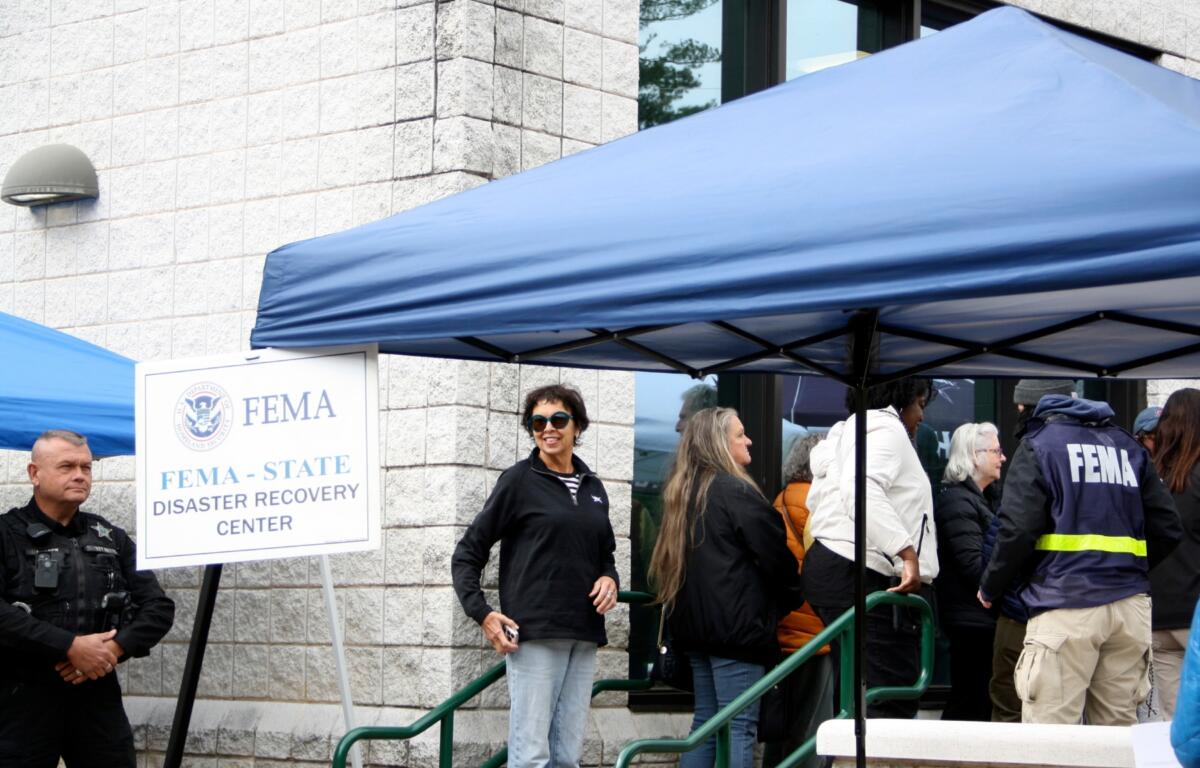

ASHEVILLE, N.C. (828newsNOW) — Western North Carolina is still counting on billions of dollars in federal help to recover from Tropical Storm Helene. Now, the Trump administration is considering changes that would put more responsibility for future disasters on states.
Federal Emergency Management Agency Administrator Cameron Hamilton told state emergency management officials this week that states should build their financial reserves and prepare to handle more disasters without relying as heavily on Washington, according to an Oct. 20 report by POLITICO.
Hamilton said changes could begin within six months, although the administration has not formally announced a new policy.
The discussion comes as communities across Western North Carolina continue rebuilding homes, roads, bridges and public infrastructure damaged by Helene in September 2024.
Billions approved, more rebuilding ahead
North Carolina estimates Helene caused about $59.6 billion in damage and recovery needs, according to the state’s disaster recovery action plan.
That includes $15.4 billion for housing, $10.3 billion for transportation, nearly $7 billion for utilities and natural resources, and $15.9 billion in economic losses and recovery needs.
In a Sept. 14 update, FEMA reported more than $7.5 billion in funding commitments for Helene and other recent disasters in North Carolina.
That includes more than $2.5 billion for about 3,000 Helene recovery projects involving debris removal, infrastructure repairs and other storm-related expenses.
FEMA also reported awarding $567.9 million to roughly 161,000 families for home repairs, rent and other critical needs. That included more than $34 million to help 12,600 families repair private roads and bridges.
Another $2.5 billion was obligated to the U.S. Army Corps of Engineers for debris removal across the state.
The $7.5 billion figure includes disasters other than Helene and represents funding commitments, not necessarily money already paid to recipients.
In June, Gov. Josh Stein requested more than $10 billion in additional federal assistance, including approximately $3.1 billion for housing, $3.1 billion for infrastructure and roads, and $1 billion for water and sewer systems.
The request involves several federal agencies and programs, not just FEMA. An updated accounting of how much of that request has since been approved was not immediately available.
What the money means for Asheville and WNC
In Buncombe County, Helene damaged more than 11,000 housing units, including hundreds that were destroyed. Across Western North Carolina, the storm damaged thousands of miles of roads and hundreds of bridges and culverts.
Federal funding has helped communities begin repairs, but many projects remain unfinished.
In August, FEMA announced another $137 million for recovery and mitigation projects across North Carolina. The funding included $23.4 million for state transportation repairs, $16.8 million for affordable housing repairs in Hendersonville and $3.3 million for Asheville Christian Academy.
A September announcement included $1.7 million for repairs to Roberts Drive in Laurel Park and $1.1 million for emergency work and storm drain repairs in Spruce Pine.
Other federal agencies are also helping pay for the recovery.
The U.S. Department of Housing and Urban Development awarded North Carolina about $1.4 billion for long-term recovery, plus a separate $225 million allocation to Asheville.
The Environmental Protection Agency has committed more than $700 million for water infrastructure resilience, while the U.S. Department of Agriculture has contributed more than $1 billion for agricultural losses, land restoration and related projects.
Those programs are separate from FEMA’s disaster assistance and are not necessarily included in the agency’s reported $7.5 billion total.
FEMA chief: ‘Still a lot of work to do’
Just weeks earlier, Hamilton visited North Carolina and acknowledged how much rebuilding remained.
In a Sept. 14 FEMA news release, he said he had seen progress since his previous visit but recognized that recovery was far from complete.
“However, we’re not out of the woods yet, there is still a lot of work to do,” Hamilton said.
He also pointed to President Donald Trump’s assurance that Western North Carolina would not be forgotten.
“The work continues,” Hamilton said.
But at a national emergency management conference in Little Rock, Arkansas, on Tuesday, Oct. 20, Hamilton outlined how a greater state role might work.
According to POLITICO, he told officials states should have enough financial reserves and emergency response capabilities to begin recovering without waiting for federal disaster declarations.
Hamilton argued that states could move more quickly without navigating the federal approval process, which can take weeks or months.
The administration is also considering a national mutual aid system that would allow states to help one another respond to major disasters.
In a statement reported Oct. 21, FEMA said it remained committed to supporting states when federal disaster assistance is warranted.
A shift months in the making
The idea isn’t new.
In May, a FEMA Review Council established by Trump recommended keeping the agency but giving states, local governments and tribal governments greater responsibility for managing disasters and distributing recovery assistance.
The recommendations included streamlining federal aid, changing eligibility requirements and giving states more control over rebuilding projects.
The council also recommended changes to how disaster costs are shared between federal and state governments, potentially reducing the federal share of some recovery expenses.
The recommendations were advisory and did not automatically change federal disaster assistance programs. Some would require congressional action.
The administration argues that giving states more responsibility could reduce bureaucracy and speed recovery.
But environmental and disaster recovery advocates have questioned whether states and local governments have enough money and personnel to take on those responsibilities.
A recent FEMA assessment found that state emergency management agencies are often understaffed and underfunded, with many relying heavily on federal assistance.
What happens to Helene recovery?
For Western North Carolina, one of the biggest unanswered questions is whether changes to FEMA would affect disasters that have already received federal declarations.
The administration has not announced how the proposed changes would work or whether they could affect ongoing recovery efforts such as Helene.
Funding already approved for Helene would not automatically disappear under a policy aimed at future disaster declarations. But what might happen to projects still awaiting approval or reimbursement remains unclear.
North Carolina’s recovery needs also extend far beyond FEMA’s responsibilities. The nearly $60 billion estimate includes private losses, economic damage and projects supported by other federal and state programs.
North Carolina has requested billions more in federal assistance to recover from Helene, and many rebuilding projects remain unfinished.
Whether the administration’s proposed changes would affect that work remains unanswered.