




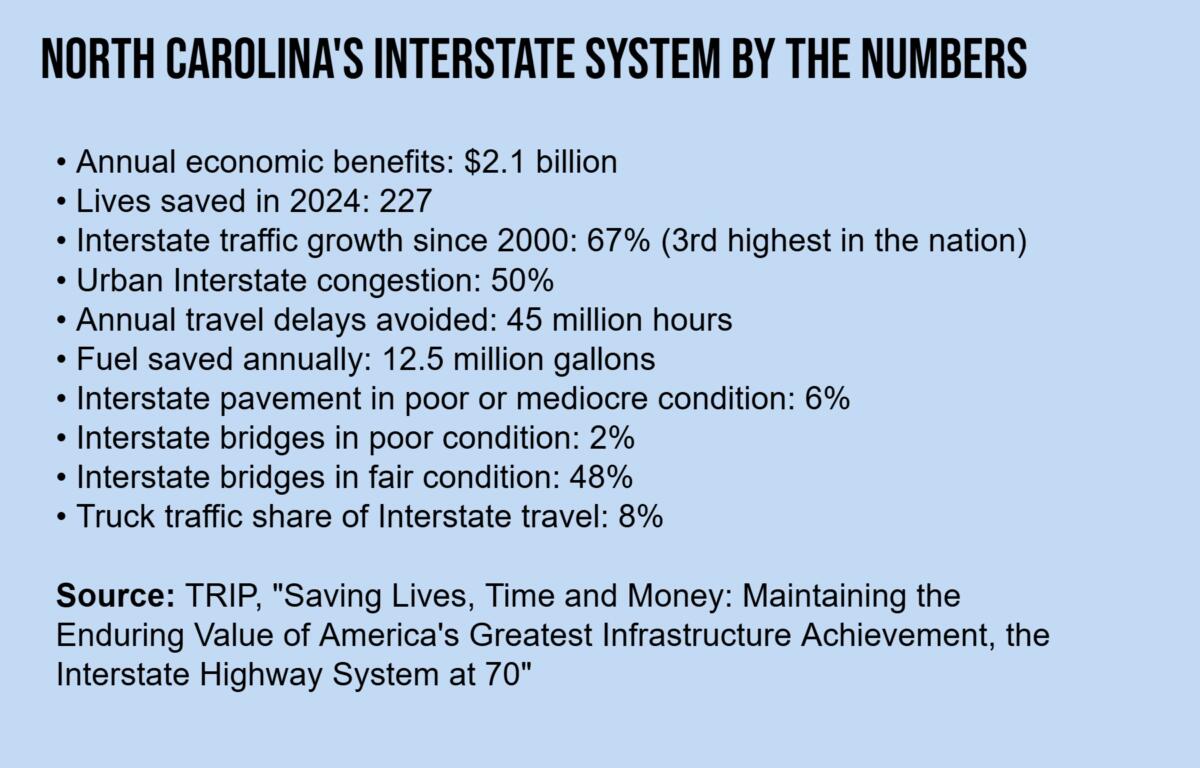
ASHEVILLE, N.C. (828newsNOW) — North Carolina’s Interstate Highway System generates an estimated $2.1 billion in annual safety and mobility benefits, but a new national report warns that the aging network faces growing congestion, record traffic growth and a massive funding challenge as it turns 70 years old.
The report, released Tuesday by transportation research nonprofit TRIP, found that North Carolina’s interstate highways continue to save lives, reduce travel delays and support economic growth. At the same time, researchers say the state’s roads are carrying far more traffic than they were originally designed to handle.
The findings come as North Carolina continues investing billions of dollars in major transportation projects, including the Interstate 26 Connector in Asheville and ongoing improvements along Interstate 40, a critical freight corridor through the mountains.
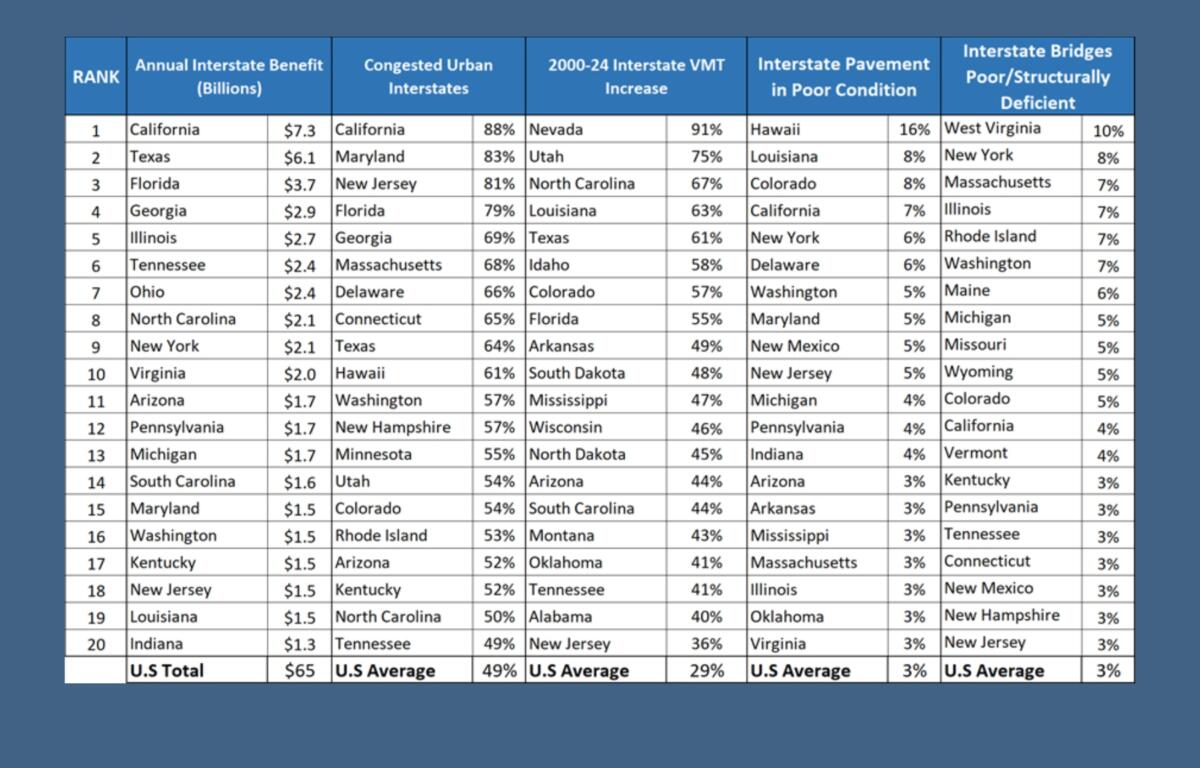
According to the report, North Carolina residents receive approximately $2.1 billion in annual benefits from the interstate system through improved safety and reduced congestion.
Researchers estimate that interstate highways save North Carolina motorists 45 million hours in travel delays and reduce fuel consumption by 12.5 million gallons each year. Those savings account for roughly $1.2 billion in economic benefits annually.
Safety benefits account for another $878 million.
The report found that travel on North Carolina’s interstate highways is more than twice as safe as travel on other roads because of features such as median barriers, paved shoulders, limited access points and separation from cross traffic.
In 2024, the fatality rate on North Carolina Interstates was 0.63 deaths per 100 million vehicle miles traveled, compared with 1.40 on non-Interstate roads.
Researchers estimate those safety improvements saved 227 lives in North Carolina last year, ranking the state 11th nationally.
One of the report’s most significant findings is the rapid growth in interstate traffic across North Carolina.
Vehicle travel on the state’s interstate highways increased 67 percent between 2000 and 2024, the third-highest increase in the nation behind only Nevada and Utah. The growth reflects North Carolina’s expanding population, booming tourism industry and increasing freight movement.
That surge has contributed to worsening congestion across the state.
According to the report, 50 percent of North Carolina’s urban interstate highways are considered congested during peak travel periods, placing the state among the nation’s most heavily traveled Interstate systems.
North Carolina also ranks among the country’s busiest states for urban interstate traffic, averaging nearly 13,900 vehicles per lane mile each day on urban Interstate routes.
For Western North Carolina, the findings underscore the importance of major corridors such as Interstates 40 and 26, which serve as vital links for freight movement, tourism and daily commuting.
The report arrives less than two years after Tropical Storm Helene damaged key transportation corridors across the mountains, highlighting how dependent the region is on reliable Interstate connections for economic activity and emergency response.
Truck traffic remains a significant part of the interstate system’s role in North Carolina. According to the report, combination trucks account for about 8 percent of all travel on the state’s Interstate highways.
While overall pavement conditions remain relatively good, the report warns that much of the nation’s Interstate infrastructure is reaching the end of its design life.
In North Carolina, 6 percent of interstate pavement is rated in poor or mediocre condition. The report also found that 2 percent of interstate bridges are in poor condition, while 48 percent are rated in fair condition.
TRIP cites a congressionally requested study by the Transportation Research Board that concluded most interstate highways nationwide will require extensive reconstruction rather than routine resurfacing in the coming decades because many roadways still rely on aging foundations built during the system’s early years.
The report estimates that annual national investment in the interstate system should increase from approximately $23 billion to $57 billion per year over the next two decades to address aging infrastructure, improve safety and expand capacity.
The issue is expected to become a major topic in Washington as lawmakers debate the future of federal transportation funding. The bipartisan Infrastructure Investment and Jobs Act, one of the primary funding sources for interstate improvements, expires Sept. 30, 2026.
TRIP Executive Director Dave Kearby said the interstate system continues to provide enormous benefits but warned that preserving those benefits will require significant investment.
“The Interstate Highway System at 70 continues to provide tremendous benefits to Americans, saving lives, time and money,” Kearby said in a statement. “It is absolutely vital that we preserve these transportation benefits for future generations of Americans, but this will require that the funding needed to rebuild and modernize our Interstate highways is provided.”
For North Carolina, where interstate traffic growth ranks among the fastest in the nation, the report suggests the challenge will be balancing future growth with the need to rebuild an aging transportation network that remains critical to the state’s economy.