


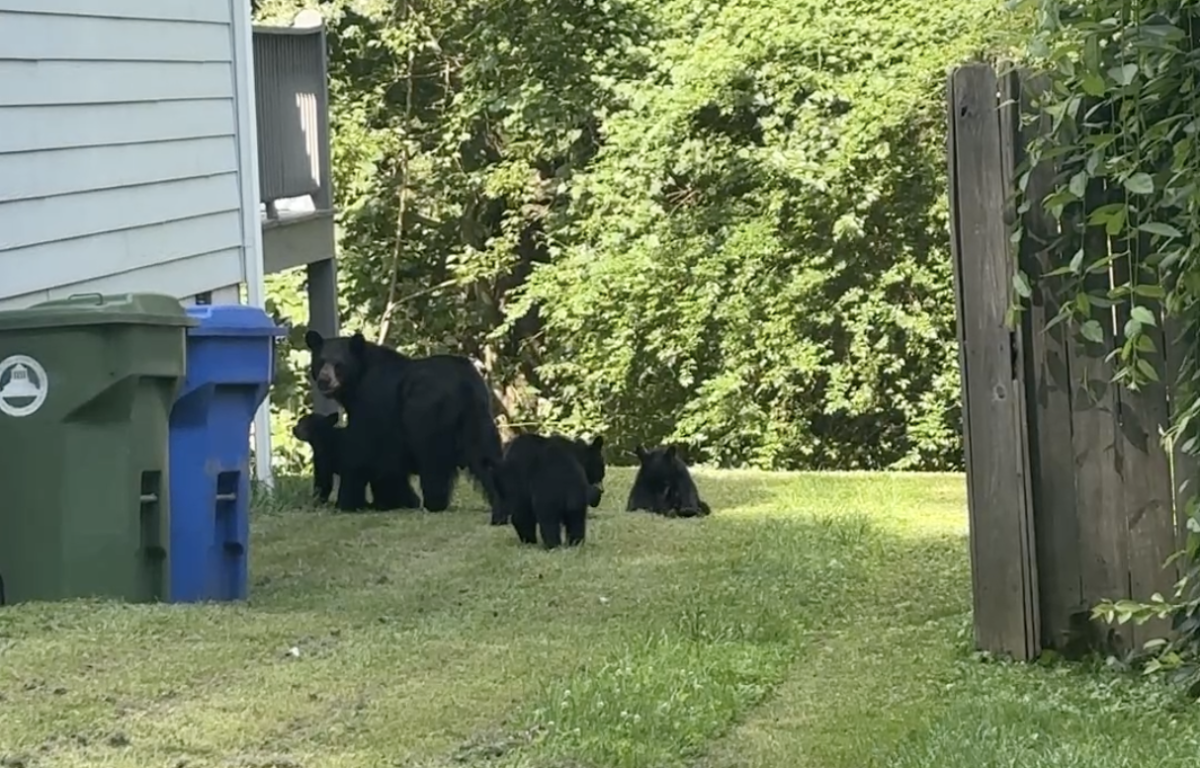

ASHEVILLE, N.C. (828newsNOW) — Black bears getting into trash cans is nothing new in Asheville. But some are taking things a lot further, breaking into homes and even ripping doors and windows off their frames.
And a state wildlife biologist says the problem is getting worse.
Ashley Hobbs, a special projects biologist with the N.C. Wildlife Resources Commission, told Asheville City Council on Tuesday, Oct. 27, that bears have forced their way into homes about 250 times in Buncombe County since 2017. Of those incidents, 143 happened in just the past three years.
Hobbs, who handles bear-related calls in Buncombe County, said the encounters are becoming more dangerous for people and often end badly for the bears.
The biggest problem, she said, is food. And much of it is coming from people.
Garbage, bird feeders, pet food and other easy meals are drawing bears into neighborhoods. Once they learn where to find food, they keep coming back.
Over time, they lose their natural fear of people.
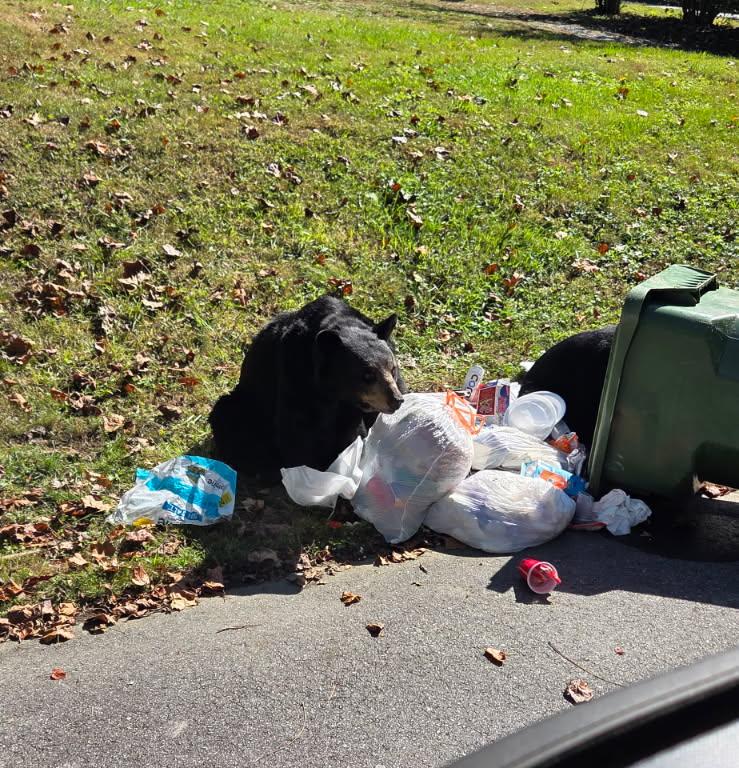
Photo credit: NC Wildlife Resources Commission
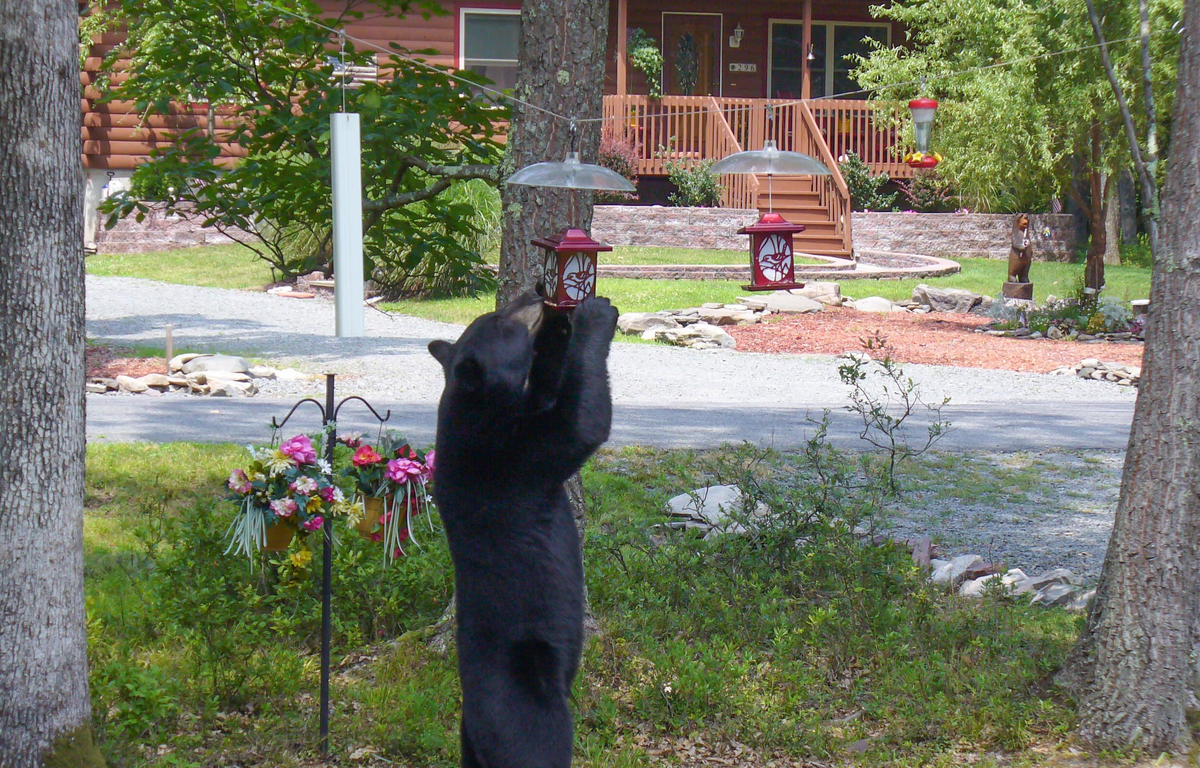
Photo credit: NC Wildlife Resources Commission
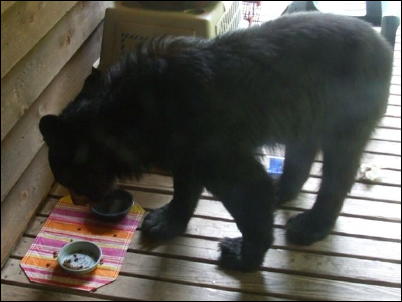
Photo credit: NC Wildlife Resources Commission
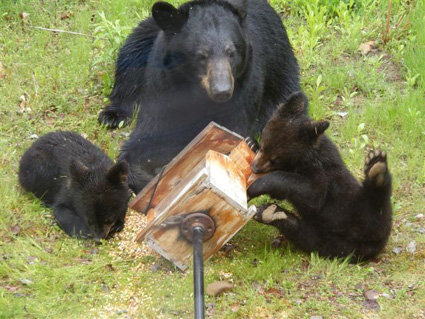
Photo credit: NC Wildlife Resources Commission
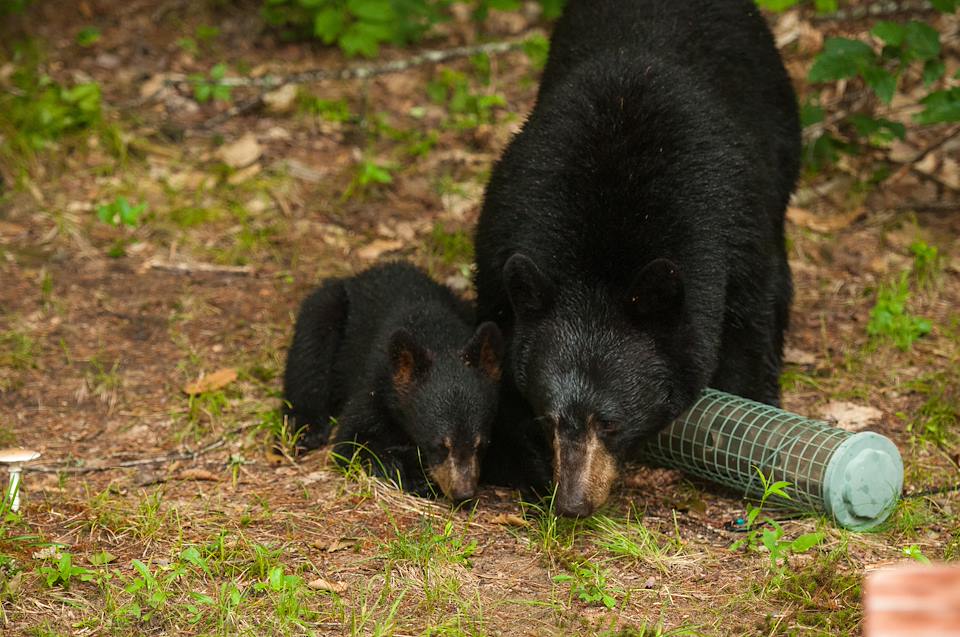
Photo credit: NC Wildlife Resources Commission
Bears are getting bolder
Hobbs showed council members videos of bears breaking into homes, most of them in Asheville.
Some bears have learned to turn doorknobs or push open unlocked windows. Others have gone so far as to pull doors and windows off their frames.
Even a locked door isn’t always enough to keep them out, she said.
Since 2017, there have been 17 incidents statewide in which people were injured during encounters with bears. Eleven happened in Buncombe County, including seven since 2023.
Buncombe County accounts for roughly 38% of all bear-related calls to the state wildlife agency, typically between 800 and 1,000 calls a year.
Hobbs said Henderson County, which had the second-highest number of calls in 2025, had about 100.
And the bears are paying a price.
Hobbs said 30 bears have been euthanized in Buncombe County since 2017, including 26 in the past three years.
When a bear repeatedly breaks into homes and becomes a threat to people, wildlife officials may have little choice but to kill it, Hobbs said.
Relocating the animal isn’t necessarily a solution. Research has shown that many relocated bears try to return to their original territory, putting themselves at risk along the way.
Hobbs said she wants to prevent encounters from reaching that point.
Asheville’s trash cans are part of the problem
Hobbs told council members that keeping food away from bears is one of the best ways to reduce encounters.
But she also made it clear that she believes Asheville needs to do more.
She criticized cuts to the city’s funding for bear-resistant trash carts, which are designed to keep bears from getting into household garbage.
“You guys just cut all the funding for the bear-resistant trash carts,” she told council.
City officials said Asheville expects to receive 420 carts through deliveries this year and early next year. The first 210 arrived in August, and another 210 are expected in December and January.
The city has a waiting list of about 400 households.
Council members questioned whether the city would be able to order more carts before another backlog develops.
Staff acknowledged that funding for additional carts is limited this budget year, with further discussions expected during the next budget process.
Mayor Esther Manheimer said the city doesn’t charge residents the full cost of a bear-resistant cart upfront. Instead, residents who receive one pay a higher trash collection fee.
She wondered whether some residents might be willing to pay for the carts themselves, easing the city’s upfront expense.
Hobbs said research has shown that properly securing garbage can dramatically reduce bear encounters, property damage and break-ins.
Should Asheville get tougher on people feeding bears?
Hobbs also wants the city to take a harder line against people who feed bears.
Asheville already has an ordinance addressing bear feeding, but Hobbs said the current $50 fine isn’t much of a deterrent. She also questioned how effectively those fines can be collected.
The state has taken action, too.
A new N.C. Wildlife Resources Commission emergency rule took effect Oct. 19, prohibiting both intentional and negligent feeding of bears in Buncombe County. That includes leaving unsecured garbage or pet food where bears can get to it under circumstances covered by the rule.
A first violation is a Class 3 misdemeanor, with a $25 fine plus court costs, although a judge can impose a fine of up to $200. A repeat violation within three years is a Class 2 misdemeanor, punishable by a fine of up to $1,000.
State wildlife officials have said their initial focus will be on educating residents and issuing warnings rather than immediately pursuing criminal charges.
The rule also gives state wildlife officers authority to enforce bear-feeding restrictions, something they couldn’t do under local ordinances alone.
At Tuesday’s meeting, council members questioned whether Asheville should increase its fines or do a better job enforcing the rules already on the books.
Manheimer said the city worked with state wildlife officials when it strengthened its ordinance several years ago. At the time, there were concerns about imposing hefty fines.
But with encounters escalating, she suggested it might be time to revisit that decision.
Other council members wanted to know how many violations the city has issued and how much money has actually been collected.
City staff said they would provide that information.
There was also a question of fairness.
Manheimer pointed out that it could be difficult to penalize residents for unsecured garbage if they don’t have access to bear-resistant carts.
Hobbs said she would help the city look at approaches that have worked in other communities.
More food means more bears
The extra food available in Asheville neighborhoods isn’t just changing how bears behave. It’s also affecting how many bears are being born.
Hobbs said research conducted in Asheville found that bears with access to human-provided food are producing an average of three to four cubs per litter, compared with the two to three typically expected.
More of those cubs are surviving long enough to reproduce.
The bears are also growing larger because of the extra calories.
The food isn’t particularly healthy for them, either.
Hobbs said bears eating garbage and processed human food can develop digestive problems and poor dental health. Researchers are also studying how those diets affect the animals’ overall health.
Wildlife official says Asheville needs to act
Council members asked whether relocating bears, creating a sanctuary or using birth control might help.
Hobbs explained that those options come with major challenges, including cost, staffing and concerns about the animals’ welfare.
Hunting also isn’t an option for controlling bears inside Asheville city limits.
That leaves reducing access to food as the most practical approach, she said.
The state has already assigned additional resources to Buncombe County, making it the only county in North Carolina with a biologist dedicated specifically to handling bear-related calls.
But Hobbs told council members she can’t solve the problem alone.
Some council members questioned whether Asheville should wait until the next budget cycle to address the problem.
They also asked for a clearer picture of what Hobbs’ recommendations would cost and how the city could pay for them.
Hobbs said she’s willing to help Asheville develop a plan, but the city needs to commit resources.
“I have the knowledge. I need your dollars,” she told council.
Council took no action Tuesday on additional funding or changes to the bear-feeding ordinance.