


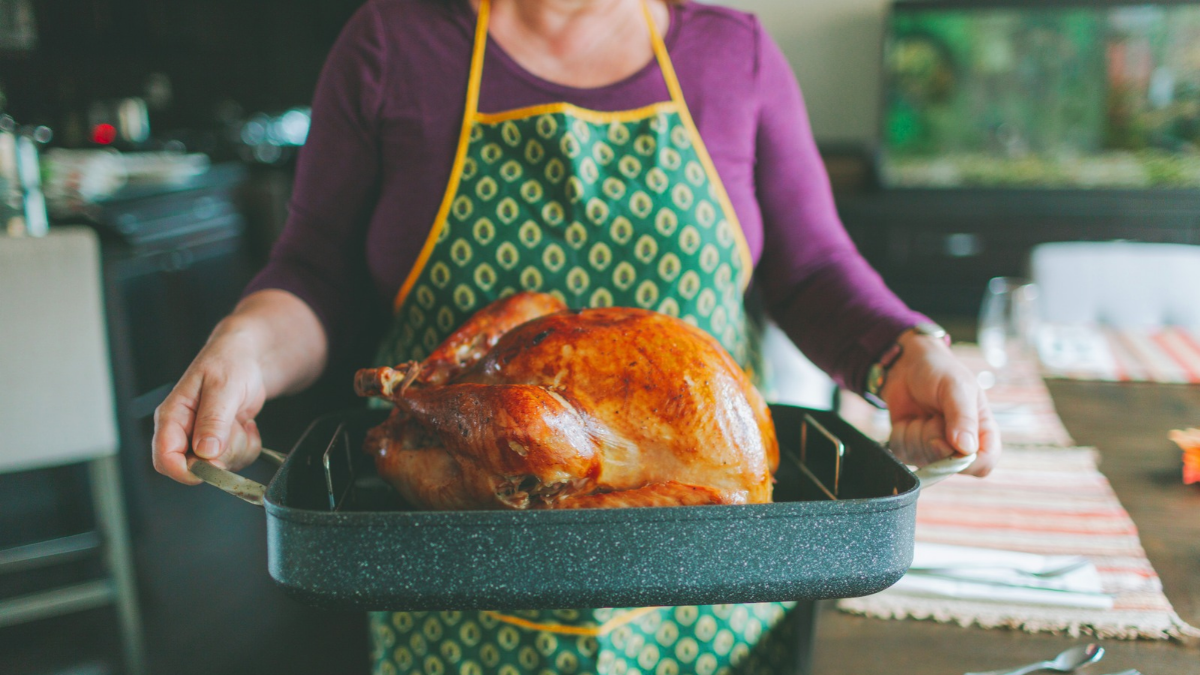

ASHEVILLE, N.C. (828newsNOW) — Hosting Thanksgiving dinner for the first time can require considerable planning, particularly when preparing a large meal for family and friends.
Turkey is traditionally the centerpiece of the holiday meal, accompanied by side dishes such as mashed potatoes, stuffing, sweet potatoes and green bean casserole. Preparing and serving those dishes requires adequate kitchen equipment, serving space and seating.
For first-time hosts, taking inventory of essential cooking tools before Thanksgiving can help identify what is already available and what may need to be purchased or borrowed.
Roasting pan
A large roasting pan is one of the primary tools used to prepare a Thanksgiving turkey. Disposable aluminum pans are an option for occasional use, while reusable roasting pans may be more practical for households that regularly prepare large meals.
The pan should be large enough to accommodate the turkey without overcrowding and should fit comfortably inside the oven.
Roasting rack
A roasting rack elevates the turkey above the bottom of the pan, allowing heat to circulate and keeping the bird from resting directly in cooking juices.
Some roasting pans include a rack, while others require a separate purchase. Depending on their design, racks may also be used for cooling baked goods or other kitchen tasks.
Food thermometer
A food thermometer helps determine whether turkey and other dishes have reached a safe internal temperature.
According to the U.S. Department of Agriculture, turkey should reach a minimum internal temperature of 165 degrees Fahrenheit. The temperature should be checked in the thickest part of the breast and the innermost portions of the thigh and wing.
If stuffing is cooked inside the turkey, the center of the stuffing also must reach 165 degrees.
Food thermometers are available in several styles, including instant-read digital models and devices that monitor temperatures during cooking.
Casserole and baking dishes
Thanksgiving side dishes often require separate preparation and cooking.
Casserole dishes can be used for stuffing, sweet potatoes, green beans and other traditional sides. Oven-safe serving dishes may also reduce the need to transfer food between containers.
Hosts should check whether they have enough appropriately sized dishes before planning the menu.
Dinnerware and serving utensils
The number of guests determines how many plates, glasses and utensils will be needed.
Hosts should account for dinnerware as well as serving spoons, carving utensils, dessert plates and coffee cups.
Matching sets are not necessary. Borrowing dinnerware or combining existing pieces can help accommodate larger gatherings without additional purchases.
Table space and seating
Holiday meals may require more seating than a household uses on a typical day.
Dining tables with extension leaves can provide additional space. Folding tables and chairs are other options for accommodating guests.
Checking seating arrangements in advance can help determine whether additional furniture will be needed.
Turkey serving platter
A large serving platter provides space for presenting a whole turkey or arranging sliced portions after carving.
The platter should be sturdy enough to support the turkey and large enough to accommodate the portions being served.
Additional food preparation considerations
Beyond cooking equipment, first-time hosts should consider refrigerator space, food storage containers and supplies for cleaning kitchen surfaces.
Raw poultry should be kept separate from foods that will not be cooked. Cutting boards, utensils and countertops that come into contact with raw turkey should be cleaned thoroughly to reduce the risk of cross-contamination.
The USDA recommends refrigerating perishable leftovers within two hours.
Preparing Thanksgiving dinner does not require elaborate equipment or matching table settings. Reviewing available supplies, planning for the number of guests and following food safety recommendations can help hosts prepare for the holiday meal.