


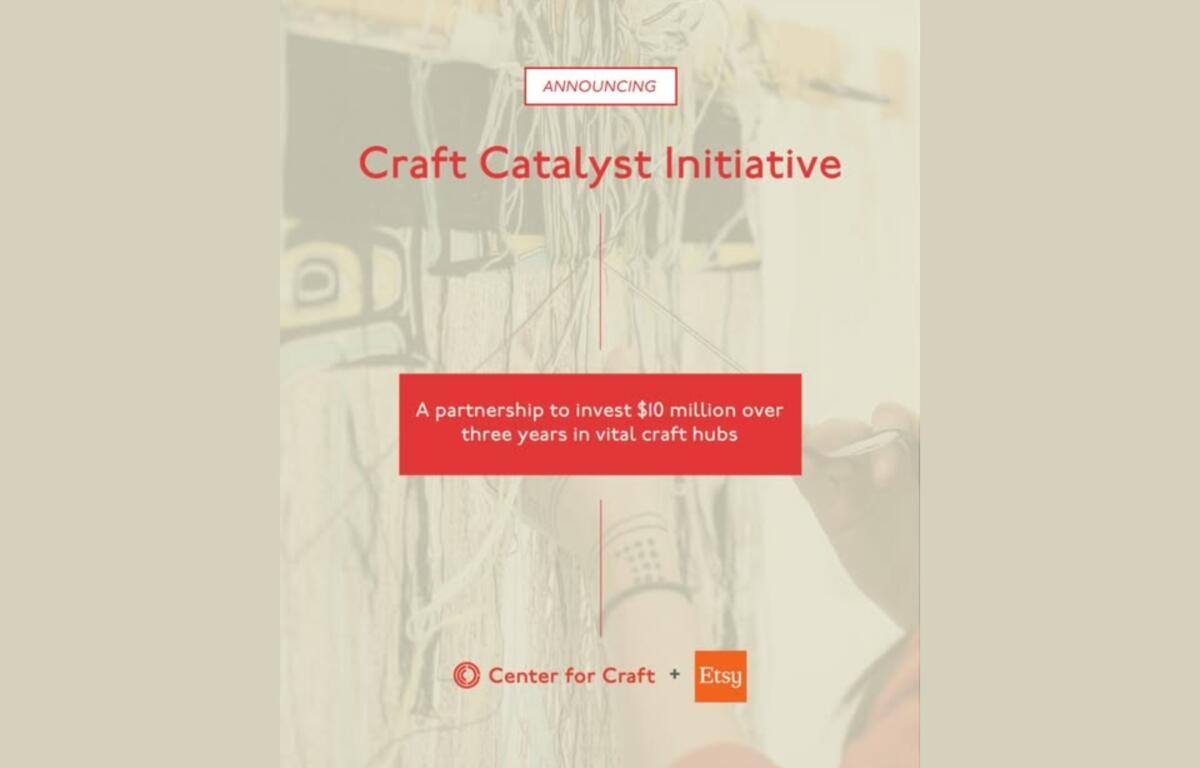

ASHEVILLE, N.C. (828newsNOW) — Etsy is investing $10 million over the next three years to strengthen craft communities across the United States, and it’s starting in Asheville.
The online marketplace and the Center for Craft announced the new Craft Catalyst Initiative on Tuesday at the Center for Craft in downtown Asheville, where Gov. Josh Stein, Etsy Executive Chairman Josh Silverman and local leaders celebrated Western North Carolina’s role as one of the nation’s premier craft hubs.
The initiative will provide $2 million in unrestricted grants during its first year to 20 nonprofit organizations in five craft regions: Asheville and Western North Carolina, the San Francisco Bay Area, Berea, Kentucky, Greater Philadelphia and northern New Mexico. Each organization will receive $100,000 to support its work.
Silverman said the investment reflects Etsy’s belief that successful creative businesses depend on strong local communities.
“Every day Etsy sellers remind us that making is one of the most human forms of entrepreneurship,” Silverman said. “A handmade object carries skill, tradition, imagination and personal risk.”
He said the initiative is designed to strengthen the organizations that provide artists with mentorship, education, workspace and business support, particularly in communities where craft plays a significant cultural and economic role.
Silverman said Asheville was a natural place to launch the initiative, pointing to the region’s long tradition of craftsmanship and the resilience shown after Tropical Storm Helene.
“Etsy was proud to support the River Arts District visioning and planning process after the storm,” he said. “Creative businesses need more than just a marketplace. They need strong local ecosystems.”
Stein called the announcement “a great day for Western North Carolina” and said Asheville’s national reputation as a center for arts and crafts made it an ideal choice.
“There are lots of remarkable places in this country,” Stein said. “But I think it’s a real testament to what the creative community of Asheville has created.”
He noted that Western North Carolina is among the most craft-dense regions in the country, home to institutions such as the Folk Art Center, Southern Highland Craft Guild, Penland School of Craft and John C. Campbell Folk School.
Stein also tied the investment to the region’s long-term recovery from Helene, which devastated the River Arts District and damaged hundreds of artist studios.
More than 500 artists have since returned to the district, he said, and the state has invested more than $100 million in grants and loans to help small businesses recover while retaining roughly 15,000 jobs. Stein also highlighted the recently approved state budget, which includes an additional $700 million for Helene recovery efforts.
Buncombe County Commission Chair Amanda Edwards said investing in craft is more than supporting artists — it’s an economic development strategy.
“When we invest in makers, we invest in entrepreneurs,” Edwards said. “Craft fuels cultural tourism, supports local businesses and creates jobs while strengthening communities.”
State Rep. Brian Turner said craft also plays an important role in community well-being, creating places where people connect, preserve traditions and improve mental health through creative work.
As part of Tuesday’s announcement, four Western North Carolina organizations each received $100,000 unrestricted grants through the inaugural Craft Catalyst Initiative:
- Haywood Community College Professional Crafts Program
- North Carolina Glass Center
- Qualla Arts and Crafts Mutual
- Toe River Arts
Center for Craft Executive Director Stephanie Moore said unrestricted funding gives organizations the flexibility to address their communities’ greatest needs.
“We chose unrestricted funding deliberately because these organizations know their communities, their makers and their needs better than anyone,” Moore said.
According to the governor’s office, Western North Carolina’s creative economy generates more than $3.1 billion in annual sales, underscoring the importance of arts and crafts to the region’s economy. Tuesday’s event also marked the beginning of Stein’s weeklong tour of Western North Carolina promoting tourism and highlighting the region’s continued recovery from Tropical Storm Helene.