
Editor’s Note: Historic Churches of Western North Carolina is an ongoing 828newsNOW series exploring the sacred spaces that helped shape mountain communities. Many of these churches began as small mission chapels or neighborhood gathering places. Their histories reveal how faith, culture and daily life intertwined across Western North Carolina. By documenting these buildings and the congregations connected to them, we hope to preserve part of the region’s church history and honor the people whose stories continue to shape the mountains today.
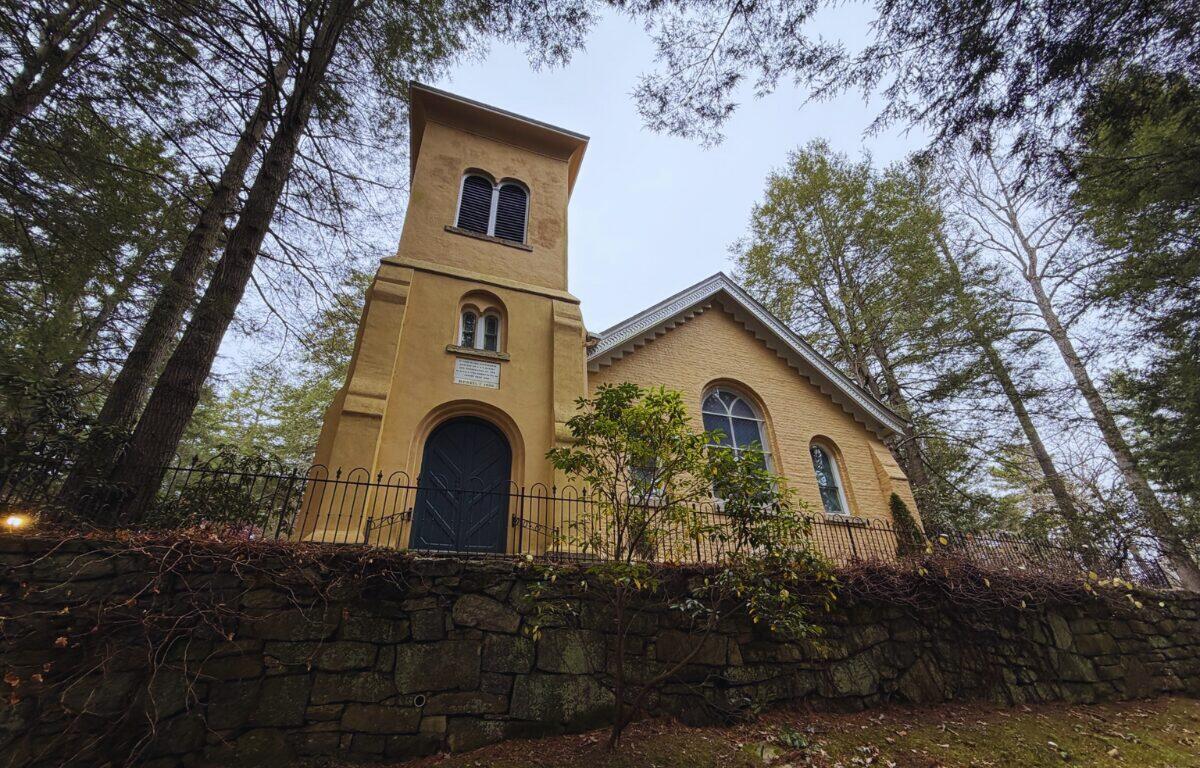
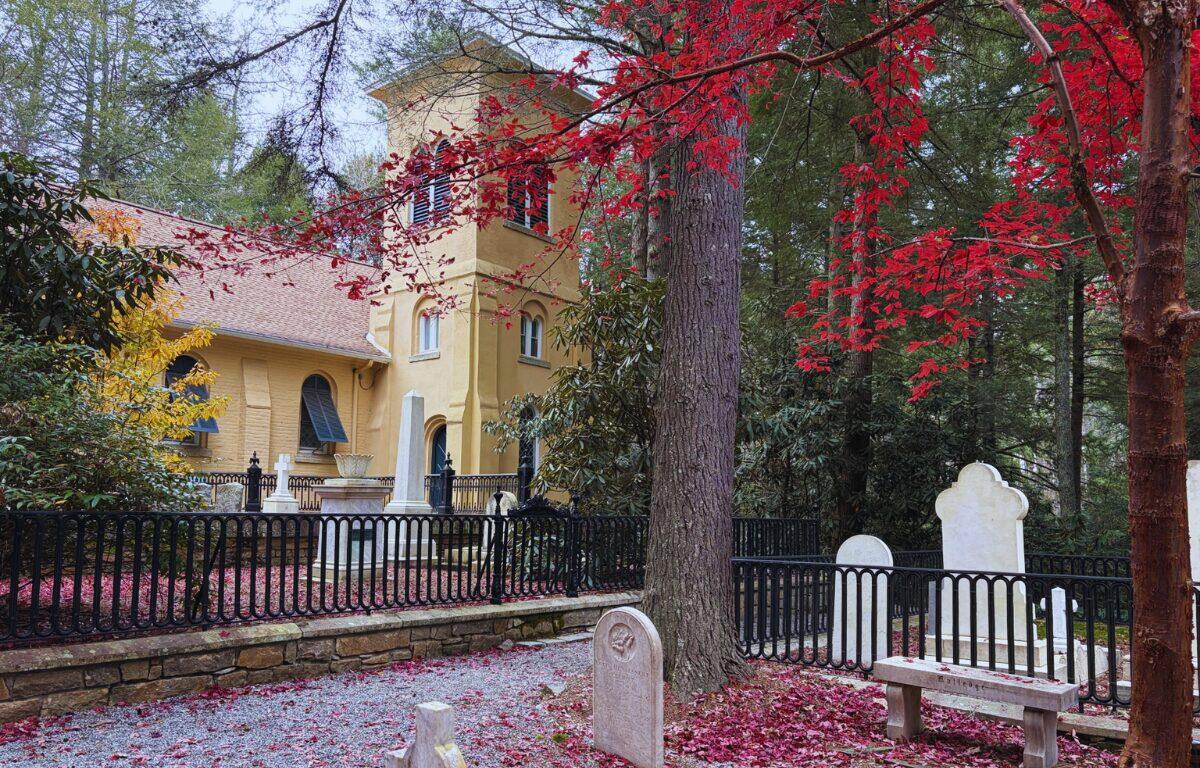
FLAT ROCK, N.C. (828newsNOW.com) — Tucked beneath tall oaks and evergreens along Greenville Highway, St. John in the Wilderness looks like something lifted from an old painting. The pale yellow brick, the bell tower and the hillside cemetery that presses close to the church walls all hint that this is no ordinary parish.
It is the oldest Episcopal church in the Diocese of Western North Carolina and one of the most layered historic sites in Henderson County.
A summer chapel in the “Little Charleston of the Mountains”
The story of St. John begins with Charles and Susan Baring, members of a prominent banking family from England who had settled in the South Carolina Lowcountry. The Barings began spending summers in Flat Rock in the 1820s to escape the heat and disease of the lowcountry. In 1827 they bought land and built their Flat Rock estate, Mountain Lodge, helping set off a wave of Charleston families who followed them to the mountains of Western North Carolina. The settlement became known as the “Little Charleston of the Mountains.”
The Barings built a small wooden chapel on their property. In 1833 the structure was destroyed by a fire. In 1833, work began on a new church made of brick.
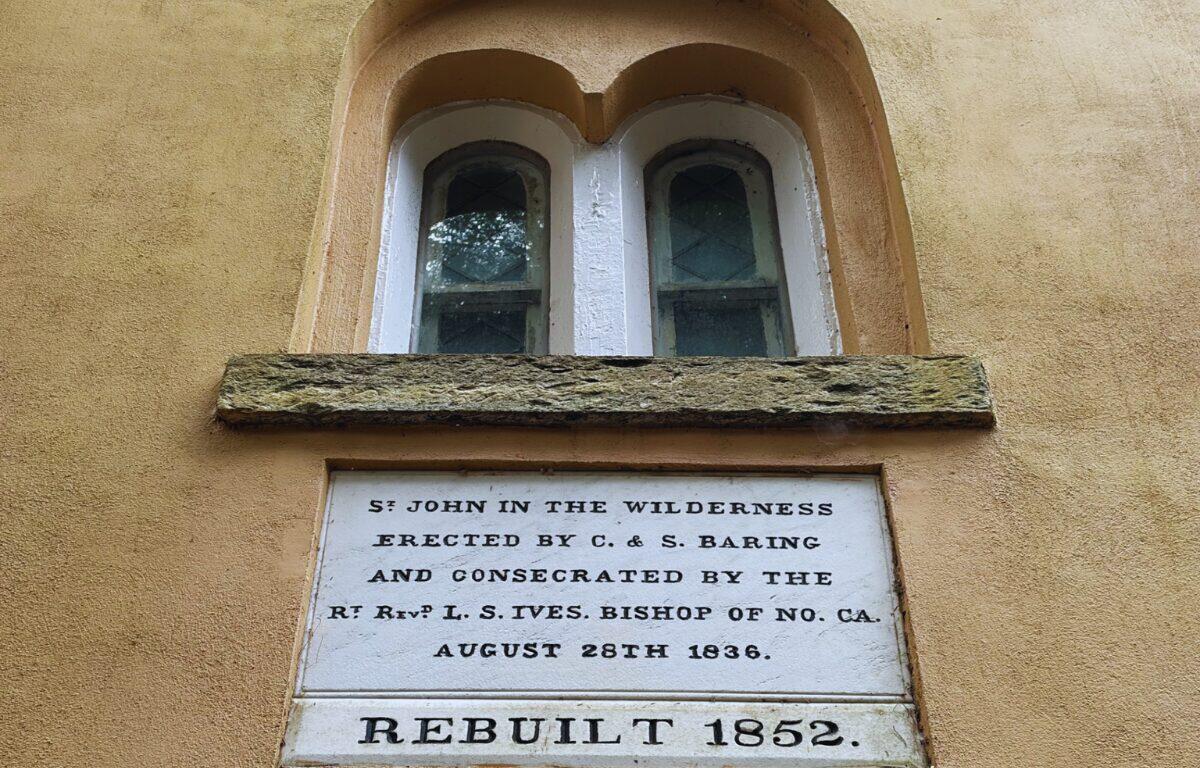
By 1836, they formally deeded the chapel and surrounding grounds to the Episcopal Church. Bishop Levi Silliman Ives of the Diocese of North Carolina consecrated it as St. John in the Wilderness and recognized a new parish formed by about 20 members of the Flat Rock “summer colony”.
When the Missionary District of Asheville was created in the 1890s, the parish shifted into the new diocese, making St. John in the Wilderness the oldest parish in the Diocese of Western North Carolina today.
Architecture along the old turnpike
The church that stands today sits above the old Buncombe Turnpike. Built of soft yellow brick, St. John reflects the work of Charleston architect Edward Jones, whose designs blended Gothic Revival and Italianate styles.
In the early 1850s the church was rebuilt, doubling its size. Over the years, the building has been repaired and expanded, but its basic footprint, character and historic details have remained since the expansion of the church building was completed in 1852.
A rare integrated worship space
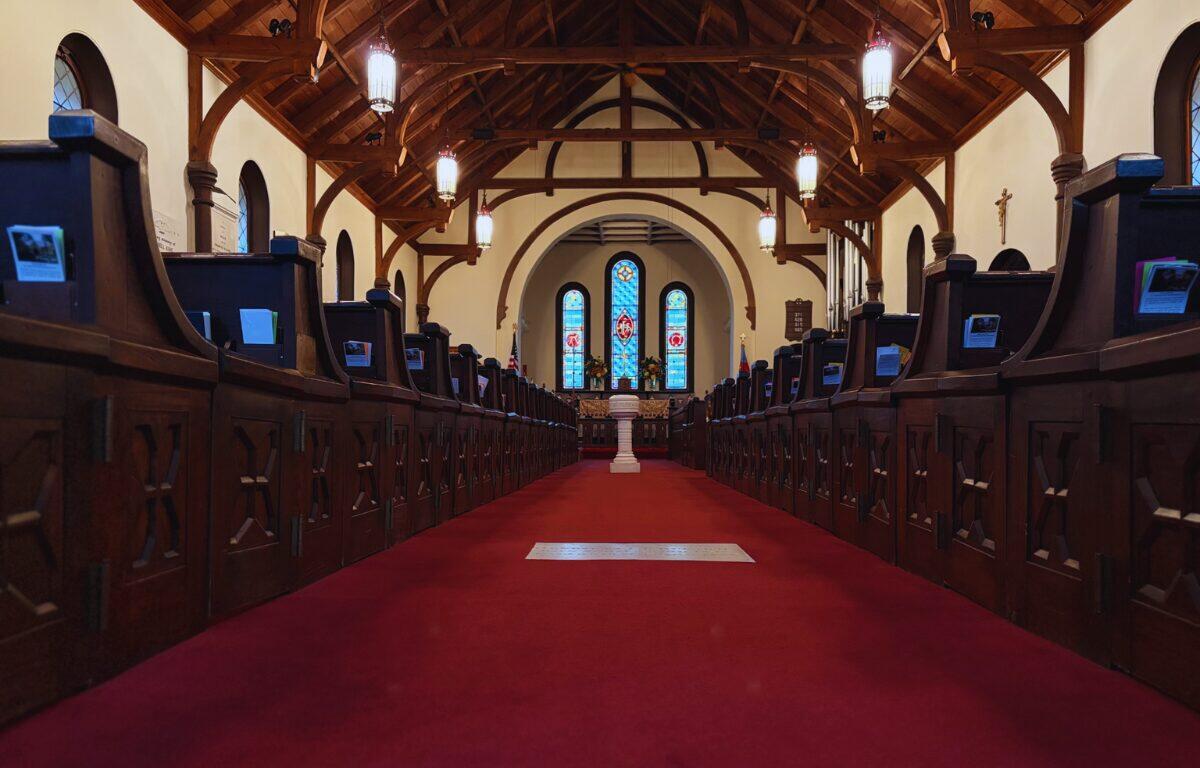
For a church founded by wealthy planters, St. John in the Wilderness holds a complicated distinction. Historical accounts describe the church as one of the few Episcopal congregations in Western North Carolina where enslaved people, free Black residents and white parishioners worshipped together in the same sanctuary. The first recorded wedding at St. John was between two enslaved people.
That shared worship did not erase the realities of slavery in Flat Rock. Many of the families who built summer houses here relied on enslaved labor brought from South Carolina. St. John’s history now asks visitors to consider both truths at once: a mountain refuge and a community built on the work of people who had little control over their own lives.
The cemetery on the hill
The hillside cemetery is one of the most striking parts of St. John in the Wilderness. Among the burials are names that loom large in Southern history, including Christopher Memminger, the first secretary of the Confederate treasury, and members of several prominent Charleston and Flat Rock families.
Walk farther toward the northeastern edge of the grounds and the tone shifts. Here, a simple granite cross rises above small markers.
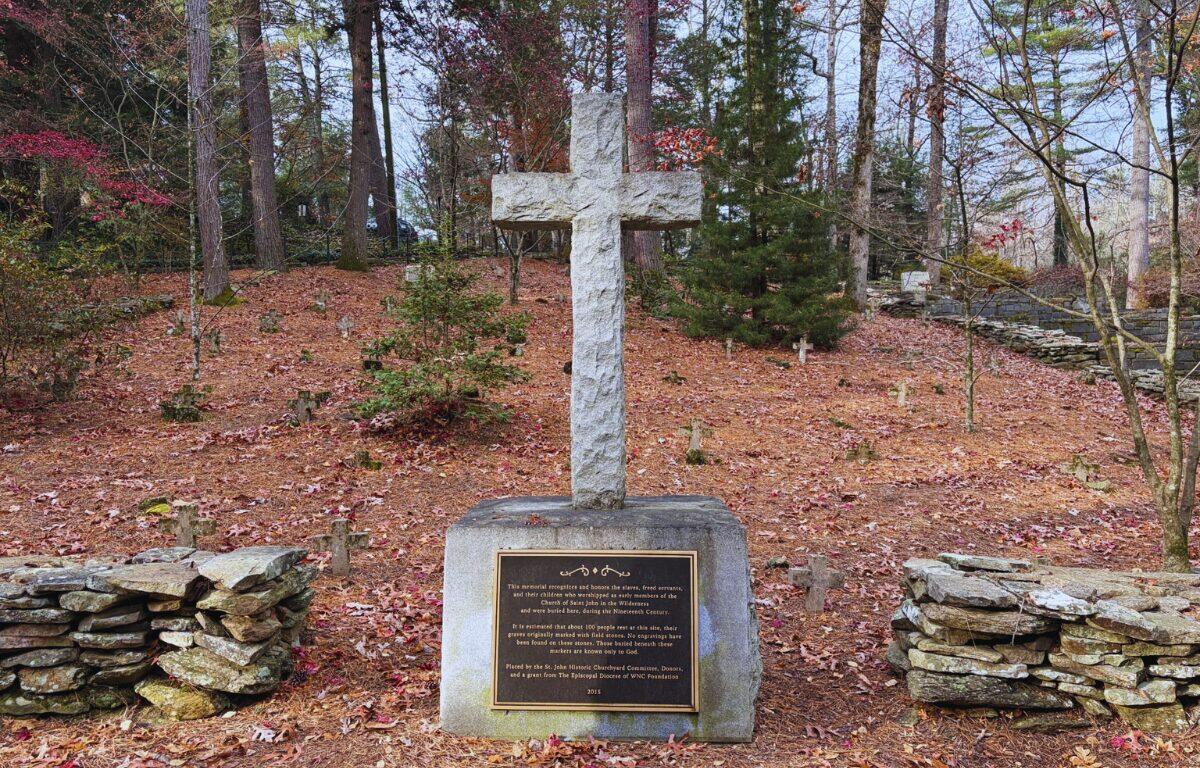
This is the section of the cemetery set aside for enslaved and freed African Americans who worshipped at St. John and were buried with no more than fieldstones to mark their graves.
Dedicated in 2015, the plaque below the Slaves and Freedmen Memorial Cross notes that the people buried here are “known only to God” and honors their role as early members of the church.
From summer chapel to year-round parish
For much of its history, St. John in the Wilderness functioned mainly as a summer chapel. It was not until the mid-20th century that year-round services began sustainable, thanks to a growing membership that kept the parish active all year.
St. John in the Wilderness is open to the public several days a week. Visitors are welcome to step inside the quiet sanctuary, walk the mossy cemetery paths and join occasional guided tours that explore the church’s architecture and history.
For anyone interested in the history of Western North Carolina, this yellow-brick chapel offers more than a pretty photo. It is a place where the region’s layered history is written into bricks, names on stone and the quiet cross in a stand of trees – asking visitors to remember everyone who once gathered here.