
Editor’s Note: “Mountain Movie Palaces” is an 828newsNOW miniseries spotlighting the independent movie theaters of Western North Carolina. From historic, single-screen arthouse theaters to unique, independently-operated multiplexes, we seek to celebrate the community of cinema through these feature stories.
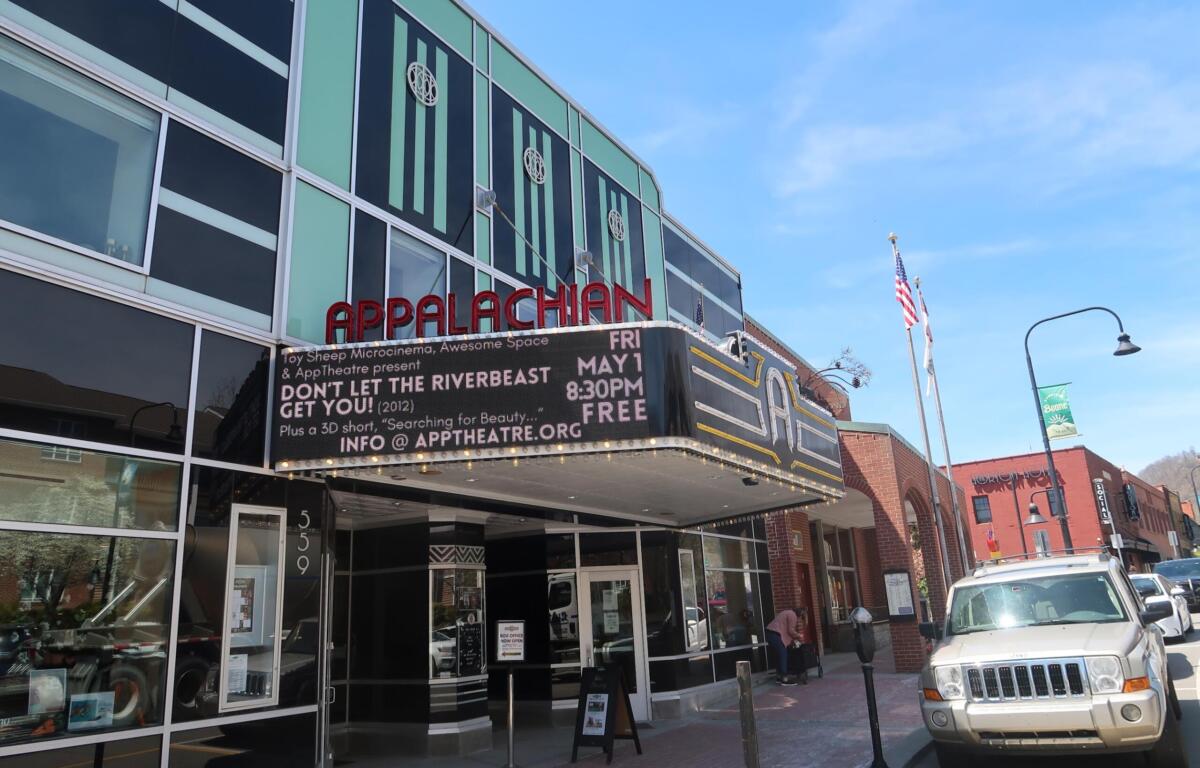
BOONE, N.C. (828newsNOW) — The Appalachian Theatre of the High Country is a multi-performing arts venue located in the downtown district of Boone, North Carolina. With over 80 years of history, the theater has almost as many stories to its name as movies it has shown. Learn more in our latest “Mountain Movie Palaces” feature.
Theater features
Location: 559 W. King St., Boone, N.C.
Hours: Vary by event
Number of screens: One
Number of seats: 629
Number of staff: 30
Type of theater: Repertory/Event


Now playing: An Appalachian historical epic
You would be forgiven for thinking the Appalachian Theatre of the High Country was a relic of the 1930s. The iconic teal-and-black movie palace, located on King Street in Boone, N.C., appears largely the same as it did in November 1938, when the theater opened its doors for screenings of now-obscure titles like “Young Dr. Kildare” (1938, 82 min., directed by Harold S. Bucquet) and “The Great Waltz” (1938, 104 min., directed by Julien Duvivier).
Looks can be deceiving. The Appalachian Theatre has had a long and tumultuous history, changing hands, brands and plans over and over again across eight decades.
From 1982-2007, for instance, the theater was known as the Appalachian Twin. In 2007, it closed its doors completely. It wouldn’t be until October 2019 that the newly-christened Appalachian Theatre of the High Country was reborn as a performing arts space. Even then, the reopening was hampered by the Covid-19 pandemic just a few months later. The Appalachian Theatre has endured a lot in 88 years.
Even so, the theater continues to be a lively player in the local arts scene, hosting live music, staging live theater and screening movies for live audiences from Boone and beyond.


Since reopening, the movie theater has leaned into “theater” more than “movie.”
“The nature of our venue is a multi-performing arts venue, and so, film is not our top priority,” explained Jason Deathridge, director of patron services at the Appalachian Theatre. ”Live events and live programming is more our focus in our current model.”


However, film is still a major building block of the Appalachian Theatre event calendar.
“We still love doing film because it is a cornerstone of the history and what we do,” Deathridge said. “Particularly classics and the favorites. That’s what people really enjoy.”
The theater regularly screens repertory titles, like Alfred Hitchcock films during an autumnal “Hitchcock-tober” series, or the original “Star Wars” trilogy around May 4. Film festivals and documentaries are also marquee mainstays, though with these, there is usually a greater emphasis on regional relevancy.


“We know where we are. We know we’re in Boone. We know that people come here and love nature and love the outdoors,” Deathridge said. “Adventure sports and things like that. And so, that audience is really cool and excited to come see some of these.”
For example, the annual Boone Docs Film Festival brings short documentaries about the Appalachian region to the Appalachian Theatre. The IF4 International Fly Fishing Film Festival will celebrate Appalachian anglers from all angles on Friday, May 1. Other film festivals at the theater have platformed environmental sustainability, skiing and more.
Such breadth of programming allows for smaller, weirder fare, too. Craig Fischer, a film professor at Appalachian State University, is the founder of Toy Sheep Microcinema, a series of cult and experimental films screened in the theater’s upstairs community room.
“Anything that’s not mainstream, anything that’s weird, that’s my remit,” Fischer explained. “I have two rules that I try to follow. One, don’t try to show anything that’s too typical, and two, try to pair it with something, even at the event itself, that makes it a unique experience for people.”


Previous Toy Sheep events have included screenings of cult flicks like “Faster, Pussycat! Kill! Kill!” (1965, 83 min., directed by Russ Meyer) and “Threads” (1984, 117 min., directed by Mick Jackson), as well as interactive attractions, like a live punk concert following a music documentary or a bingo game set to an experimental alphabet film.
While artists who license their off-the-wall work receive compensation from Toy Sheep, the microcinema events are always free for the moviegoing public.
“I want to keep it free because I think, you know, maximum accessibility. Plus, I’m asking people to come see stuff that they won’t necessarily like. They have to come on faith, you know?” Fischer laughed.
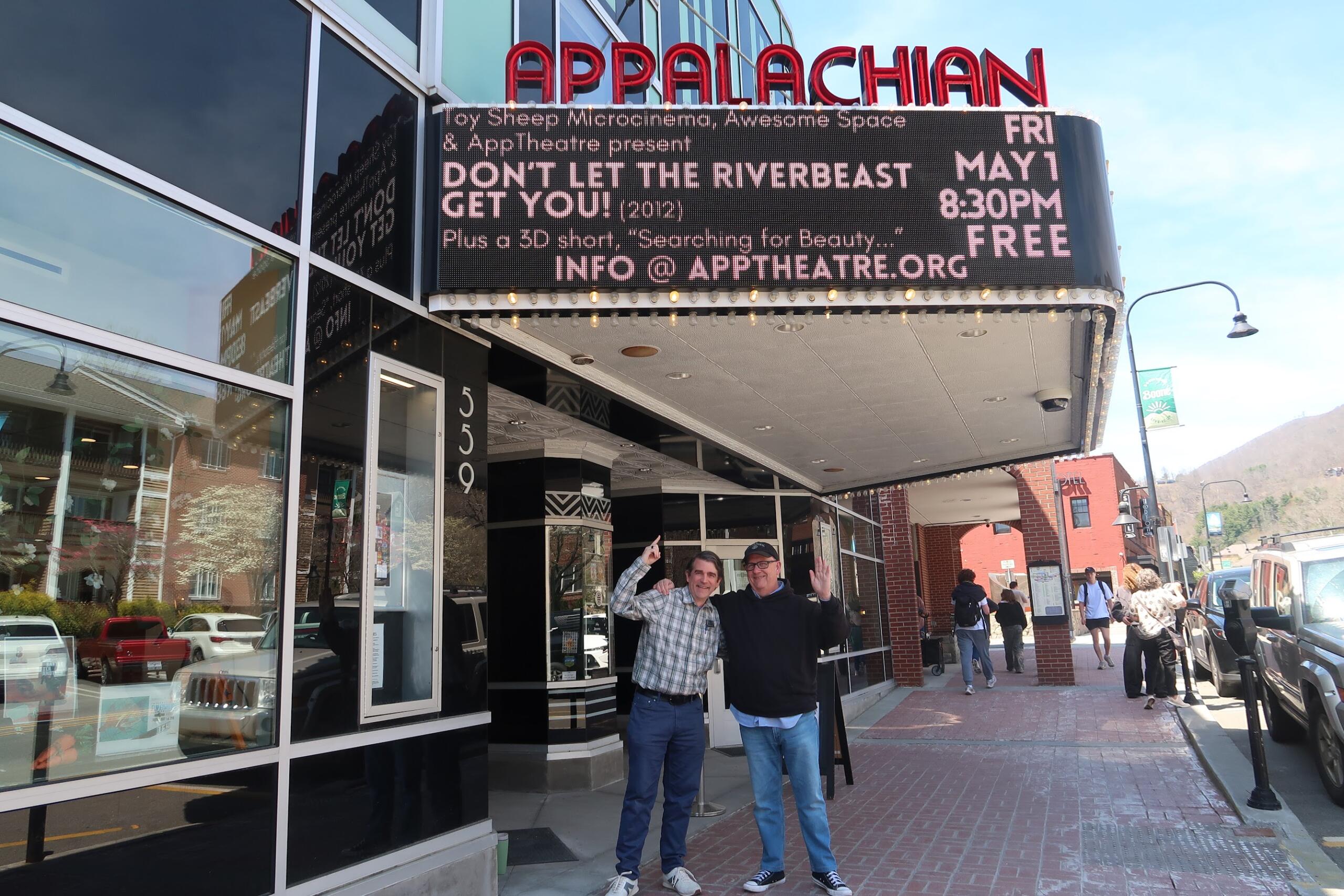
Variety is key to The Appalachian Theatre. The theater shows Toy Sheep events and hosts bluegrass bands. The theater puts on “The Rocky Horror Picture Show” and screens fly fishing films. Across 88 years, the theater has been continually rebuilt, restructured, reconfigured or reimagined.
Nonetheless, two things about the Appalachian Theatre seem to be constants:
- The theater is at the heart of Boone, N.C.
- It’s not going anywhere.
For more information about upcoming Appalachian Theatre events, including the IF4 film festival and the next Toy Sheep screening, “Don’t Let the Riverbeast Get You!,” on Friday, May 1, visit www.apptheatre.org/events-and-tickets.
Read previous “Mountain Movie Palaces” stories:
-
Korean zombies, endless roads and Anthony Bourdain: New movies to see in September 2026

“Spider-Man: Brand New Day” and “The Odyssey” might have defined the summer box office, but there are plenty of hidden movie gems to discover as we head into the fall. Check out our reviews of “Tony,” “Colony,” “Buddy” and “It Ends.”
-
5 best films at the 2026 Asheville Film Festival

The 2nd annual Asheville Film Festival ran from Aug. 21-23, 2026, at the Masonic Temple in downtown Asheville. Read a review of our favorite festival films below.
-
‘Spider-Man,’ samurai and ‘I Want Your Sex’: New movies to see in August 2026
Want to know if “Spider-Man: Brand New Day” is worth your time? Looking for a cool indie to watch? Read on for our reviews of new movies to see this August.
-
‘The Odyssey’ review: Christopher Nolan’s epic is mythic, massive moviemaking

“The Odyssey” has arrived. “Oppenheimer” director Christopher Nolan delivers an unbelievably immersive and impressive interpretation of the epic story. Read our review for more.
-
Best movies of 2026 so far: Our top 10 and honorable mentions

The year is already halfway over, which means there has never been a better time to check out the 2026 movies you may have missed. Read our list of the 10 best flicks of 2026… so far.
-
‘Disclosure Day’ is Steven Spielberg doing what he does best
That is, sentimental sci-fi spectacle. The director’s latest movie is a fantastic, heartfelt alien adventure. Read our review for more.
-
‘Backrooms,’ He-Man and ‘Scary Movie’: New movies to see or skip in June 2026
Looking for a new movie to see as summer vacation starts? Check out our reviews of three major releases: the indie horror phenomenon “Backrooms,” the silly 80s throwback “Masters of the Universe” and the sixth installment of the long-running parody series “Scary Movie.”
-
‘The Mandalorian and Grogu’ is cute, copy-and-paste ‘Star Wars’

The first new “Star Wars” movie in seven years is here! While far, far away from the galaxy’s best “Star Wars” flick, “The Mandalorian and Grogu” offers up cuteness in overdrive.
-
From ‘Michael’ to ‘Mother Mary’: New movies to see or skip in May 2026
A Michael Jackson biopic, two Anne Hathaway vehicles and an Australian serial killer thriller are our movies to see, stream or skip this May. Find out which is which in our reviews.
-
New movies to see, stream or skip in April 2026

Looking for a movie to see in Asheville this April? Learn what to see, stream or skip with our reviews of a cult horror reboot, a fresh spin on “Hamlet,” a documentary of epic length and a niche new vampire flick.