


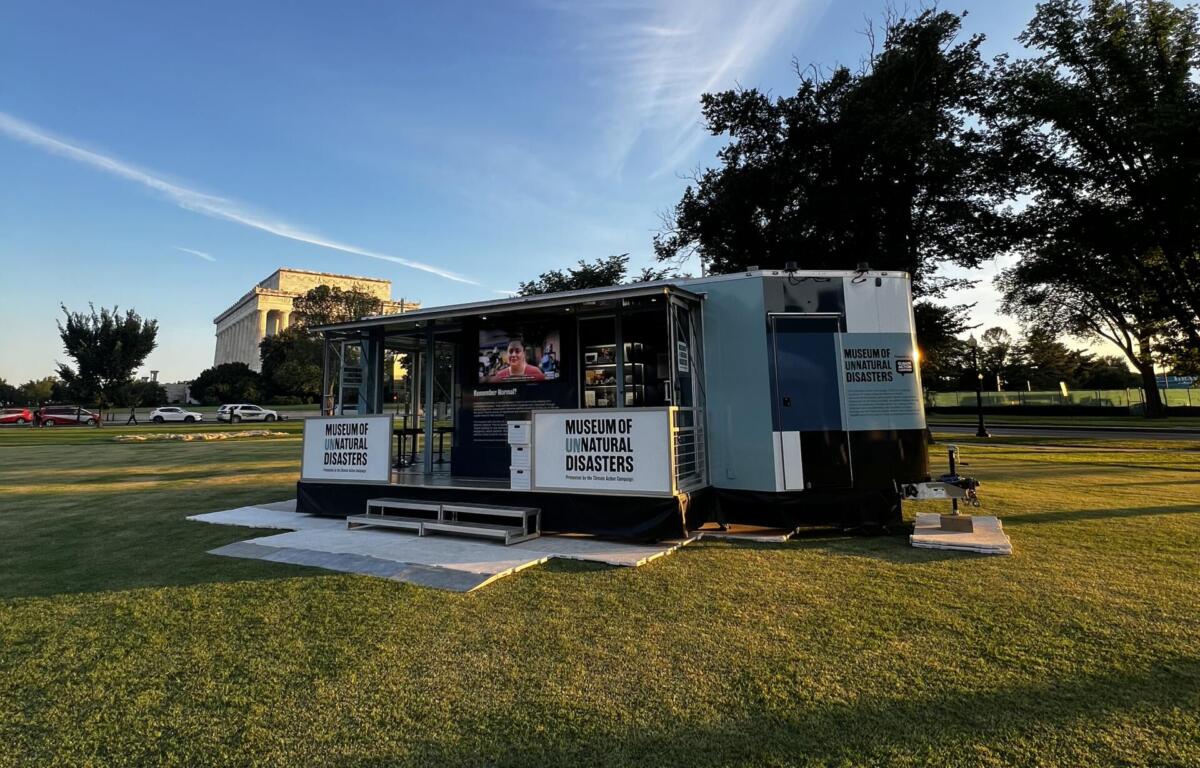

WASHINGTON (828newsNOW) — The “Museum of Unnatural Disasters” is an exhibit cataloguing the experiences of disaster survivors from across the United States over the last three years, including Tropical Storm Helene. The pop-up will be open in Washington, D.C., through mid-June.
The “Museum of Unnatural Disasters” will be run from 9 a.m. to 5 p.m., Monday to Friday, and noon to 5 p.m., Saturday to Sunday, June 3-14, at the East End Plaza of the Constitution Gardens in Washington. No tickets are required to visit the free exhibit, but guests are encouraged to RSVP at www.mobilize.us/climateactioncampaign/event/947473.
Cataloguing the climate crisis
The climate exhibit is an initiative of the Climate Action Campaign, a collective of environmental advocacy groups from across the United States. The project was curated by Sam Hartman, an Asheville, N.C., resident and designer who lived through Helene.
Hartman said that the museum is centered around telling human stories of disaster, be it tornado, hurricane, fire, freeze or flood, through the items they carried through their experiences.
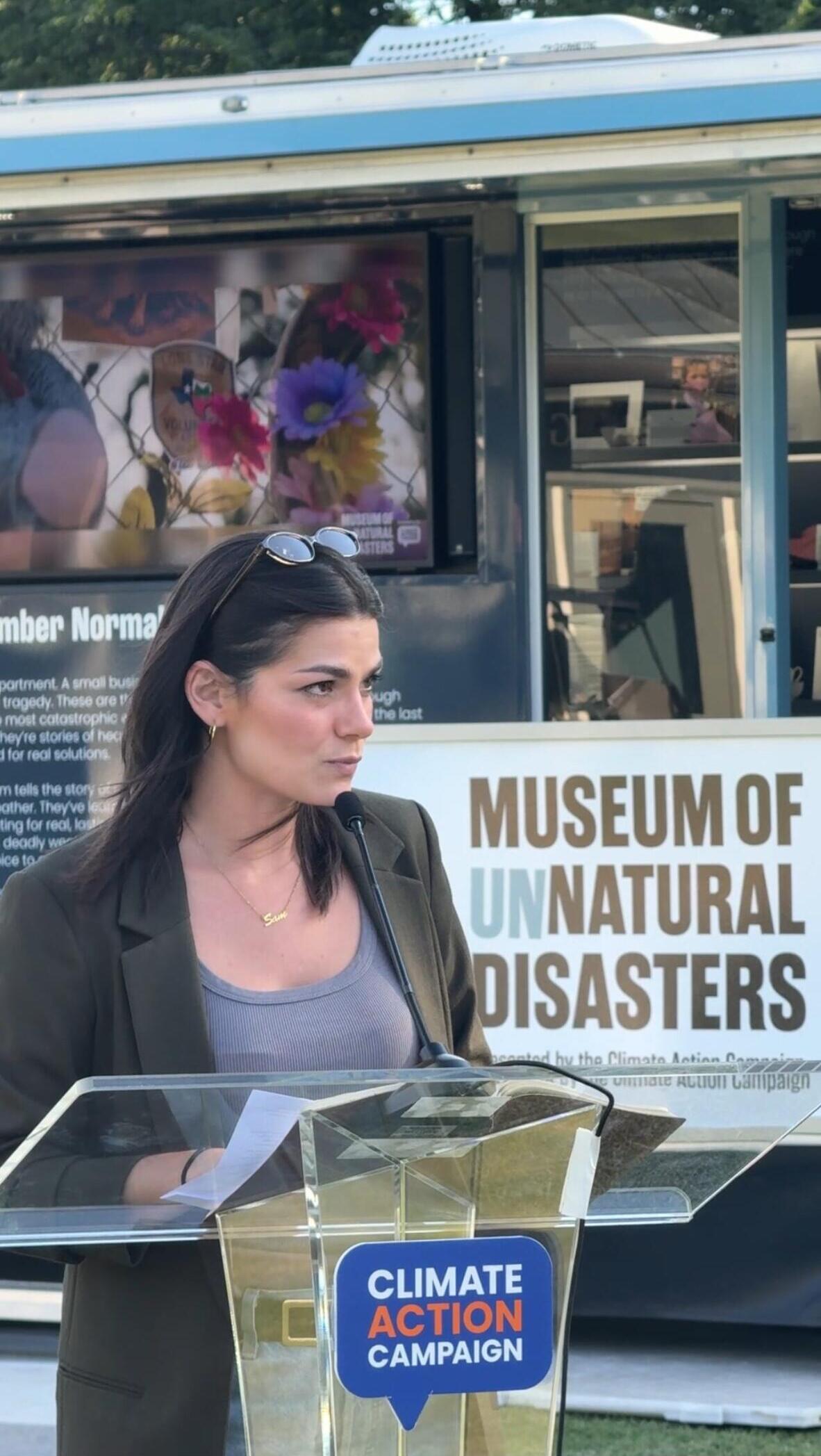
“This pop-up came from the idea that any person you meet on the street, you can’t necessarily see what storm they have been through, but their objects really carry that. We took into account that objects are kind of this silent witness to people’s lives, and often are kind of overlooked when it comes to climate disaster and really reading what happened in this situation,” Hartman explained. “So, we wanted to highlight stories of people who have gone through extreme weather and have experienced that, and talked to them about what were their saving graces, what were things that were devastated that cut the image. What do they still keep from that time and their experience?”
The museum is fashioned in three major components:
- A map of disaster headlines from all 50 states from the last three years, spotlighting 15 $1 billion storms in particular
- A photo wall contributed by disaster survivors with pieces of their stories
- An artifact cabinet with a few of the objects that express the multitudinous experiences of their owners


“You can see things like a small Fisher-Price radio that was the only communication that someone had in Asheville. You can see things like a really beautiful wine glass set that was passed on from someone’s mom, completely flattened and melted from the fires in L.A.,” Hartman said. “A lot of different objects that communicate weathering and storm.”
Hartman said that visitors are invited to share with the exhibit operators what object they would save from disaster if they found themselves in a similar scenario, as well as to sign a petition advocating for the fight against climate crisis.
Museum contributor
One of the contributors to the “Museum of Unnatural Disasters” photo wall was Ulla Reeves, an Asheville environmental advocate who has lived in the city for over 20 years. Reeves and her husband were connected with the Climate Action Campaign around 6-8 months after Helene, when the coalition held a series of “citizen hearings” to connect Asheville residents with climate activism opportunities. During one meeting, the organization solicited photos of the aftermath of the storm.
Reeves had plenty to share. Reeves and her husband took photos all over the region in the wake of Helene, from their home in the Kenilworth neighborhood of Asheville down to Hot Springs, N.C. The images captured rampant flooding in the River Arts District, long lines of people clutching gas cans and forests of downed trees.
The museum took four, collected below:


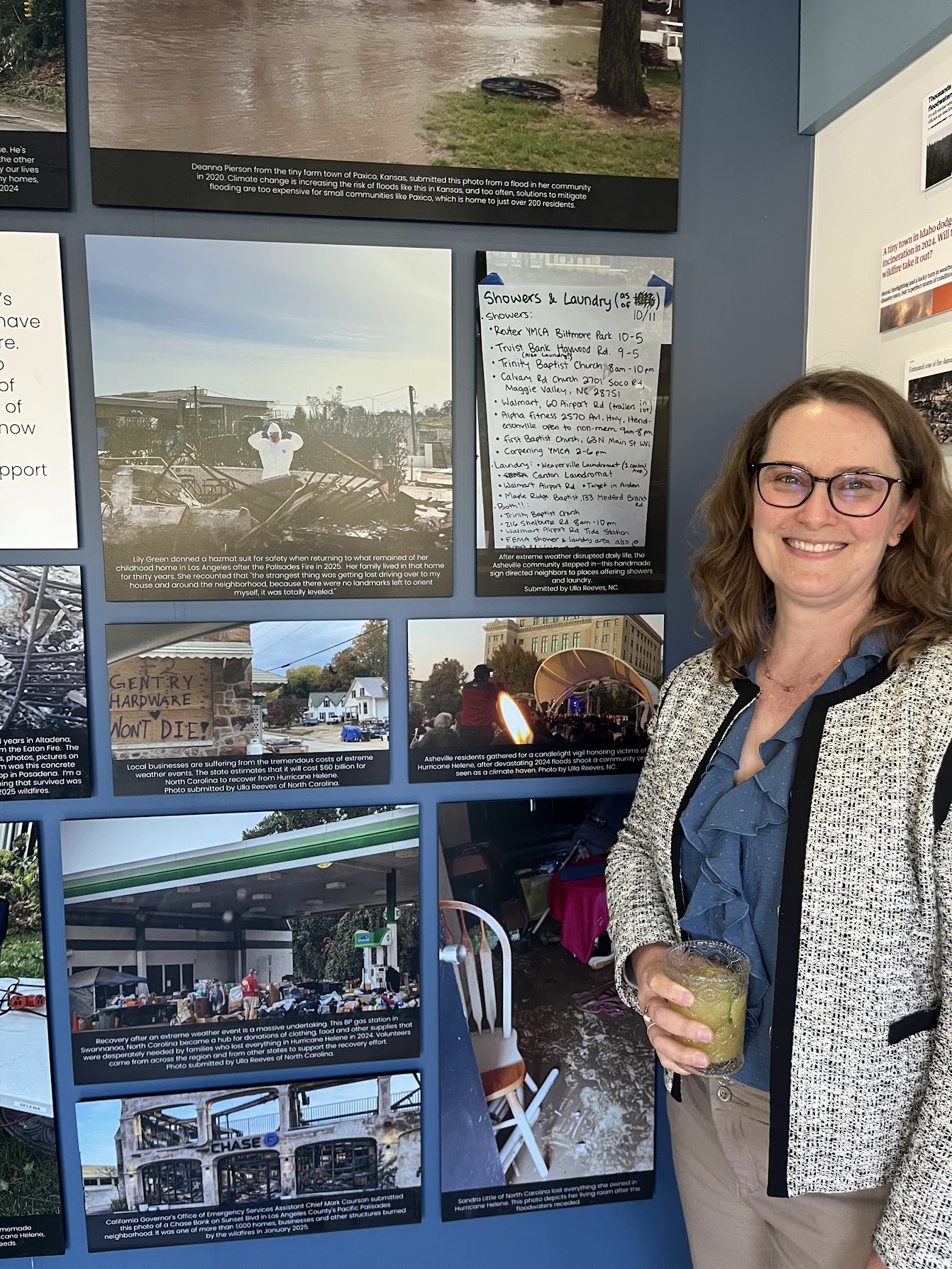
Earlier this week, Reeves attended the exhibit reception in Washington and visited the museum for herself.
“It’s really well done. They did a great job with it. I am honored to be included in in that. I’m not a photographer. These were snapshots that I took of Helene, but they are symbolic, and show some of the devastation and what the recovery started to look like,” Reeves said. “What it looked like for the community to come together.”
According to Reeves, seeing the collected exhibit, with its walls of storms and stories, was “sobering.”
“I think it’s incredibly disturbing that there are so many stories to be had right now and, honestly, it’s only going to get worse,” Reeves said. “It’s sobering and it’s scary.”
Reeves wants to see the community collective Helene created translated into unified advocacy for combating climate change, especially among lawmakers.
“I would love for every single person to feel empowered to call on their decision-makers to tackle climate change. This is a human-made problem that has human-made solutions,” Reeves said. “We need to be moving into a post-fossil fuel era. Burning fossil fuels is driving climate change and is going to make these unnatural disasters worse. We need to do something about it and we can do something about it. We can move to more sustainable ways of using and producing energy. Every single resident who rallied up to support their neighbors could be rallying to call on their our decision-makers to do something about this problem.”
Hartman hopes that the “Museum of Unnatural Disasters” will remind its visitors what the consequences of unchecked climate change could be.
“I hope that this exhibit really highlights that people don’t really remember big headlines. They don’t necessarily remember the statistic of, like, what percentage of water we have in this area or anything. But, they do take with them stories of others, and that’s the human piece to all of this,” Hartman said. “I hope someone goes into the exhibit and they feel a little bit more, and they are able to connect through these everyday objects that we see and then feel like they have to do something about it.”
Like Reeves, Hartman feels that the path toward climate sustainability is paved by a unified people.
“We’re asking for people to sign that petition, to really hope that when when enough people talk about meeting actual solutions and action towards climate sustainability, that enough people using that power, will really create change,” Hartman said. “One person can only do so much, but if we band together, we can do a lot more.”
For more information about the “Museum of Unnatural Disasters” or the Climate Action Campaign, visit www.actonclimate.com/museum-of-unnatural-disasters.
Read more. . .
-
PHOTOS: Trombone Shorty brings New Orleans funk to WNC
See photos from Trombone Shorty and Orleans Avenue’s high-energy Friday night performance at Sierra Nevada Brewing Co. in Mills River
-
Asheville weather: 80s return before weekend cooldown
After a weekend of heavy rain, sunshine and highs near 85 return before a cold front brings frost and possible freezing temperatures to the mountains
-
Honor a WNC veteran in 828newsNOW’s Veterans Day tribute
As Veterans Day approaches, 828newsNOW and Asheville Media Group are inviting Western North Carolina residents to share photos and stories of veterans for the Honoring Our Local Heroes community gallery. Submissions are open through Nov. 1.
-
Weaverville pickleball club sets Oct. 24 grand opening
Ballcrank Pickleball Club will celebrate its opening with 12 indoor courts, music, food trucks and free admission
-
Asheville Costco traffic study projects 12,000 daily trips
NCDOT is reviewing proposed improvements to Smokey Park Highway and Sand Hill Road. The developer must pay for required road work before opening.