
EDITOR’S NOTE: Strangeville explores the curious and unexplained stories that have long defined Asheville and Western North Carolina. The region is full of unanswered questions, from old folklore and local legends to eerie encounters, unsolved moments in history, and the true-crime mysteries that still leave people wondering. Each week, we look back with an open mind and a sense of curiosity, trying to understand why some stories take hold and why some can never be explained.
ASHEVILLE, N.C. (828newsNOW.com) — Sometime in the spring of 1865, as Union troops occupied Raleigh at the end of the Civil War, one of the most important documents in American history was stolen from the North Carolina State Capitol.
No alarms were raised, and no one seemed to notice the document was missing for years.
The document was North Carolina’s original copy of the Bill of Rights, one of 14 handwritten parchments produced in 1789 and sent to the states after Congress approved the first ten amendments to the U.S. Constitution. North Carolina’s version was of particular significance to the historical record.
The state had refused to ratify the Constitution in 1788 until guarantees of individual liberties were added. After those amendments were proposed, North Carolina ratified the Constitution and the Bill of Rights in November 1789.
The parchment was stored at the State Capitol in Raleigh, where it remained for decades.
Then came the Civil War.
In April 1865, Union forces entered Raleigh following the Confederate surrender. During the occupation, soldiers moved through government buildings, including the Capitol. At some point during that period, the Bill of Rights was taken. Historians believe it was removed by a Union soldier, likely as a souvenir.
With no inventory of Capitol records after the occupation, the document’s disappearance went unrecorded.
For more than a century, the Bill of Rights passed through private hands, reportedly changing ownership multiple times through sales and inheritance. The document remained largely unknown outside a small circle of collectors.
The mystery resurfaced in the 1990s, when individuals claiming to own the parchment contacted the State of North Carolina. They offered to sell the Bill of Rights back to the state, reportedly asking for millions.
State officials refused, stating the document had been stolen during the Civil War and remained state property.
With negotiations stalled, North Carolina turned to federal authorities.
In 2003, the FBI officially opened an investigation, and an undercover operation was set in motion to recover the document. Agents posed as prospective buyers and set a meeting with the sellers at a hotel in Raleigh. The sellers were instructed to bring the parchment to finalize what they believed to be a private sale.
Experts were invited to the meeting to authenticate the document. Once they analyzed the handwriting, ink, paper, and historical markings, it was confirmed as North Carolina’s original copy of the Bill of Rights, and federal agents seized the document.
Authorities did not file criminal charges against the sellers, citing the passage of time, unclear chains of custody, and the complexity of ownership claims. The focus of the operation was recovery, which proved successful.
After the seizure, the parchment was transferred to the National Archives for conservation and verification. Specialists confirmed it was one of the original 1789 copies distributed to the states, and the Bill of Rights was formally returned to North Carolina.
In 2007, a statewide public tour was organized to allow residents to see the recovered document. The tour included several cities across North Carolina, including Asheville. The stop marked a rare public display of the parchment outside Raleigh and connected Western North Carolina to the document’s unusual modern history.
Today, North Carolina’s Bill of Rights is preserved under secure conditions as a state-owned historical artifact.
Its disappearance and recovery remain one of the strangest chapters in North Carolina history.
-
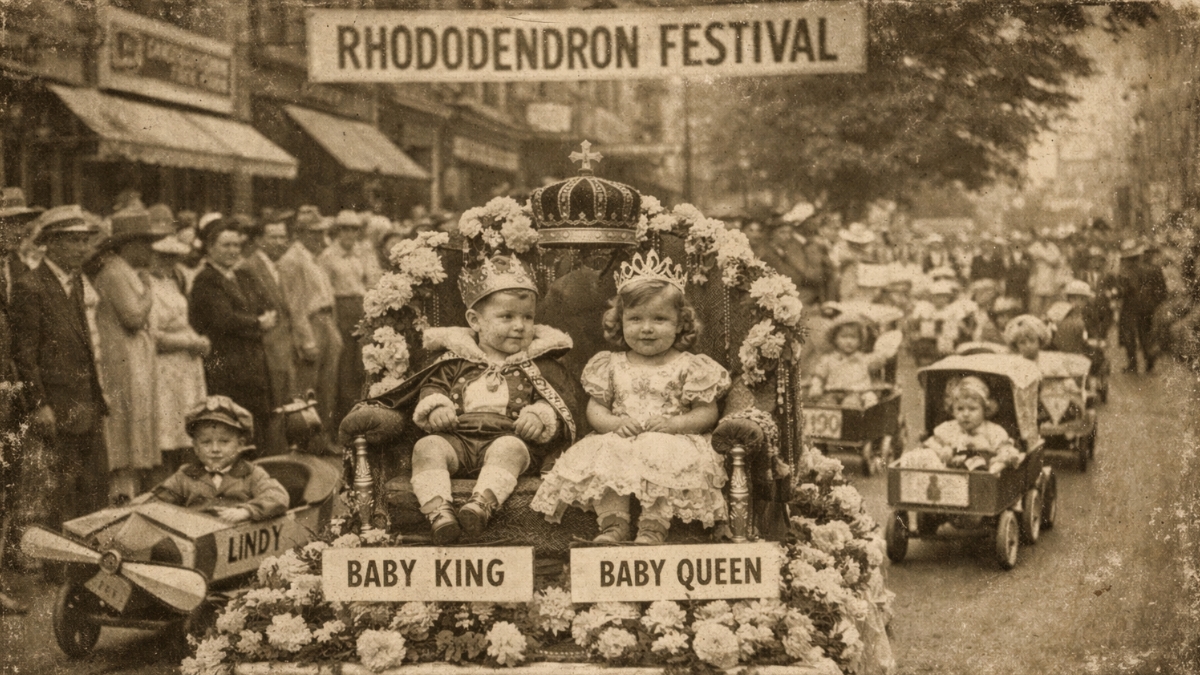
Strangeville: Asheville’s Rhododendron Baby Parade

During Asheville’s Rhododendron Festival heyday, a Baby Parade drew huge crowds and tiny floats. The tradition lasted until money worries and a world war changed everything.
-
Strangeville: Linville Hermit disappearance remains a mystery

A man known locally as the Linville Hermit is said to have vanished from his mountain cabin in the 1800s. No official record exists, but the story has remained part of local folklore for generations.
-
Strangeville: The Whang Doodle that haunted Polk County

A legend from Polk County tells of a mysterious creature once seen by a young boy in the Appalachian foothills.
-
Strangeville: The Ghost Town of Puncheon Camp Creek
EDNEYVILLE, N.C. (828newsNOW.com) — In the open farmland of rural Henderson County, two oversized
-
Strangeville: The Cherry Bounce King of WNC
Meet Amos Owens, the Cherry Bounce King of North Carolina, whose moonshine legacy and infamous mountain parties made him a folk legend on Cherry Mountain in the late 1800s.