



ASHEVILLE, N.C. (828newsNOW) — Thanksgiving in Asheville more than a century ago wasn’t all that different from today. There were turkey dinners to prepare, family gatherings to attend, church services to visit and holiday shopping to finish.
But there were also fancy hotel dances that lasted into the early morning, hunting trips into the mountains and elaborate celebrations at some of the city’s most fashionable gathering places.
And if you were cooking Thanksgiving dinner in 1898, you might have been just as concerned about having enough coal for the stove as having a turkey to put in it.
Old Asheville newspapers from the 1890s through 1920 tell the story of a holiday filled with food, dancing, worship, shopping and a few traditions that might surprise people today.
Turkey, oysters and all the trimmings
Thanksgiving dinner was a big deal in Asheville long before grocery stores offered ready-made holiday meals.
In November 1900, G.A. Greer, a grocer at 53 Patton Ave., advertised figs for 20 to 25 cents a pound, nuts for 20 cents a pound and Malaga grapes for 25 cents a pound.
Turkey was already a holiday staple, but it wasn’t the only thing on the menu.
In 1917, Acme Fish Co. at City Market advertised fish and oysters for Thanksgiving. Two years later, Baker’s Market promoted North Carolina turkeys along with roasting and frying chickens, urging customers to place their orders early.
Fruitcakes were also on the holiday shopping list, at least according to local advertisements. In 1920, Edwin C. Jarrett offered cakes made to order, along with raisins, figs, dates and nuts.
For those who didn’t want to cook, Asheville restaurants offered another option.
A Thanksgiving Day advertisement in 1919 invited diners to enjoy a holiday meal at The Piping Hot or The Plaza, with reservations available by telephone.
And for home cooks, there was plenty of advice.
A 1900 newspaper article suggested decorating the Thanksgiving table with a hollowed-out pumpkin filled with fruit, yellow chrysanthemums and homemade cornucopias overflowing with candy, nuts and dried fruit.
The decorating suggestions, reprinted from Woman’s Home Companion, even included artificial pumpkin pies containing small wrapped gifts for dinner guests.
Of course, preparing the meal required more than ingredients.
In 1898, Carolina Coal Co. advertised its Jellico coal as the secret to a perfectly cooked Thanksgiving turkey. Three years later, Asheville Hardware Co. promoted turkey-carving sets with stag handles.
Some Thanksgiving concerns, it seems, never change.
Dancing the night away
For Asheville’s fashionable social crowd, Thanksgiving was an occasion to dress up and go dancing.
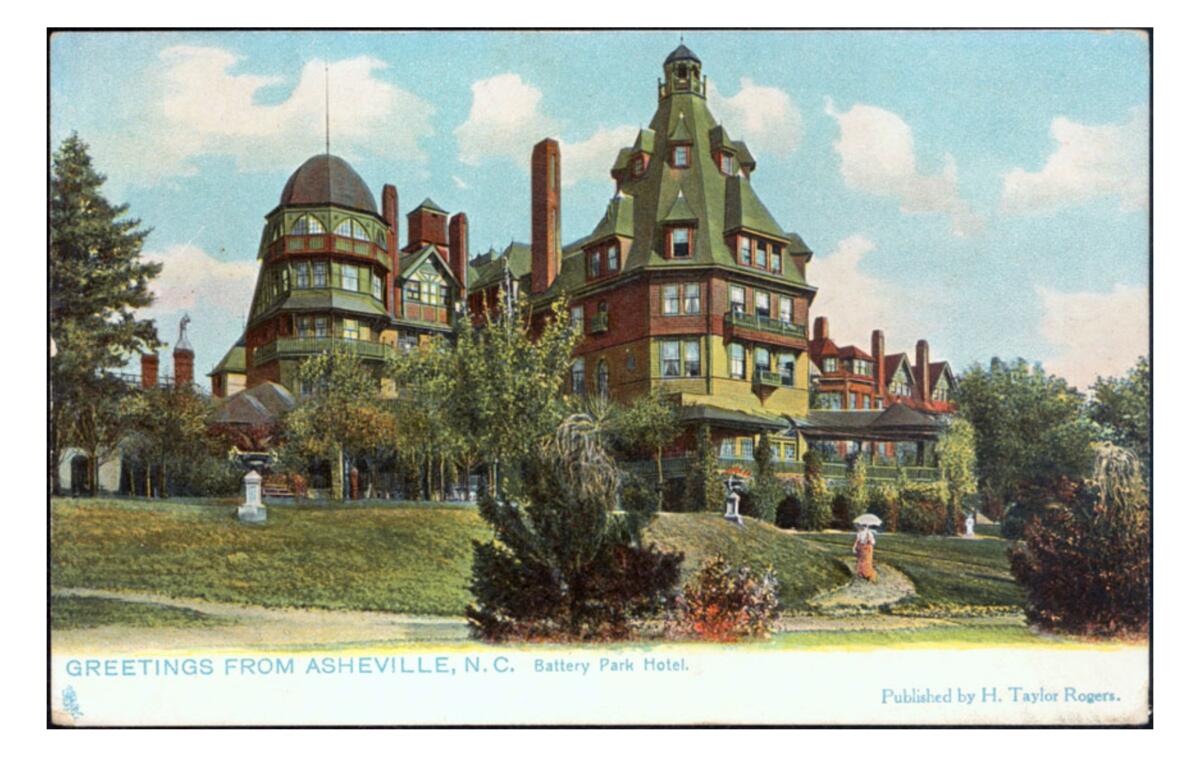
In 1900, the Battery Park Hotel hosted a Thanksgiving dance that filled its ballroom with guests. A newspaper account described it as one of the most successful dances of the year.
The evening featured music by Spear’s City Orchestra, refreshments and a cotillion.
Three years later, the Bingham German Club held a Thanksgiving dance at the Battery Park Hotel. According to a Nov. 27, 1903, newspaper account, dancing began around 9:30 p.m. and continued until nearly 2 a.m.
Apparently, nobody was in much of a hurry to get home.
By 1916, the Asheville Country Club was also a popular Thanksgiving destination, offering golf, dancing and an open house.
In 1919, the club planned another full day of activities, including a golf tournament, a luncheon and a tea dance. About 40 golfers had registered for the tournament by the day before Thanksgiving.
A day for church and giving
While some Asheville residents spent Thanksgiving dancing or enjoying a holiday feast, others marked the occasion with worship and charitable giving.
Church services were a central part of the holiday.
In 1902, local newspapers described plans for special religious services, school programs and community gatherings. Many businesses and government offices closed so employees could observe the day.
Giving to those in need was another longstanding custom.
In 1917, members of First Presbyterian Church organized Thanksgiving donations for the Mountain Orphanage at Balfour, near Hendersonville.
The newspaper reported that sugar, cereals, flour and clothing were especially needed.
But not every Thanksgiving brought the same level of charitable activity.
In November 1918, the Asheville Times reported that the Salvation Army and Associated Charities expected to distribute fewer holiday gifts than in previous years.
The article attributed the change partly to improved employment opportunities during World War I, including work connected with the construction of Azalea Hospital. The influenza epidemic had also affected Asheville residents that year.
Still, Thanksgiving remained an occasion to remember those who might otherwise be overlooked.
In 1920, patients at Kenilworth Hospital enjoyed a holiday dinner accompanied by music from a high school jazz band.
The dining room was decorated with greenery and flowers donated by Asheville residents and the Baraca-Philathea organization. Visitors also spent time with patients in the hospital wards.
A Thanksgiving to remember
Few Thanksgivings carried as much significance as the one Asheville celebrated in 1918.
Fighting in World War I had ended with the armistice on Nov. 11, just 17 days before Thanksgiving.
A Nov. 26, 1918, article in the Asheville Times reported that some residents had planned to forgo their usual Thanksgiving dinners during the war. But after the armistice, they reconsidered.
Turkey dealers reported plentiful supplies, despite large orders for soldiers at military camps.
On Thanksgiving Day, Nov. 28, Asheville residents gathered for church services, offering thanks for the Allied victory and the end of the fighting.
The newspaper reported that the holiday was widely observed despite unpleasant weather.
Stores and government offices closed, while residents attended religious services, played golf or ventured into the countryside.
The holiday also came during the deadly influenza pandemic, which had disrupted life in Asheville and across the country.
After four years of war, Asheville had something especially meaningful to be thankful for.
Hunting, golf and holiday entertainment
Not everyone spent Thanksgiving around the dinner table.
Outdoor recreation was part of the holiday, too.
Golf was a popular Thanksgiving activity at the Asheville Country Club, while hunting drew residents into the surrounding mountains.
On Thanksgiving Day in 1920, the Asheville Times reported that streets and early streetcars were crowded with hunters heading into the countryside.
Quail, rabbits and squirrels were among the game they hoped to find.
The newspaper also described visitors from other parts of the country traveling to Western North Carolina to hunt.
For those who preferred indoor entertainment, Asheville’s theaters advertised holiday attractions.
A November 1920 advertisement promoted Thanksgiving week movie screenings at the Princess and Strand theaters.
Thanksgiving shopping, long before Black Friday
Black Friday hadn’t arrived, but Asheville merchants already knew how to turn Thanksgiving into a shopping opportunity.
In November 1903, Bon Marché, a downtown department store, advertised a “Big Thanksgiving Sale” featuring clothing, linens, hosiery and other merchandise.
By 1920, M.V. Moore & Co. was promoting Thanksgiving as an occasion to look one’s best, offering men’s suits at one-third off.
Other downtown merchants used the holiday to advertise groceries, household furnishings, clothing and gifts.
But Thanksgiving Day was generally treated as a holiday.
Newspaper accounts from the early 1900s repeatedly noted that schools, banks, government offices and many businesses would close for the occasion.
Some traditions never change
More than a century later, Asheville residents are still gathering for Thanksgiving dinners, heading outdoors, attending church and looking for holiday bargains.
Of course, the old newspapers don’t tell everyone’s story. Much of the coverage focused on downtown businesses, prominent families and fashionable social gatherings, leaving the holiday experiences of many working-class and Black Asheville residents less documented.
Still, those accounts offer a glimpse of a city celebrating a familiar holiday in a very different time.
The coal-fired ovens and all-night hotel dances may be gone, but some Thanksgiving traditions have proved remarkably hard to change.