


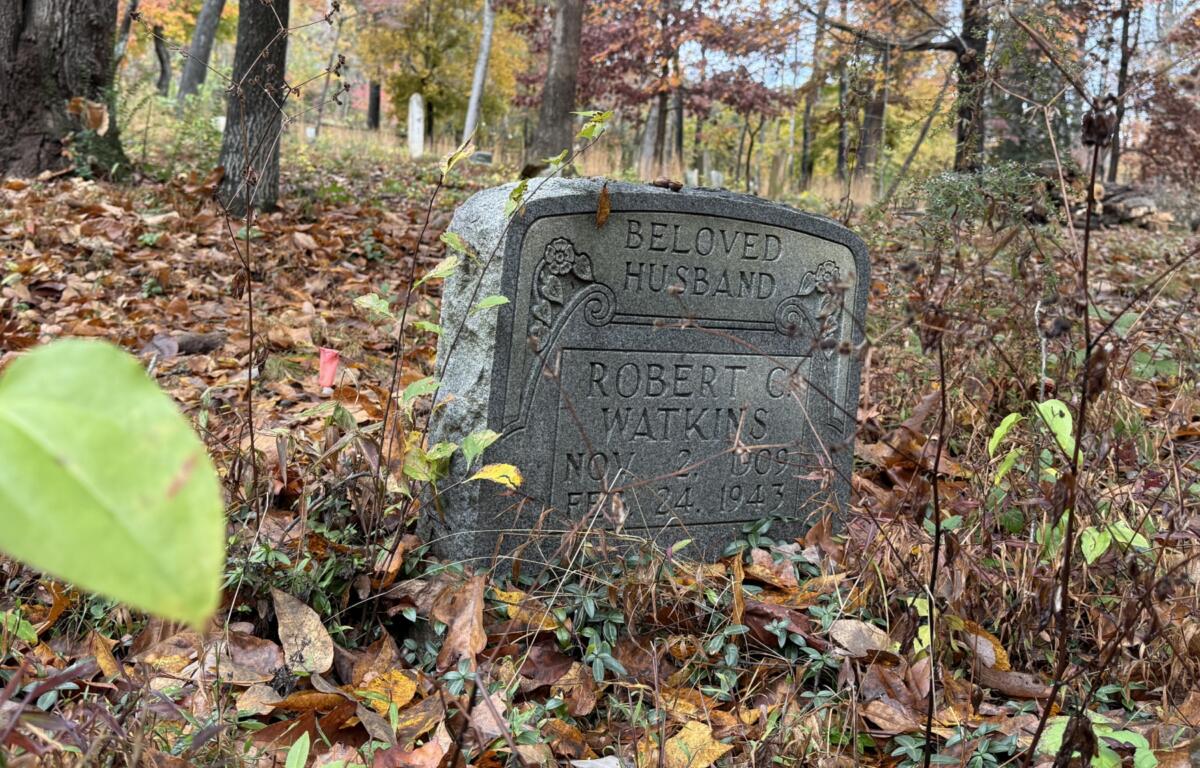

ASHEVILLE, N.C. (828newsNOW) — A simple inscription on a gravestone at South Asheville Cemetery offers a glimpse into the life of a young Navy sailor who died during World War II.
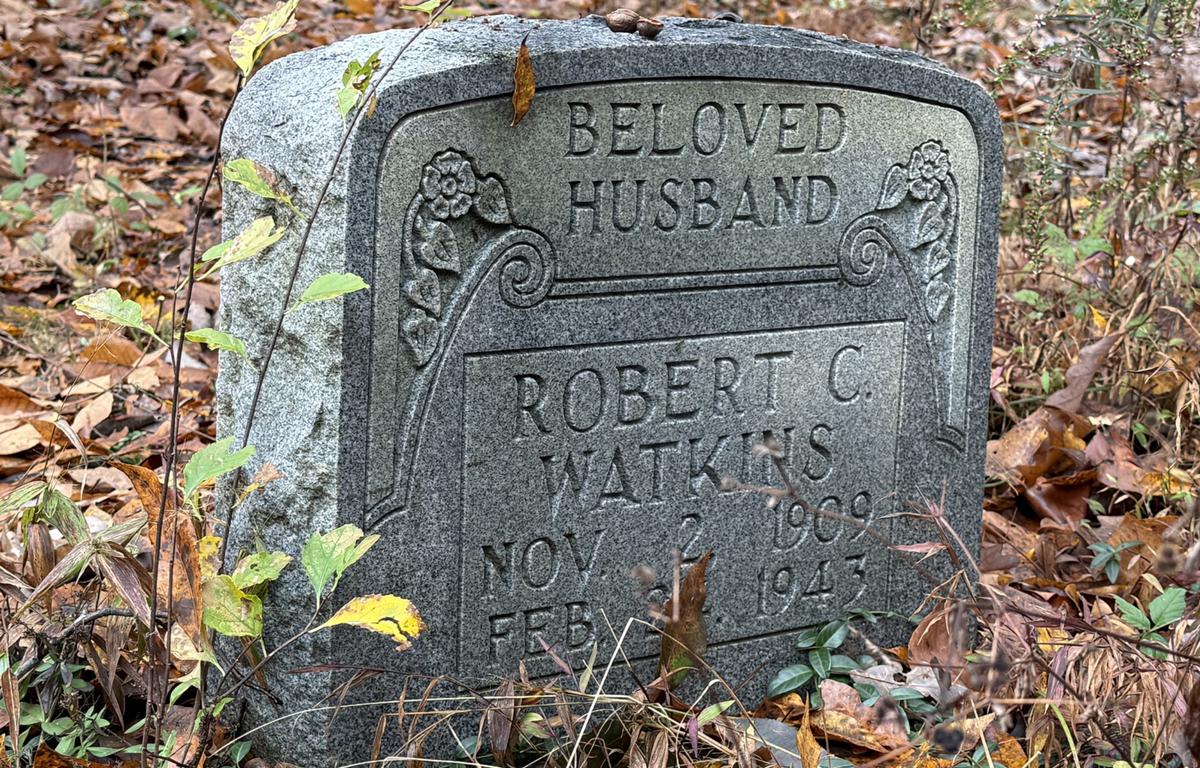
“Beloved Husband.”
The words appear on the headstone of Robert Clifton Watkins, who was just 33 when he died in February 1943.
Watkins is believed to have been the last person buried at South Asheville Cemetery, a historic burial ground where generations of Black Asheville residents were laid to rest, including people who had been enslaved.
His grave marks the end of more than a century of burials at the cemetery. But while his place in its history is documented, much about Watkins remains a mystery.
A young sailor’s death
Watkins was born Nov. 2, 1909, and was serving in the U.S. Navy when he died in 1943.
He held the rating of officer’s cook third class, a job commonly assigned to Black sailors during an era when the military was still segregated.
His gravestone lists his date of death as Feb. 24, 1943.
A few days later, on March 2, the Asheville Citizen reported his death in an article headlined “Asheville Negro, Cook in Navy, Is Killed In Service.”
The article is cited in historical documentation prepared for the cemetery’s listing on the National Register of Historic Places. That documentation describes Watkins as having been killed in action.
The available historical information does not establish exactly how he died.
There are also questions about the family he left behind.
His headstone identifies him as a beloved husband, but the identity of his wife has not been established through the records reviewed for this story.
What is known is that Watkins was buried in Asheville, in a cemetery whose history reached back to the days of slavery.
A burial ground with deep roots
South Asheville Cemetery began in the 1800s as a burial place for people enslaved by William and Sarah McDowell, whose family owned property in what is now Asheville.
Over time, it became an important burial ground for the city’s growing African American community.
An estimated 2,000 people are buried on the property, although the exact number is unknown. Many graves have no surviving markers.
Some were marked with fieldstones, wooden crosses or other simple markers that disappeared or deteriorated over the years.
Among those buried there is George Avery, a formerly enslaved man who served in the Union Army during the Civil War and later helped care for the cemetery.
Avery joined the United States Colored Troops in 1865. After the war, he returned to Asheville, where he became an important figure in the Black community and helped maintain the burial ground.
He died in 1938 and was buried in the cemetery he had helped care for.
His grave is marked by a military headstone recognizing his Civil War service.
The cemetery also had close ties to two African American congregations, St. John “A” Baptist Church and St. Mark AME Zion Church.
The churches helped oversee burials through a cemetery board, providing a place where Black residents could bury their loved ones during an era when segregation limited their options.
The cemetery holds the remains of people who experienced slavery, emancipation, Reconstruction and the decades of segregation that followed.
Some of their names survive on gravestones. Many others are known only through historical research, oral histories and memories passed down through families.
The cemetery’s final chapter
By the 20th century, South Asheville Cemetery had served generations of Black families.
Watkins’ burial in 1943 is believed to have been the last.
But exactly how the cemetery came to stop accepting burials is less clear.
Historical documentation prepared for the National Register notes that some longtime residents believed the city had closed or condemned the cemetery.
Researchers, however, found no records establishing that Asheville had formally ordered it closed.
Whatever the circumstances, the cemetery gradually fell into neglect.
Trees, brush and other vegetation spread across the grounds. Grave markers became difficult to find, and the burial places of many Asheville residents faded from public view.
For decades, much of the cemetery’s history remained hidden beneath the overgrowth.
Remembering those buried there
That began to change in the 1980s.
George Gibson, who had worked as a gravedigger and helped care for the cemetery in his younger years, began clearing the neglected grounds.
He was joined by George Taylor, a trustee of St. John “A” Baptist Church, and eventually other community members and volunteers.
The work was difficult. With so many graves marked only by stones or other fragile objects, clearing the cemetery required care to avoid disturbing burial sites.
The restoration effort eventually grew into a larger community project.
The South Asheville Cemetery Association was established to help preserve the property, and volunteers have continued working to maintain the grounds and protect its history.
Oral history interviews conducted in the 1980s also helped preserve memories of the cemetery and the people connected to it.
In 2021, South Asheville Cemetery and St. John “A” Baptist Church were added to the National Register of Historic Places, recognizing their importance to Asheville’s African American history.
Today, the cemetery remains a reminder of generations of Black residents whose lives helped shape the city, even when their stories were left out of written histories.
A name that remains
Among those graves is the one belonging to Robert Clifton Watkins.
He was born decades after slavery ended, served his country during World War II and died at an age when much of his life should still have been ahead of him.
His burial in 1943 came more than a century after the cemetery’s earliest graves.
There are still things we don’t know about Watkins. The circumstances of his death remain unclear, and the surviving records offer only fragments of his personal life.
But his headstone preserves something more than his name and military service.
Two words tell us that someone loved him and wanted that love remembered.
“Beloved Husband.”
More than 80 years after his death, those words remain at South Asheville Cemetery, where his grave is believed to mark the final burial in a place that holds generations of Asheville’s history.