


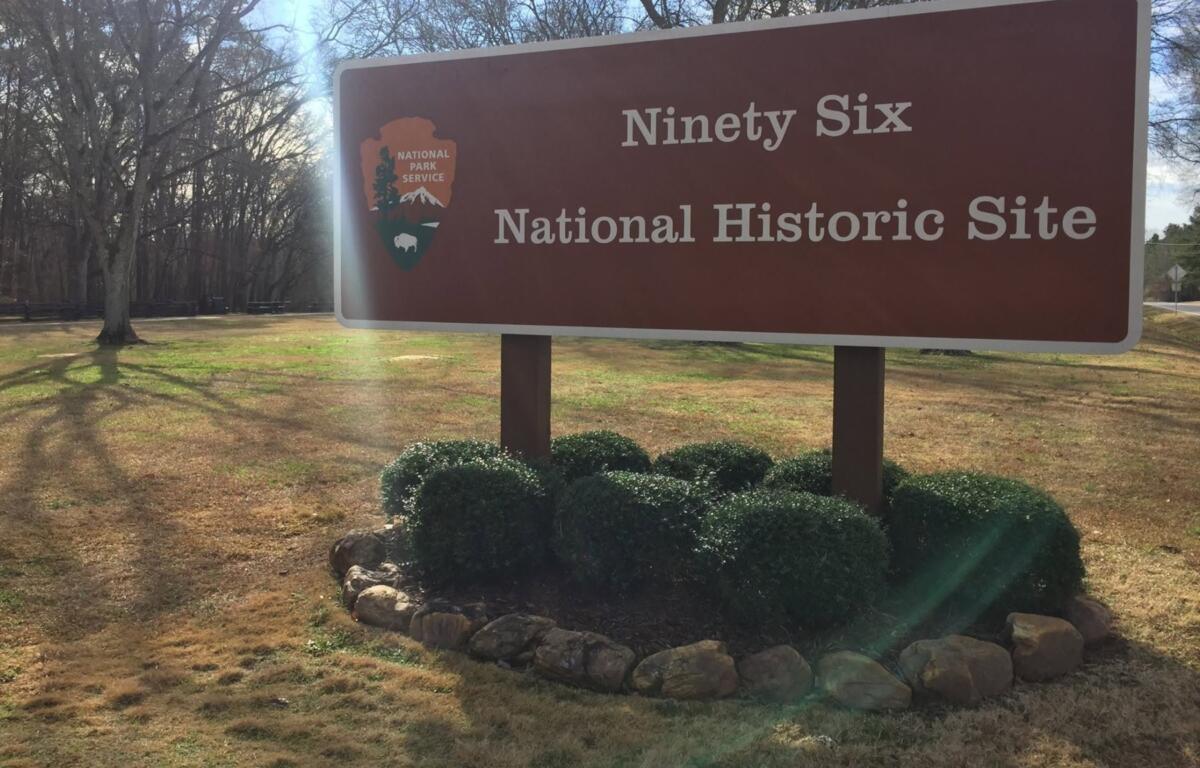

ASHEVILLE, N.C. (828newsNOW) — A family account preserved in a 1934 narrative credits a young North Carolina woman, Ruth Davidson, with carrying a critical Patriot message through the Southern backcountry during the Revolutionary War.
According to the story recounted by Catherine Rebecca Carson, Davidson disguised herself as an elderly woman and rode on horseback from her home near the Catawba River in Western North Carolina to the British-held post at Fort Ninety Six in South Carolina. The message she carried urged Patriot forces to “hold out,” assuring them that reinforcements were on the way.
The journey is placed in the context of 1781, during General Nathanael Greene’s Southern Campaign, when Continental forces were attempting to reclaim territory from British and Loyalist control. In that period, Patriot troops laid siege to Ninety Six, a fortified outpost that became one of the war’s key strongholds in the Carolinas.
In the Davidson family tradition, Davidson was about 16 years old at the time of the ride. She is said to have traveled alone over rough terrain, covering more than 100 miles and relying on her disguise to avoid suspicion in a region where couriers were often intercepted.
The siege of Ninety Six ultimately failed to dislodge Loyalist defenders, but historians have long viewed the broader campaign as an important step in weakening British authority in the South and paving the way for eventual Patriot victory.
While the story of Davidson’s ride has been passed down through generations, historians and genealogists note inconsistencies in the historical record, including shifting dates and limited contemporary documentation. As a result, the episode is often treated as a blend of family history and Revolutionary-era folklore rather than a fully verified military account.
The account of Davidson’s journey is preserved in family histories and regional interpretations of early Western North Carolina settlement and Revolutionary War-era oral tradition, including materials held and referenced by the Asheville Museum of History, from which this story was written.
Still, within that tradition, Davidson’s journey endures as a symbol of backcountry resilience and the often-unrecorded roles women played in wartime communication networks during the American Revolution.