Editor’s Note: Western North Carolina is rich with untold stories—many resting quietly in local cemeteries. In this Tombstone Tales series, we explore the lives of people from our region’s past whose legacies, whether widely known or nearly forgotten, helped shape the place we call home.
ASHEVILLE, N.C. (828newsNOW.com) — A cemetery can hold an entire city’s history, but some stones stand as symbols of a single moment in time. Mary McDowell’s headstone in Riverside Cemetery doesn’t mention a tragedy or the headlines that once carried her name across the South. It simply offers a few gentle and final words: “Entered into rest suddenly.”
McDowell was born Mary Hamilton Blair on Jan. 15, 1853, in Jonesborough, Tennessee, the daughter of William and Elizabeth Blair. She later settled in Asheville, where she married Jesse McDowell in 1876. Over the next decade, the couple had five children, building a family in a growing mountain city closely tied to the rail lines that connected Western North Carolina to the rest of the South.
Her life ended on Oct. 20, 1887, when she was just 35 years old. McDowell’s death was tied to a major railroad disaster near Spartanburg, S.C. that stunned Asheville as telegraph reports arrived and residents waited for the names of the dead and injured.
The accident happened on the Charlotte, Columbia and Augusta Air Line Railroad, a key rail route in a network that connected Western North Carolina to cities across the region. The system depended on schedules, telegraph orders and human judgment, and when those failed, the consequences could be catastrophic.
Newspaper accounts described the collision as violent and chaotic. A freight train running off schedule entered the same section of track as an oncoming passenger train. Without modern signaling systems to prevent an accident, the two trains struck at speed. Passenger cars were crushed, and railroad workers and travelers were thrown, trapped, and injured as wreckage piled along the track.
Reports in the first hours after the crash placed the number of deaths at roughly eight to 10, with dozens injured, including several passengers connected to Asheville. Some accounts identified an engineer among the dead, along with passengers traveling from towns across the Carolinas and Georgia.
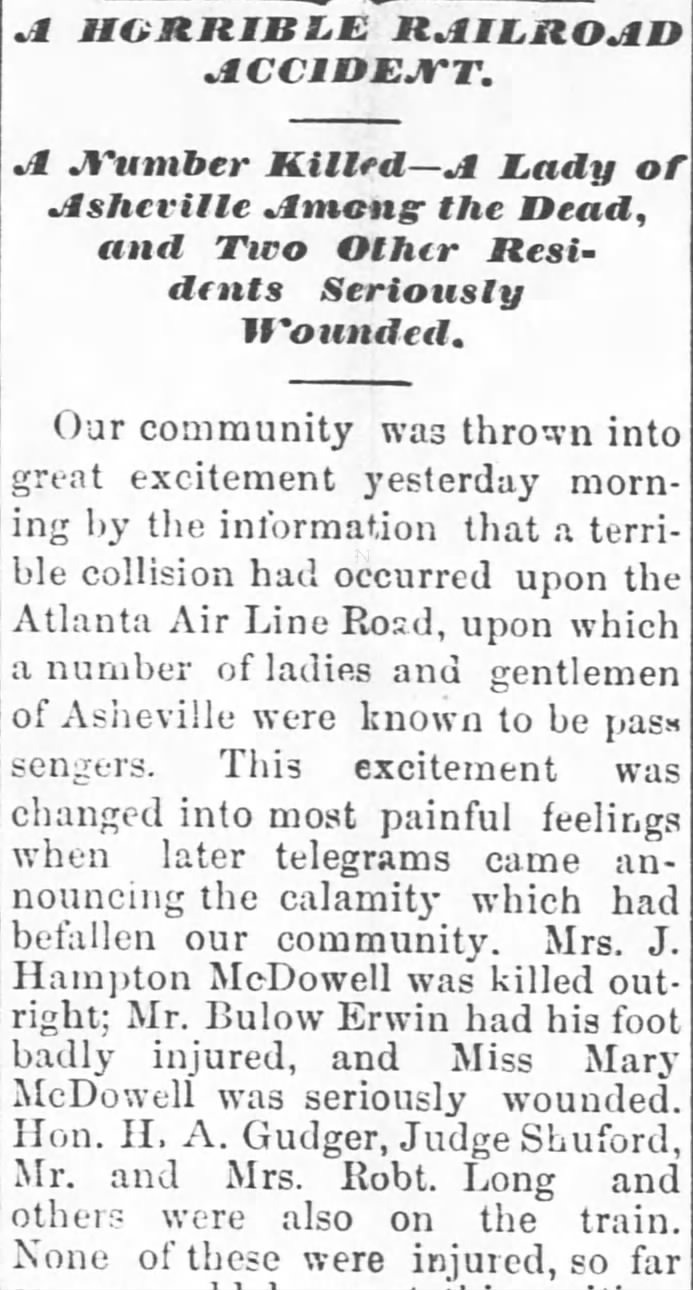
News of the wreck hit Asheville hard. Papers described a city on edge as telegrams were received and updated lists were published. One report captured the way the tragedy became personal almost immediately: “A Horrible Railroad Accident — A Lady of Asheville Among the Dead.”
That “lady” was Mary McDowell.
The newspaper accounts recorded the disaster in the language of damage and accounting: which cars were destroyed, how the engines looked after impact, and what railroad officials believed went wrong. They pointed repeatedly to the same underlying problem, a freight train operating out of sequence and the breakdown of coordination that should have kept the line clear for a passenger run.
While the papers recorded McDowell’s death, they offered little about her life beyond her name and her connection to Asheville. But her gravestone tells more of her story. The tall Gothic-arched marker, carved with floral details that appear broken or cut short, reinforces the inscription’s theme of the sudden loss of a beloved wife and mother.
Railroad accidents in the 19th century were reported in columns and casualty lists, then replaced by the next day’s news.
Cemeteries hold what the headlines could not.
Every number was a life interrupted, and a story that ended too soon.
-
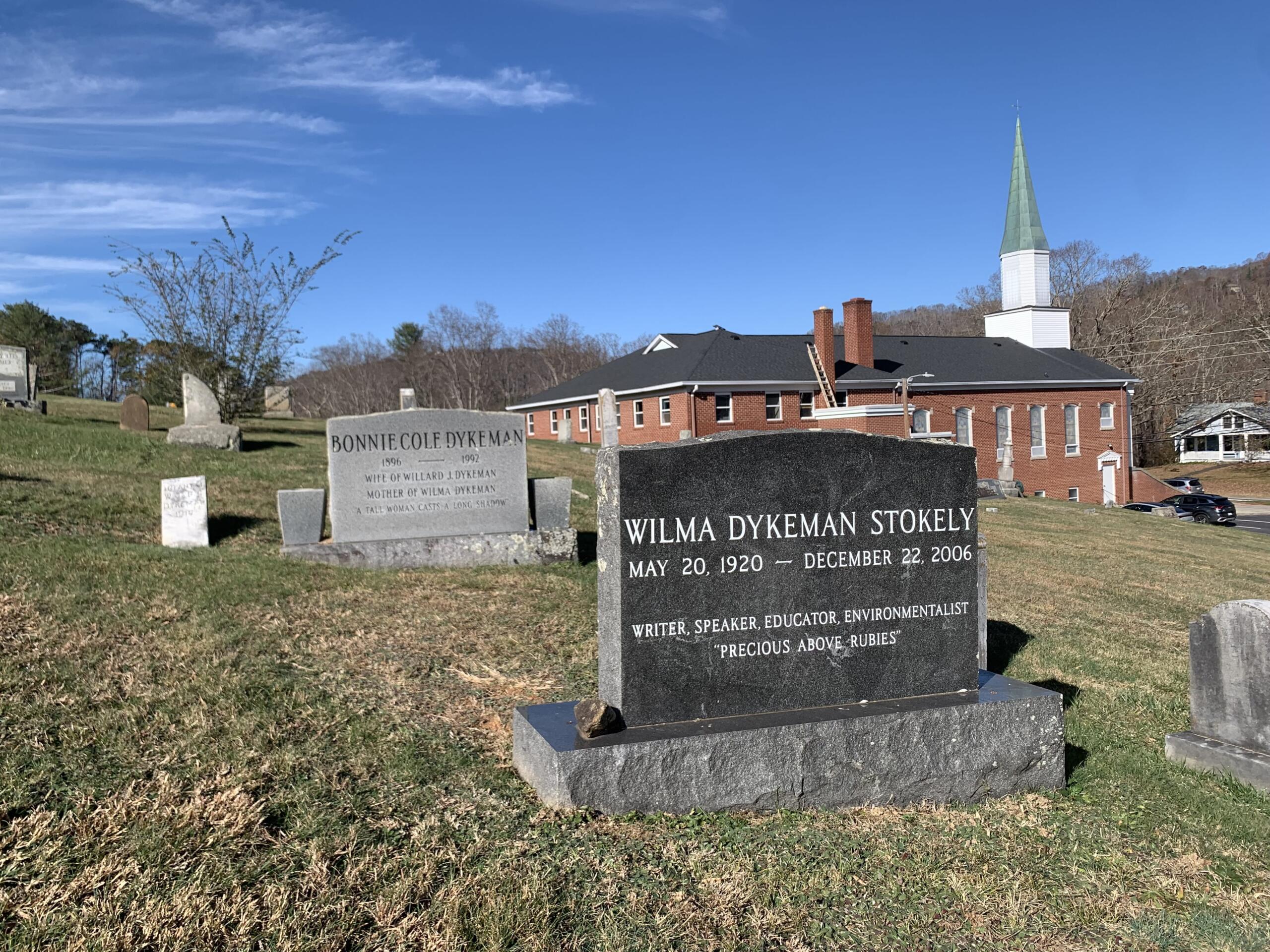
Tombstone Tales: Asheville’s River Champion, Wilma Dykeman Stokely

Wilma Dykeman Stokely, often called the “First Lady of Appalachian Literature,” helped shift public attention toward the French Broad River’s pollution and cleanup.
-
Tombstone Tales: Gig Young’s shocking murder‑suicide and his grave in WNC

Gig Young’s rise, fall and violent final act still echo from Manhattan to the mountains, where he’s buried under his real name.
-
Tombstone Tales: The man who helped light America

A Connecticut-born pioneer of electric lighting and his North Carolina wife rest in Asheville’s Riverside Cemetery, their stories entwined with industry, innovation and philanthropy.
-
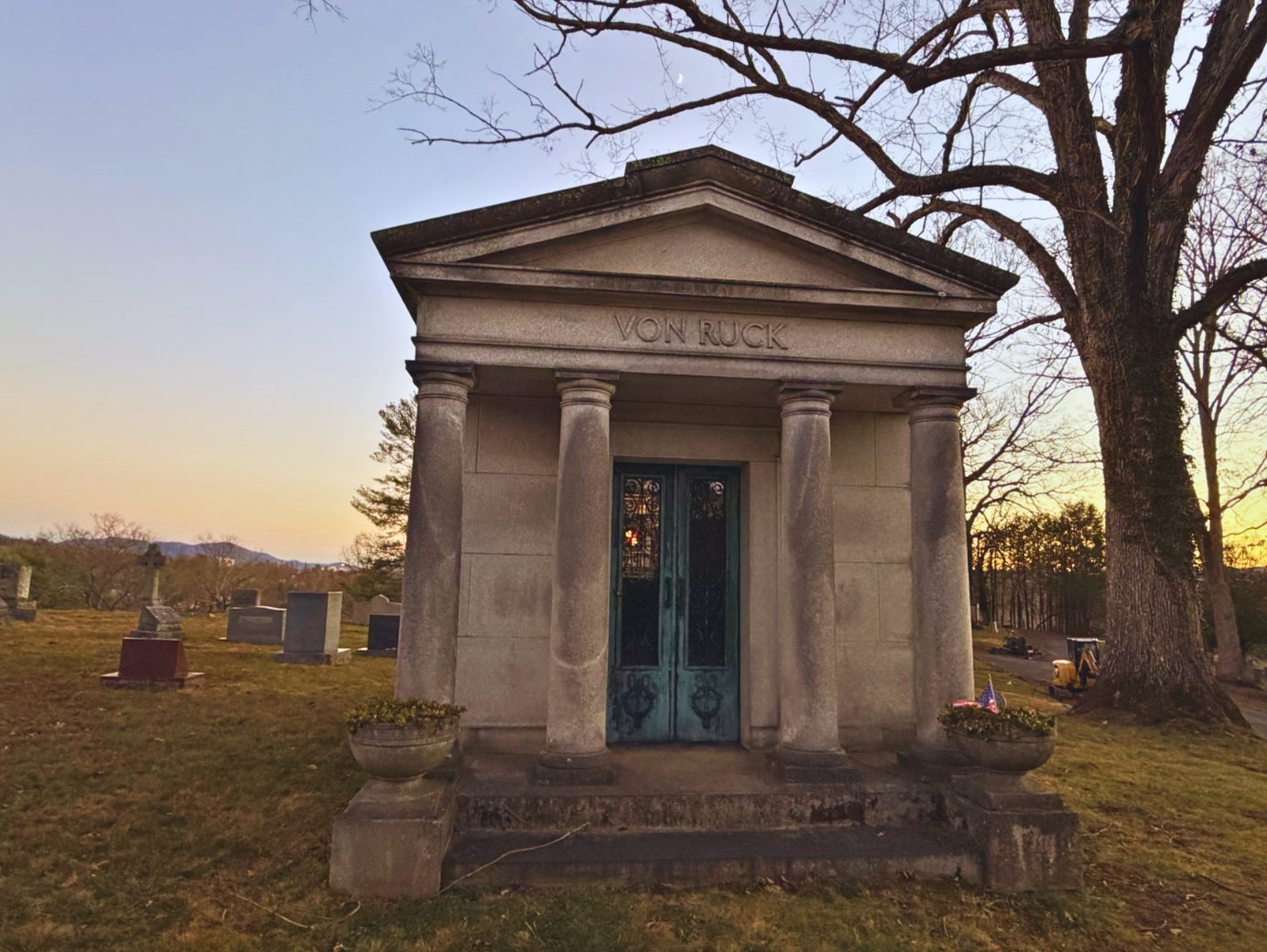
Tombstone Tales: The Von Ruck Mausoleum and Asheville’s literary ties
A story that runs from Asheville’s tuberculosis era to Thomas Wolfe’s fiction and early American horror.
-
Tombstone Tales: A Revolutionary War Soldier at Canton’s Locust Field
A Revolutionary War pension file and a Canton gravesite connect Thomas Abel’s Virginia enlistment to his final resting place in Haywood County.